Coreopsis, Genus, verticillata, Species,
- Genus & species
Threadleaf coreopsis
Overview
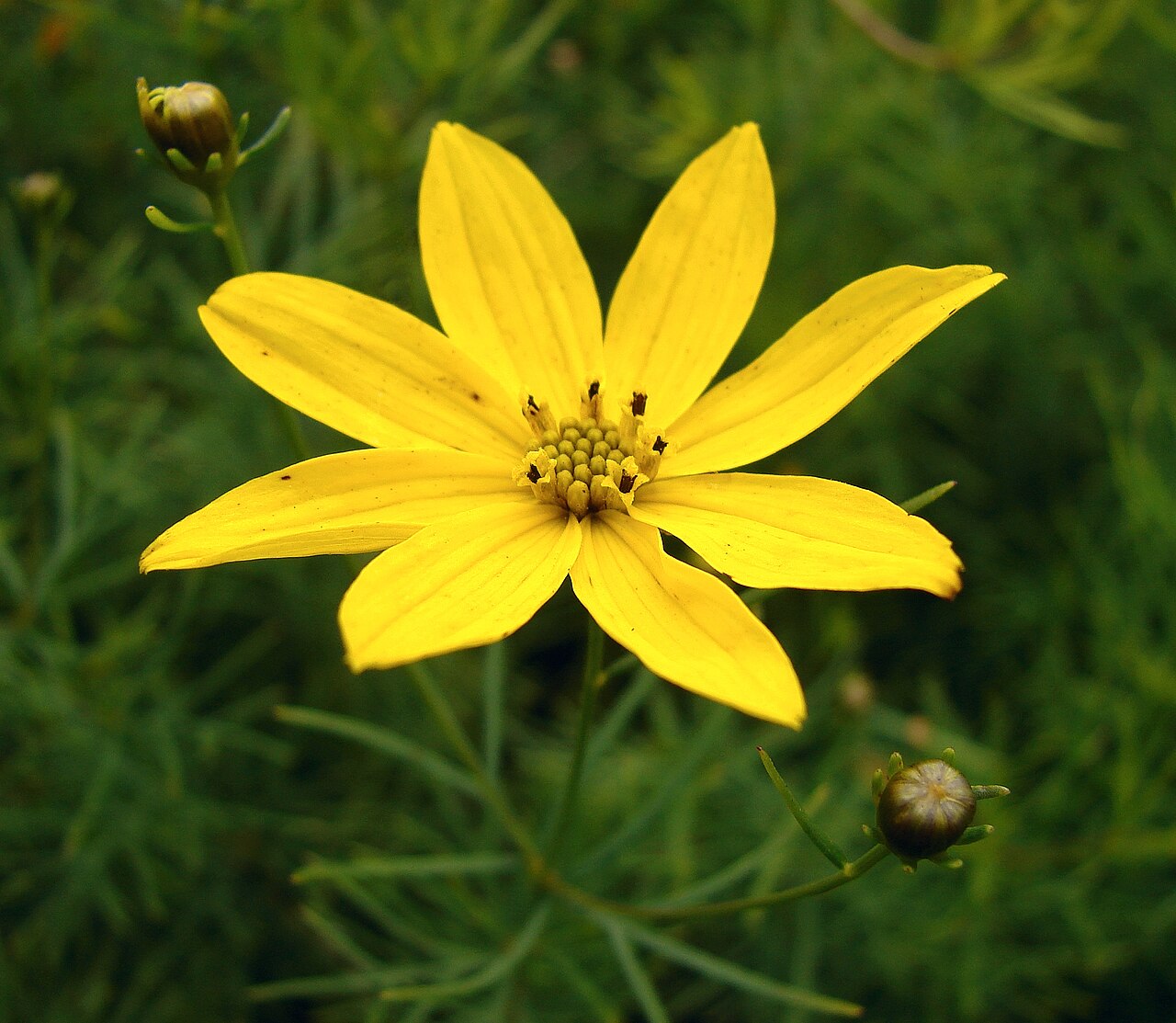
Coreopsis verticillata is a rhizomatous herbaceous perennial forming colonies 1-3 feet (30-90 cm) tall and 18-36 inches (45-90 cm) across. Stems are slender, wiry, and branched in the upper half. Leaves are opposite and sessile, each divided palmately into three thread-like segments 1-2 inches (2.5-5 cm) long and under 0.1 inch (2 mm) wide; because the paired leaves divide again at the node, each joint reads as a whorl of narrow segments. Daisy-form heads 1-2 inches (2.5-5 cm) across open from June into August, each with eight yellow ray florets, squared and shallowly notched at the tip, around a small yellow disc. Rhizomes advance 4-8 inches (10-20 cm) a year in loose soil and lift new shoots between neighbouring plants. Plants in soil that holds winter moisture are short-lived, with crown rot the usual cause of loss, and clumps in less than six hours of sun flop outward and set fewer heads. Powdery mildew whitens the lower stems in humid weather with still air. Hardy in USDA zones 3-9.
Native Range
Coreopsis verticillata is native to the southeastern United States, from Maryland and Virginia south to northern Florida and west into Alabama, Mississippi, and Arkansas. It grows in dry open woodland, rocky pine barrens, sandy roadside banks, and thin Piedmont soils over granite and shale. Stands recorded north and west of this range spread by rhizome rather than by seed.Suggested Uses
Used at the front of sunny borders, in gravel and rock gardens, along hot driveway edges, and in mass plantings on dry banks, spaced 12-18 inches (30-45 cm) apart. The spreading rhizomes fill gaps between shrubs and knit with grasses in prairie-style plantings. Container culture works in pots of 2 gallons (7.5 L) or larger in a gritty mix, with the colony divided every second spring.How to Identify
Appearance
Size & Dimensions
Height1' - 3'
Width/Spread1'6" - 3'
Bloom Information
The first heads open in early to mid-June and the main flush runs six to eight weeks to early August. Shearing at the end of that flush brings a second, lighter run of flowers in September in zones 6-9. Flowering is heaviest in full sun and thins by roughly half where the site is shaded after midday. Small bees, hoverflies, and butterflies including skippers and painted ladies feed at the discs.
Detailed Descriptions
Flower Description
Yellow rays around a yellow discFoliage Description
Mid-green, hairless, divided into thread-like segmentsGrowing Conditions
Sun Requirements
Requires 6-10 hours of direct sunlight daily
• Full Sun: 6+ hours of direct sunlight
• Partial Shade: 3-6 hours of direct sunlight
• Full Shade: Less than 3 hours of direct sunlight
Care & Maintenance
Care Guide
Six to ten hours of direct sun holds the stems upright and carries the heaviest flowering. The species grows in sandy or rocky soil of pH 5.5-7.0 that drains within hours of rain, and it tolerates infertile ground; heavy clay that stays wet through winter causes crown rot within one or two seasons. Established colonies run three to five weeks without water in summer, and irrigation beyond about 0.5 inch (1.3 cm) per week produces soft growth that lodges. Feeding is unnecessary on average soil, and nitrogen applications push leafy growth at the cost of flowers. Colonies are lifted and divided in early spring every three to four years, discarding the woody centre and replanting the outer rhizomes 12-18 inches (30-45 cm) apart. Winter mulch heaped over the crown traps moisture and raises rot losses in zones 3-5.Pruning
Stems are sheared to 6-8 inches (15-20 cm) once the first flush fades in late July or early August, which strips the spent heads and triggers a second flowering in warm-climate gardens. Individual heads cut at the stem junction through the season stop seed forming, though the thread-like stems make selective deadheading slow. The whole colony is cut to 2 inches (5 cm) above ground in early spring, with the stems left standing over winter for seed-eating birds.Pruning Schedule
Prune: March & July–August
summerearly spring
Container Growing
Suitable for container growing
Minimum container size: 2 gallons
Toxicity
Non-toxicRelated Coreopsis species
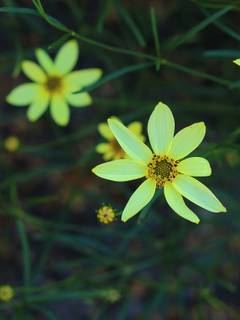 Moonbeam coreopsis, tickseedCoreopsis verticillata 'Moonbeam'
 Limerock ruby coreopsisCoreopsis 'Limerock Ruby'
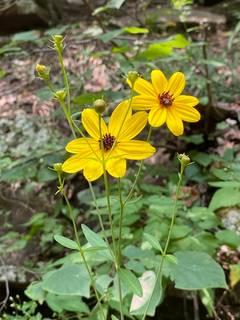 Tall coreopsisCoreopsis tripteris
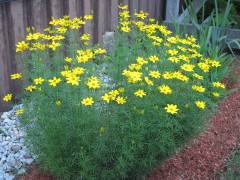 Large-flowered tickseedCoreopsis verticillata 'Grandiflora'
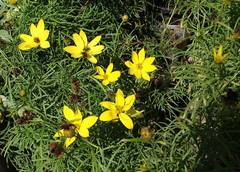 Zagreb coreopsisCoreopsis verticillata 'Zagreb'
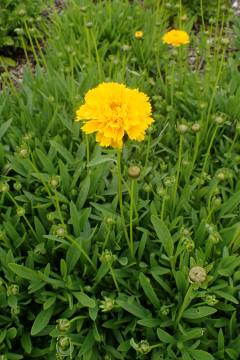 Early sunrise coreopsisCoreopsis grandiflora 'Early Sunrise'