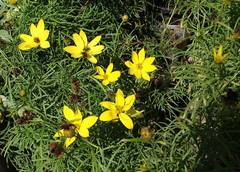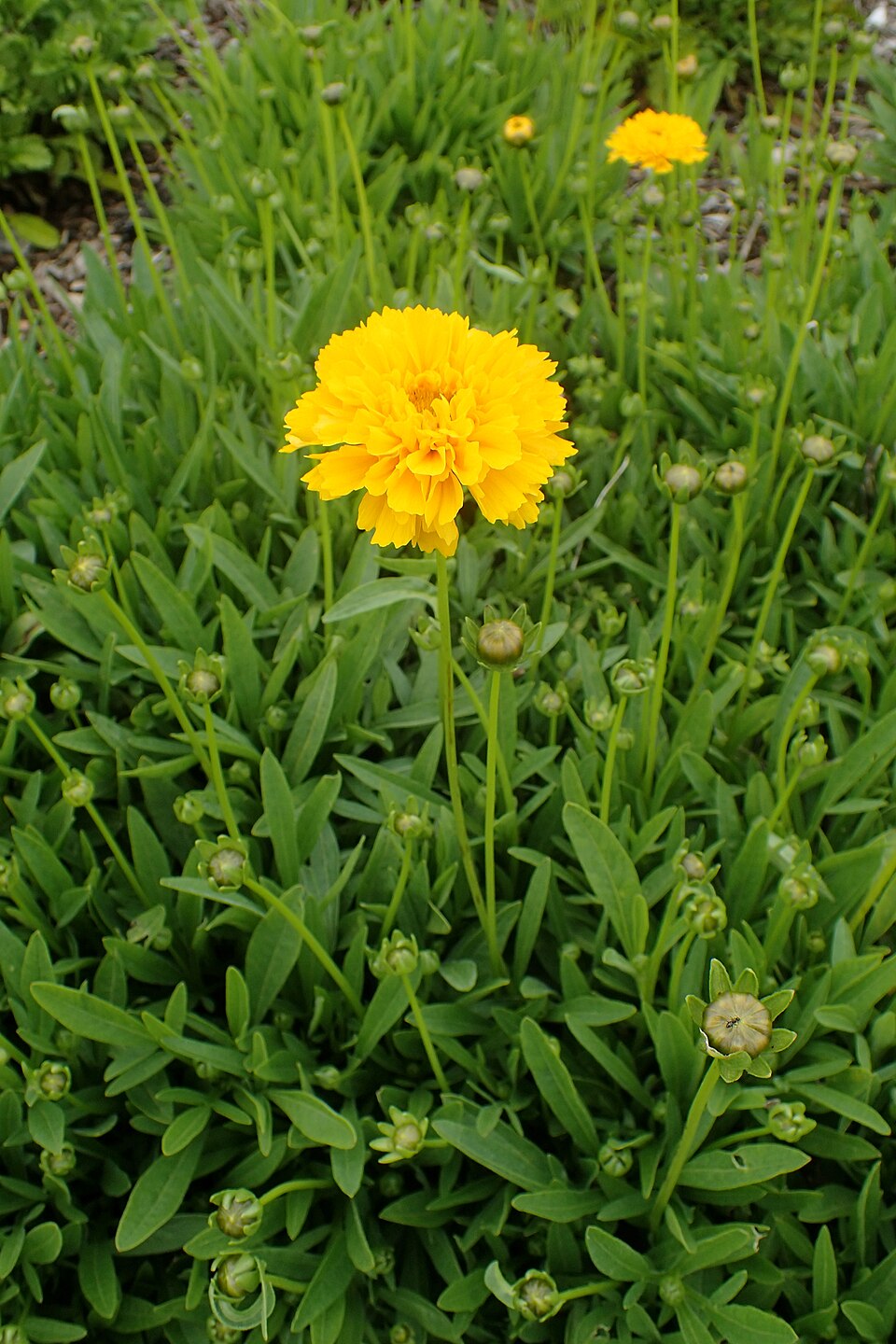
Coreopsis, Genus, grandiflora, Species, 'Early Sunrise', Cultivar,
- Genus & species
- Cultivar
early sunrise coreopsis
Garden selection; species {Coreopsis grandiflora} is native to the southeastern and central United States
Overview
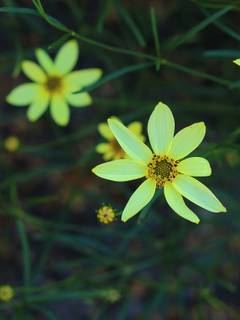
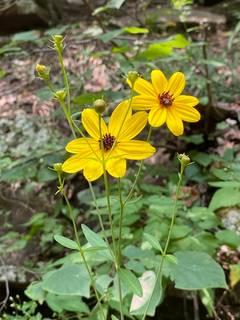
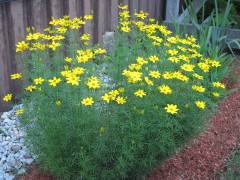
Coreopsis grandiflora 'Early Sunrise' is a semi-double-flowered tickseed in the daisy family (Asteraceae) that grows 18-24 inches (45-60 cm) tall and 12-18 inches (30-45 cm) wide. Semi-double golden-yellow flower heads 2 inches (5 cm) across with ruffled ray florets and a central tuft of shorter disc-derived petals appear from June through August. The semi-double form gives the flowers a fuller appearance than single-flowered coreopsis cultivars. 'Early Sunrise' was the first perennial to receive an All-America Selections award (1989), recognised for its ability to flower the first year from seed. The species C. grandiflora is native to the southeastern United States but tends to be short-lived as a perennial, often declining after 2-3 years even in favourable conditions. In heavy, wet, or fertile soils, the short-lived tendency is more pronounced. Lean, well-drained sandy or loam soil extends the plant's persistence. Self-sowing is moderate and helps maintain a stand where individual plants fade. Regular deadheading or a midsummer shearing by one-third extends bloom into September and prevents the plant from exhausting itself with heavy seed set. In rich conditions, stems become lanky and flop. Deer avoid the foliage.
Native Range
The species Coreopsis grandiflora is native to the southeastern and central United States, from Georgia and Florida north to Kansas and west to New Mexico. It grows in prairies, roadsides, and open woodlands on well-drained soils. 'Early Sunrise' is a garden selection recognised by All-America Selections in 1989.Suggested Uses
Used in summer perennial borders, cottage gardens, and meadow-style plantings where the golden-yellow bloom fills the early-to-midsummer gap. Container culture works in pots of 3 gallons (11 liters) or more. The ability to bloom from seed the first year suits annual bed use. Mass plantings create a golden summer carpet.How to Identify
Appearance
Size & Dimensions
Height1'6" - 2'
Width/Spread1' - 1'6"
Bloom Information
Flowering begins in June and continues through August, approximately 8 weeks with deadheading. Without deadheading, bloom concentrates in June-July and tapers. A midsummer shearing by one-third can promote a second flush extending into September.
Detailed Descriptions
Flower Description
Bright golden-yellow, semi-doubleFoliage Description
Medium green, lance-shaped to lobedGrowing Conditions
Sun Requirements
Requires 6-10 hours of direct sunlight daily
• Full Sun: 6+ hours of direct sunlight
• Partial Shade: 3-6 hours of direct sunlight
• Full Shade: Less than 3 hours of direct sunlight
Care & Maintenance
Care Guide
Plant in full sun with at least 6 hours of direct light. Lean, well-drained soil supports the upright habit; rich, moist conditions cause lanky growth and shorten the plant's lifespan. Heavy fertilising is avoided. Watering is sparing once established. Spent flowers are deadheaded regularly or the plant is sheared by one-third in midsummer. The short-lived nature (2-3 years) is accepted, with self-sowing maintaining the stand.Pruning
Spent flower stems are deadheaded regularly to extend bloom. Alternatively, the entire plant is sheared by one-third in midsummer to promote a second flush. All remaining growth is cut to ground level in late fall or early spring.Pruning Schedule
Prune: August
late summer
Container Growing
Suitable for container growing
Minimum container size: 3 gallons