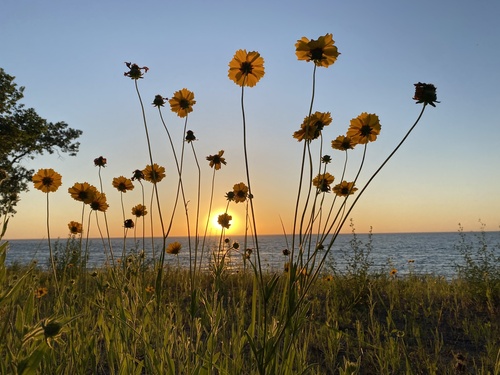
Coreopsis, Genus, lanceolata, Species,
- Genus & species
lance-leaved coreopsis
Central and eastern North America (Ontario south to Florida and west to New Mexico); prairies, roadsides, open woodlands, and disturbed ground on well-drained, often sandy or rocky soils.
Overview
Coreopsis lanceolata is a clump-forming native perennial in the daisy family (Asteraceae) growing 12-24 inches (30-60 cm) tall and 12-18 inches (30-45 cm) wide, with bright golden-yellow daisy-like flower heads 1.5-2.5 inches (4-6 cm) across borne on slender wiry stems above a basal rosette of narrow lance-shaped medium green leaves. The species is widely grown across the United States as a native wildflower, included in nearly every commercial wildflower seed mix for the eastern half of North America because of its broad adaptability, rapid establishment from seed (with first-year bloom typical), and heavy initial flowering. The notched (toothed) ray floret tips are the species' principal identification character: each ray floret ends in 3-4 small teeth rather than the smooth edge typical of most Coreopsis species, and the toothed ray tips give the flower head a slightly serrated outline visible from a few feet away. The species is longer-lived than the closely-related Coreopsis grandiflora, persisting 3-5 years or more in lean well-drained soil, though it is still considered moderately short-lived among perennials. Self-sowing is prolific, and in open disturbed ground the species naturalizes freely; in regions where it is not native the species can become weedy, with self-sown seedlings appearing tens of feet from the parent plant in some seasons. Shearing the entire plant by one-third to one-half after the main bloom flush prevents heavy seed set and may produce a lighter rebloom in August. The foliage rosette concentrates near the plant base, with long mostly-leafless flower stems rising above; the leafless stem habit is shared across the genus and gives Coreopsis its airy floating-flower visual character in mass plantings. In rich moist soil, growth becomes leggy and the plants are shorter-lived than in lean conditions; the species' physiological preference for poor soil reflects the dry prairie and sandy roadside habitats it evolved in. Deer avoid the foliage. Asteraceae generalist pollinators (bees, butterflies, beneficial predatory insects) work the flat composite landing platform that the family's daisy flower architecture creates; the plant is a key component of mid-summer pollinator forage in eastern North American grasslands. Self-sown seedlings produce a slightly variable color expression around the bright golden-yellow standard.
Native Range
Coreopsis lanceolata is native to central and eastern North America, with a range from Ontario south to Florida and west to New Mexico. The species grows in prairies, roadsides, open woodlands, and disturbed ground on well-drained sandy or rocky soils. The species is widely commercially-distributed across North American native plant horticulture and is a recurring component of commercial wildflower seed mixes for the eastern half of the continent.Suggested Uses
Used in native wildflower meadows, prairie restorations, and low-maintenance perennial borders where the species' broad adaptability and rapid establishment from seed produce reliable first-year bloom. The species works well on dry slopes, in roadside plantings, and in drought-tolerant xeriscape gardens, where the lean-soil preference and water economy match the planting style. Container culture works in pots of 3 gallons (11 liters) or larger, though container plants are typically not the species' primary use. The prolific self-sowing suits large-scale naturalization in dedicated meadow plantings; in formal beds, post-bloom shearing and removal of volunteer seedlings is needed to prevent the species from spreading beyond its assigned area.How to Identify
Appearance
Size & Dimensions
Height1' - 2'
Width/Spread1' - 1'6"
Bloom Information
Bright golden-yellow daisy flowers with notched ray florets open from May through July, with the main flush running approximately 6 weeks at the peak. Shearing the entire plant by one-third to one-half after the first flush may produce a lighter second bloom in August on the new lateral growth that emerges from the cuts. The species is among the earliest Coreopsis to flower and the concentrated spring bloom fills a perennial-color gap before the summer Coreopsis cultivars (C. verticillata, C. grandiflora cultivars) begin to bloom. Pollination is by Asteraceae generalist pollinators including bees, butterflies, and beneficial predatory wasps that work the flat composite landing platform.
Detailed Descriptions
Flower Description
Bright golden-yellow daisy-like flower heads 1.5-2.5 inches (4-6 cm) across, with notched ray floret tips (each ray ending in 3-4 small teeth rather than a smooth edge)Foliage Description
Medium green; narrow lance-shaped basal leaves with smooth (entire) margins, concentrated at the base of the plant in a low rosette with the long leafless flowering stems rising aboveGrowing Conditions
Sun Requirements
Requires 6-12 hours of direct sunlight daily
• Full Sun: 6+ hours of direct sunlight
• Partial Shade: 3-6 hours of direct sunlight
• Full Shade: Less than 3 hours of direct sunlight
Care & Maintenance
Care Guide
Plant in full sun with at least 6 hours of direct light. Lean well-drained soil at pH 5.5-7.5 is suited to the species because rich moist conditions cause leggy growth and shorten the plant lifespan; the species' native prairie and sandy roadside habitats reflect the lean-soil physiological preference. Fertilization is omitted because high soil fertility produces the same leggy growth that rich moist soil produces. Watering is sparing once established, and supplemental irrigation is rarely needed except during extended drought. Shearing the entire plant by one-third to one-half after the main bloom flush in midsummer reduces self-sowing (which is prolific in open disturbed ground) and may produce a lighter second bloom on the new lateral growth. Self-sowing is allowed in naturalistic meadow plantings to maintain the colony as the individual plants reach the end of their 3-5 year lifespan; the volunteer seedlings replace the aging mother plants and carry the planting forward across multiple generations.Pruning
Shear the entire plant by one-third to one-half after the main bloom flush in midsummer. The shearing reduces self-sowing and may produce a lighter second bloom on the lateral growth that emerges from the cuts. All remaining growth is cut to ground level in late fall after frost or in early spring before new shoots emerge from the basal rosette.Pruning Schedule
Prune: July–August
summer
Container Growing
Suitable for container growing
Minimum container size: 3 gallons
Toxicity
Non-toxicRelated Coreopsis species
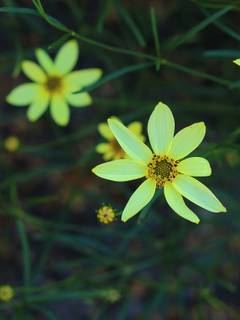 Moonbeam coreopsis, tickseedCoreopsis verticillata 'Moonbeam'
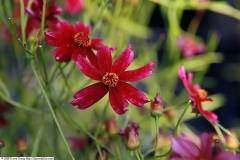 Limerock ruby coreopsisCoreopsis 'Limerock Ruby'
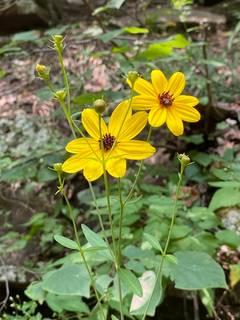 Tall coreopsisCoreopsis tripteris
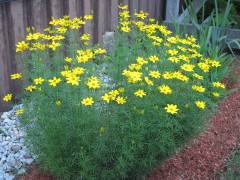 Large-flowered tickseedCoreopsis verticillata 'Grandiflora'
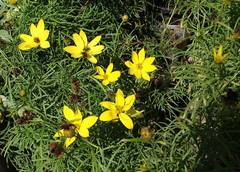 Zagreb coreopsisCoreopsis verticillata 'Zagreb'
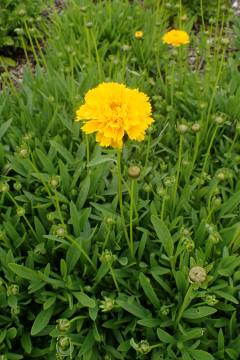 Early sunrise coreopsisCoreopsis grandiflora 'Early Sunrise'