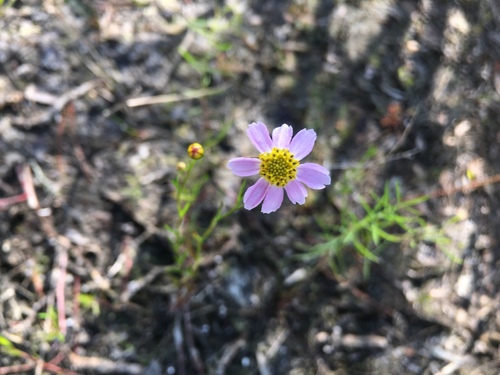
Coreopsis, Genus, rosea, Species,
- Genus & species
pink tickseed
Eastern North America, primarily the Atlantic coastal plain from Nova Scotia south to Georgia
Overview
Coreopsis rosea is the only commonly cultivated coreopsis with pink flowers, a clear departure from the yellow, orange, and red tones that dominate the genus. Plants grow 12–24 inches (30–60 cm) tall and spread 18–24 inches (45–60 cm) wide by underground rhizomes. Soft pink daisy-like flower heads 0.75–1 inch (2–2.5 cm) across with yellow disc centers appear from July through September above a mass of very narrow, thread-like medium green leaves. The narrow-leaved foliage creates an airy, grass-like base for the small flowers. Unlike most coreopsis, this species requires consistently moist to wet soil — it occurs naturally on the Atlantic coastal plain in moist sandy meadows, pond margins, and seasonally wet depressions. In dry conditions, the plant declines rapidly. The rhizomatous spread can be vigorous in moist, open ground, forming expanding colonies. In garden settings with adequate moisture, the advance may need periodic thinning. The species has become a parent in modern coreopsis breeding programs, contributing the pink flower color to many hybrid cultivars. Some native populations are of conservation concern due to habitat loss. Deer avoid the foliage.
Native Range
Coreopsis rosea is native to eastern North America, primarily along the Atlantic coastal plain from Nova Scotia south to Georgia. It grows in moist sandy meadows, pond margins, bog edges, and seasonally wet depressions on acidic, sandy soils.Suggested Uses
Used in rain gardens, pond margins, and moist meadow plantings where the pink flower color and wet-site tolerance fill a niche that other coreopsis cannot. Suited to bioswales and areas with seasonal standing water. Container culture works in pots of 3 gallons (11 L) or more with consistent watering. The pink flowers complement blue and white moisture-loving companions.How to Identify
Appearance
Size & Dimensions
Height1' - 2'
Width/Spread1'6" - 2'
Bloom Information
Detailed Descriptions
Flower Description
Soft pink with a yellow centerFoliage Description
Medium green, very narrow, thread-likeGrowing Conditions
Sun Requirements
Requires 5-10 hours of direct sunlight daily
• Full Sun: 6+ hours of direct sunlight
• Partial Shade: 3-6 hours of direct sunlight
• Full Shade: Less than 3 hours of direct sunlight
Care & Maintenance
Care Guide
Plant in full sun to partial shade with 5–10 hours of light. Consistently moist to wet soil is required; unlike most coreopsis, this species cannot tolerate drought. Water heavily during dry spells. Acidic, sandy to loamy soil supports the strongest growth. Rhizome spread can be thinned if the colony outgrows its area. No fertilization is needed. Cut all growth to ground level in late fall or early spring.Pruning
All growth is cut to ground level in late fall or early spring. Rhizome spread can be thinned by removing outlying shoots as needed. No deadheading is required.Pruning Schedule
Prune: March & November
fallearly spring
Container Growing
Suitable for container growing
Minimum container size: 3 gallons
Toxicity
Non-toxicRelated Coreopsis species
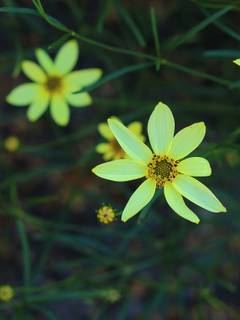 Moonbeam coreopsis, tickseedCoreopsis verticillata 'Moonbeam'
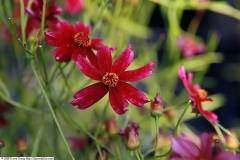 Limerock ruby coreopsisCoreopsis 'Limerock Ruby'
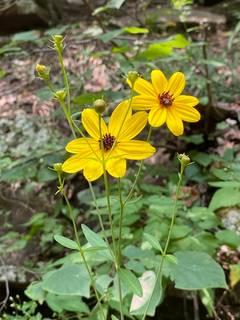 Tall coreopsisCoreopsis tripteris
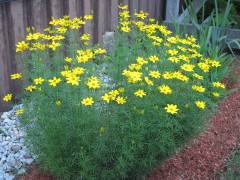 Large-flowered tickseedCoreopsis verticillata 'Grandiflora'
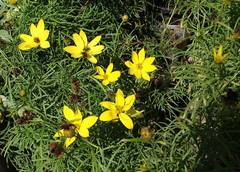 Zagreb coreopsisCoreopsis verticillata 'Zagreb'
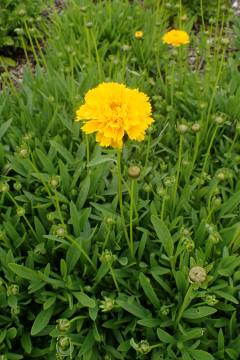 Early sunrise coreopsisCoreopsis grandiflora 'Early Sunrise'