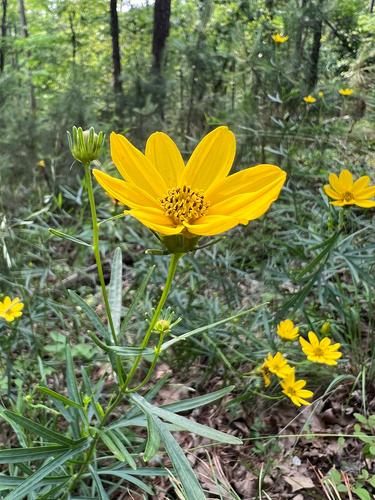
Coreopsis, Genus, palmata, Species,
- Genus & species
stiff tickseed
Central North America (Indiana and Wisconsin west to the Dakotas and south to Oklahoma and Arkansas); dry to mesic prairies, open savannas, and rocky glades on well-drained soils.
Overview
Coreopsis palmata is an upright rhizomatous native perennial in the daisy family (Asteraceae) growing 18-30 inches (45-75 cm) tall and 18-24 inches (45-60 cm) wide. The species name 'palmata' references the deeply three-lobed leaves with narrow finger-like segments arranged along stiff upright stems, with the palmate lobing pattern being the species' principal identification character and a leaf shape that no other commonly cultivated Coreopsis species shows. Golden-yellow daisy-like flower heads 1.5-2 inches (4-5 cm) across appear at stem tips in June and July, with the active flowering window running approximately 4 weeks. The bloom period is shorter and more concentrated than that of most other Coreopsis species, with the species making up the difference through its substantially longer plant lifespan. The plant spreads by underground rhizomes, forming loose colonies in favorable conditions; in lean dry prairie soils, the rhizome advance is slow and the colony stays manageable, but in rich garden soil rhizome spread accelerates and may require periodic thinning to keep the plant within its assigned area. This species ranks at the long-lived end of the genus, persisting 10 or more years in well-drained soil — a substantial advantage over the short-lived Coreopsis grandiflora and Coreopsis lanceolata, which typically last only 3-5 years in similar conditions. The longer lifespan reflects the species' adaptation to the long-cycle prairie ecosystems of central North America, where rhizomatous perennials with multi-decade lifespans are the dominant herbaceous component of the standing vegetation. The stiff upright stems remain self-supporting without staking and continue to stand through summer storms that flatten weaker-stemmed perennials. The species is a recognized component of tallgrass and midgrass prairie restorations across its native range. Self-sowing is minimal compared to other Coreopsis species, with the rhizome reproduction handling most colony expansion. Deer avoid the foliage, and the dried winter stems supply seed forage for prairie songbirds across the dormant season.
Native Range
Coreopsis palmata is native to central North America, with a range from Indiana and Wisconsin west to the Dakotas and south to Oklahoma and Arkansas. The species occurs in dry to mesic prairies, open savannas, and rocky glades on well-drained soils. The native range covers the core of the central tallgrass and midgrass prairie ecosystems, and the species is a common component of intact prairie remnants and prairie restoration plantings across the central states. Outside the native range, the species adapts well to garden cultivation in similar climatic conditions; in cooler northern climates and cooler maritime climates, the species is a reliable garden perennial without the prairie context that supports it in the wild.Suggested Uses
Used in prairie restorations, native meadow plantings, and naturalistic perennial borders, with the long 10-year-plus persistence making the species more reliable than the short-lived Coreopsis cultivars in equivalent garden positions. The species works well on dry slopes and in low-maintenance landscapes where the rhizomatous spreading habit acts as a slow ground-covering colony rather than as an isolated specimen plant. The palmate finger-like foliage adds textural variety among other prairie plants with simpler leaf shapes (Echinacea, Liatris, Ratibida), and the golden-yellow flower color combines well with purple, blue, and red prairie companions. The species is not typically used in containers because the rhizomatous spreading habit doesn't suit the confined root volume of a pot.How to Identify
Appearance
Size & Dimensions
Height1'6" - 2'6"
Width/Spread1'6" - 2'
Colors
Bloom Information
Golden-yellow daisy flower heads 1.5-2 inches (4-5 cm) across open at stem tips in June and July, with the active flowering window running approximately 4 weeks. The bloom is shorter and more concentrated than that of Coreopsis lanceolata (which runs 6 weeks) and substantially shorter than that of Coreopsis verticillata cultivars (which can run 10-12 weeks with deadheading). The trade-off for the shorter bloom is the species' substantially longer plant lifespan: a Coreopsis palmata planting persists 10 or more years in well-drained soil, while Coreopsis lanceolata typically declines after 3-5 years. Pollination is by Asteraceae generalist pollinators (bees, butterflies, beneficial predatory wasps) working the flat composite landing platform.
Detailed Descriptions
Flower Description
Golden-yellow daisy-like flower heads 1.5-2 inches (4-5 cm) across at stem tips, with the standard Coreopsis ray-and-disc flower architectureFoliage Description
Dark green; deeply three-lobed leaves with narrow finger-like segments arranged along stiff upright stems, the palmate lobing pattern being the species' principal identification characterGrowing Conditions
Sun Requirements
Requires 6-12 hours of direct sunlight daily
• Full Sun: 6+ hours of direct sunlight
• Partial Shade: 3-6 hours of direct sunlight
• Full Shade: Less than 3 hours of direct sunlight
Care & Maintenance
Care Guide
Plant in full sun with at least 6 hours of direct light. Well-drained soil of any type works for the species, including clay, loam, and sand. Fertilization is omitted because lean conditions slow the rhizome advance and keep the colony from expanding faster than the gardener can manage. Watering is during establishment only; the species is drought-tolerant once the rhizome system develops, with the rhizomes storing water and carbohydrate reserves underground. Thin rhizome shoots at the colony edge if the spread exceeds the assigned area; cutting individual outlying shoots at ground level handles the spread without damaging the parent colony. All stems are cut to ground level in late fall after frost or in early spring before new shoots emerge from the rhizomes. Leaving the dried stems standing through winter supplies bird-forage habitat for prairie songbirds and adds architectural texture to the dormant garden.Pruning
All stems are cut to 3-4 inches (8-10 cm) above ground in late fall after frost or in early spring before new shoots emerge from the underground rhizome system. Standing dried stems are left through winter when bird-forage habitat is wanted across the dormant season; cut in fall when the dormant garden is desired to look cleaner. Rhizome spread is thinned by removing outlying shoots at the colony edge if needed. No deadheading is required because the rhizome reproduction handles colony continuity without seed production from the flowers.Pruning Schedule
Prune: March & November
fallearly spring
Toxicity
Non-toxicRelated Coreopsis species
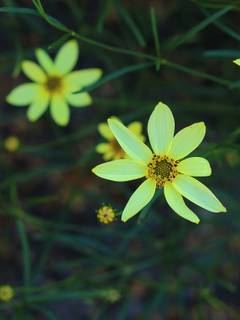 Moonbeam coreopsis, tickseedCoreopsis verticillata 'Moonbeam'
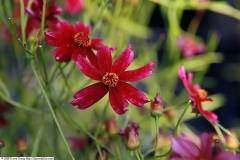 Limerock ruby coreopsisCoreopsis 'Limerock Ruby'
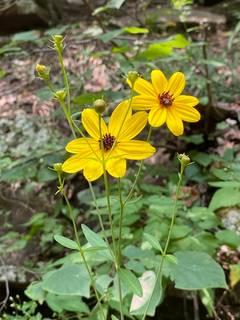 Tall coreopsisCoreopsis tripteris
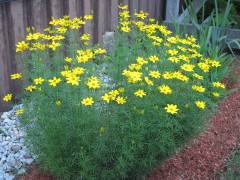 Large-flowered tickseedCoreopsis verticillata 'Grandiflora'
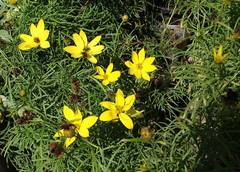 Zagreb coreopsisCoreopsis verticillata 'Zagreb'
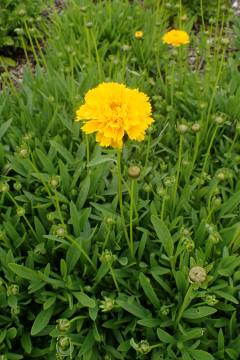 Early sunrise coreopsisCoreopsis grandiflora 'Early Sunrise'