Claytonia, Genus, perfoliata, Species,
- Genus & species
Miner's lettuce
Western North America: Pacific coast from British Columbia to Baja California; inland to Idaho, Utah, Arizona
SunPart Shade – Full Shade
WaterMedium
Overview
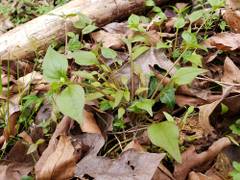
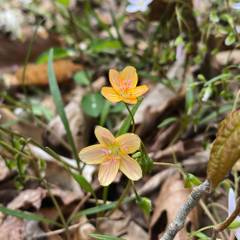
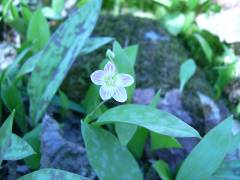
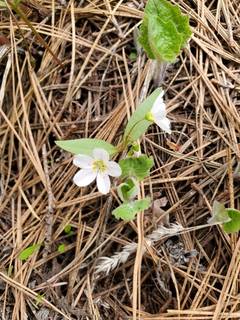
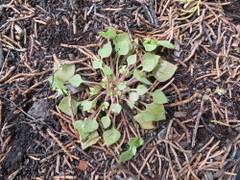
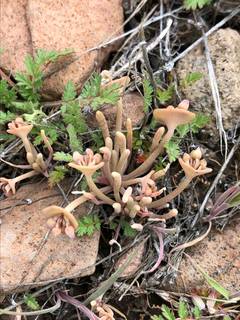
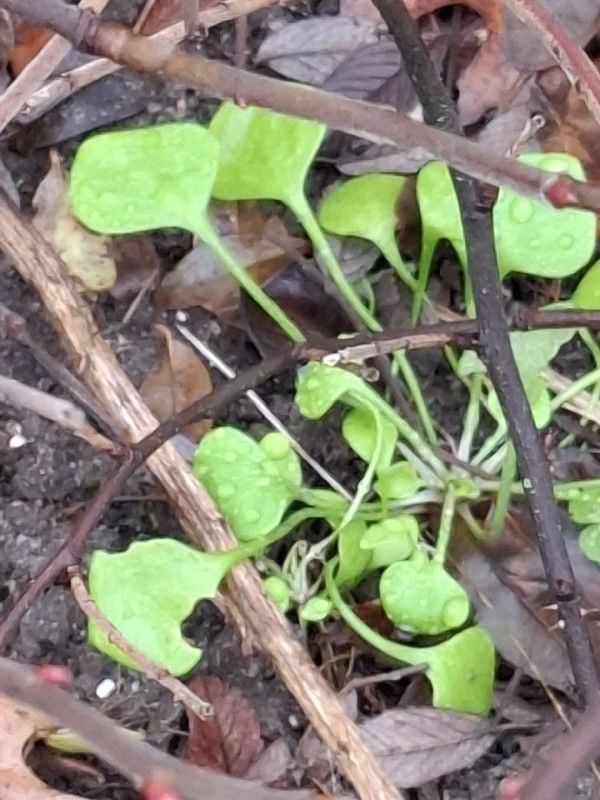
Claytonia perfoliata is an annual herbaceous wildflower forming a basal rosette of fleshy leaves topped by disc-shaped perfoliate stem leaves. Plants reach 4-12 inches (10-30 cm) tall and 4-8 inches (10-20 cm) wide. Initial leaves are slender and lance-shaped, 1-3 inches (2.5-7.5 cm) long, transitioning to round to triangular blades 0.5-1.5 inches (1.3-4 cm) wide that fuse around the flower stem to form a single disc. Small white to pinkish flowers, 0.2-0.3 inch (5-8 mm) wide, are borne in loose clusters above the perfoliate disc from February through May. The whole plant is succulent, mild-flavored, and edible raw or cooked; leaves are commonly used as salad greens. Plants self-seed prolifically; volunteer seedlings appear in fall after first significant rains and develop through the cool season. Above-ground tissue dies back completely by late spring as soils dry; the species behaves as an obligate winter annual in its native range.
Native Range
Native to western North America from southern British Columbia south through Washington, Oregon, California to Baja California, and inland to Idaho, Nevada, Utah, and Arizona. Grows in moist shaded sites under oaks, riparian forests, north-facing slopes, and seasonally damp disturbed ground at elevations from sea level to 6,500 feet (2,000 m). Naturalized in parts of Europe, Australia, and New Zealand.Suggested Uses
Used as a winter cool-season ground cover in California native gardens, edible-landscape plantings, and shaded vegetable beds, sown at 4-6 inch (10-15 cm) spacing. Edible foliage supports kitchen-garden harvest from January through April; plants remain edible until flowering, after which leaves toughen. Volunteer self-seeding in adjacent paths and beds is the principal management consideration in tidy garden settings.How to Identify
Appearance
Size & Dimensions
Height4" - 1'
Width/Spread4" - 8"
Bloom Information
Blooms February through May in California and the Pacific coastal lowlands, with peak in March-April. Inland plantings bloom April through May. Individual flowers last 4-6 days; total bloom on a plant extends 6-10 weeks. Hot dry weather above 75°F (24°C) ends bloom and begins senescence.
Detailed Descriptions
Flower Description
white to pinkishFoliage Description
bright greenGrowing Conditions
Sun Requirements
Requires 2-5 hours of direct sunlight daily
• Full Sun: 6+ hours of direct sunlight
• Partial Shade: 3-6 hours of direct sunlight
• Full Shade: Less than 3 hours of direct sunlight
Care & Maintenance
Care Guide
Seed is sown in fall directly on prepared soil after first significant rains; transplanting is rarely successful because of the brittle taproot. Established stands self-perpetuate from seed and require no further sowing in suitable sites. Water during dry winter spells in coastal climates; otherwise rain-fed. Few pest or disease problems occur. Slugs and snails feed on succulent foliage in damp gardens; foliage remains edible after damage. Fertilization is not required in average garden soils; over-fertilization produces leggy plants that bolt early.Pruning
Pruning is not done; plants are annual and senesce naturally in late spring. Spent stems can be pulled and composted once tissue browns. Seed heads can be removed before dispersal to limit self-seeding, or left in place for natural regeneration.Pruning Schedule
spring
Container Growing
Suitable for container growing
Minimum container size: 1 gallons