Claytonia, Genus, sibirica, Species,
- Genus & species
Siberian miner's-lettuce
Alaska south through British Columbia, Washington, Oregon to northern California, east to Idaho and Montana; moist conifer forest understory, streambanks, seeps, and moist disturbed ground
Overview
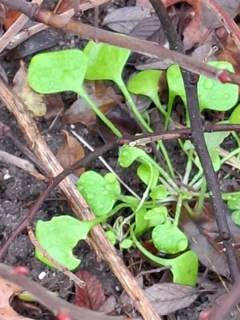
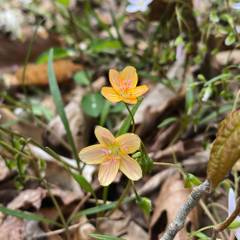
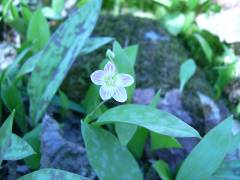
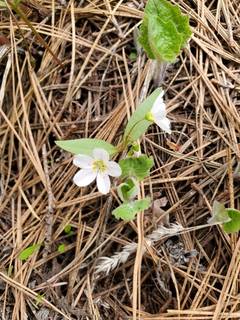
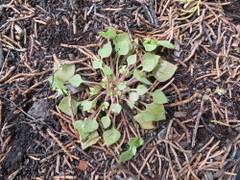
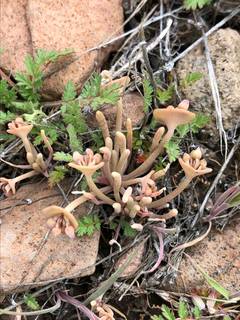
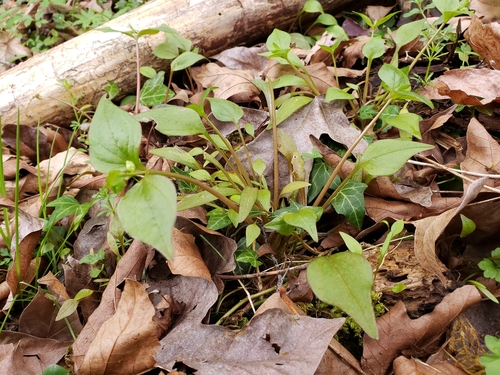
Claytonia sibirica is a mounding short-lived perennial or reseeding annual growing 4-16 inches (10-40 cm) tall in flower from a basal rosette 2-4 inches (5-10 cm) wide, with individual plants 4-8 inches (10-20 cm) across and colonies forming rapidly from self-sown seedlings in moist shaded ground. The species was long known as Montia sibirica. Leaves are medium green, slightly fleshy and succulent in texture, with lanceolate to rhombic-ovate basal leaves on long petioles and a pair of opposite sessile cauline leaves midway on each flowering stem — the succulent basal rosette leaves are edible and are used in salads. Loose racemes of white to pink five-petaled flowers 0.4-0.8 inch (10-20 mm) across bloom from March through July, often with darker pink candy-stripe veining. Each flower has only 2 sepals (5-petaled flowers in most plant families have 5 sepals), a character that separates the species from most visually similar native forest perennials. Seeds are dispersed by ants (myrmecochory) and germinate readily in moist shade. Hardy zones 5-9. In Montiaceae.
Native Range
Native to Alaska south through British Columbia, Washington, Oregon, and northern California, east to Idaho and Montana. Grows on moist conifer forest understory, streambanks, seeps, and moist disturbed ground in the shade of overstory trees from sea level to 3,500 feet (1,050 m) elevation.Suggested Uses
Grown as a shade groundcover in woodland gardens, under deciduous trees, along forest edges, in native plant gardens, and in edible landscape plantings, spaced 6-12 inches (15-30 cm). The self-sown colonies fill in around established trees and shrubs in moist shade. The edible basal leaves can be harvested for salads and have a mild spinach-like flavor. Hardy zones 5-9.How to Identify
Appearance
Size & Dimensions
Height4" - 1'4"
Width/Spread4" - 8"
Bloom Information
Spring through early summer (March-July). Loose racemes of white to pink five-petaled flowers 0.4-0.8 inch (10-20 mm) across with darker pink candy-stripe veining on the petals, borne on slender stems rising above the basal rosette. 10 weeks. Visited by small native bees and flies. Seeds disperse by ant-mediated transport (myrmecochory), germinate readily in moist shade, and produce seedlings that reach flowering size within a single growing season.
Detailed Descriptions
Flower Description
White to pink five-petaled flowers 0.4-0.8 inch (10-20 mm) across with darker pink candy-stripe veining on the petals, borne in loose racemes on slender stems from March through JulyFoliage Description
Medium green, slightly fleshy/succulent texture; lanceolate to rhombic-ovate basal leaves on long petioles; opposite sessile cauline leaves midway on each flowering stemGrowing Conditions
Sun Requirements
Tolerates up to 3 hours of direct sunlight daily
• Full Sun: 6+ hours of direct sunlight
• Partial Shade: 3-6 hours of direct sunlight
• Full Shade: Less than 3 hours of direct sunlight
Care & Maintenance
Care Guide
Plant in moist loam, peat, or clay pH 5.5-7.5 in 0-3 hours of sun (deep to partial shade). Water weekly during dry spells; the species declines rapidly in sustained drought. Self-sows freely in moist shaded ground and forms colonies that expand over 2-3 seasons. The basal rosette leaves are edible, with a mild texture and flavor similar to spinach. Hardy zones 5-9.Pruning
No pruning required. Individual plants are short-lived (1-2 years) and colonies are maintained by self-sown seedlings. Cut back senesced foliage in August after seed dispersal to tidy the planting, or leave the foliage to break down naturally.Container Growing
Suitable for container growing
Minimum container size: 1 gallons