Claytonia, Genus, lanceolata, Species,
- Genus & species
lanceleaf springbeauty
Overview
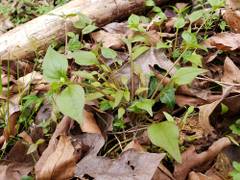
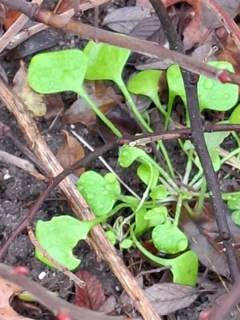
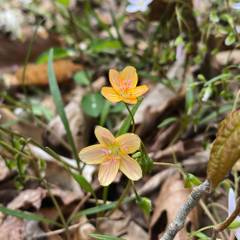
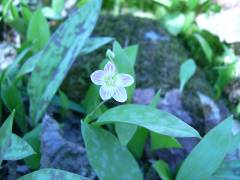
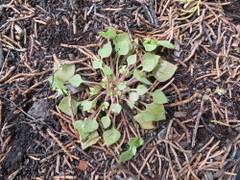
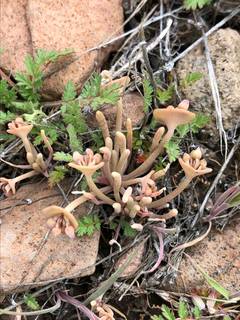
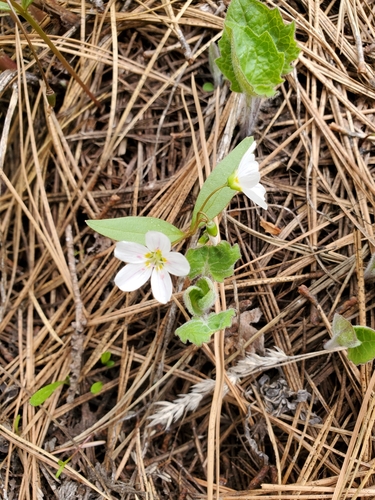
Claytonia lanceolata is a low, spring-flowering perennial that grows from a deep, rounded corm and reaches 2-8 inches (5-20 cm) tall. Each stem carries a single pair of opposite, lance-shaped to elliptic leaves 1-3 inches (2.5-8 cm) long, set partway up the stem, with a loose cluster of 3-15 flowers above them. The five-petaled flowers are 0.4-0.8 inch (1-2 cm) across, white to pink with darker pink veins and yellow at the base, opening on sunny days and closing at night. Bloom comes early, often at the edge of melting snow, and the whole plant withers back to the underground corm within a few weeks of flowering, spending most of the year dormant. As a spring ephemeral it completes leaf growth, flowering, and seed set in a short window before tree and meadow canopies close. The starchy corm, sometimes called Indian potato, sits 2-6 inches (5-15 cm) deep and stores energy between seasons. Plants spread slowly from seed and form scattered colonies on moist mountain slopes.
Native Range
Native to western North America, from British Columbia and Alberta south through the Rocky Mountains and Sierra Nevada to California, Arizona, and New Mexico. Grows in moist montane and subalpine meadows, open coniferous woodland, and slopes near melting snow at 3,000-12,000 feet (900-3,700 m) elevation.Suggested Uses
Used in rock gardens, woodland and native plant gardens, and alpine troughs in cool-summer climates, planted in drifts at 3-6 inch (8-15 cm) spacing. The early flowers feed emerging native bees, and the corms are a traditional food gathered by Indigenous peoples of the region. Its summer dormancy leaves gaps in the bed, so it is combined with later-emerging plants.How to Identify
Appearance
Size & Dimensions
Height2" - 8"
Width/Spread2" - 4"
Bloom Information
Flowers from March through July depending on elevation, opening as snow recedes, so bloom moves upslope through spring and into summer at higher elevations. At any one site flowering lasts about 2-4 weeks. Flowers open in sun and close in cloud or at night.
Detailed Descriptions
Flower Description
white to pinkFoliage Description
greenGrowing Conditions
Sun Requirements
Requires 4-8 hours of direct sunlight daily
• Full Sun: 6+ hours of direct sunlight
• Partial Shade: 3-6 hours of direct sunlight
• Full Shade: Less than 3 hours of direct sunlight
Care & Maintenance
Care Guide
Grows in full sun to part shade in moist, gritty, well-drained soil that stays damp during spring growth and dries as the plant goes dormant in summer. Corms are planted 2-4 inches (5-10 cm) deep in fall for spring bloom. Summer irrigation of dormant corms causes rot, so it suits sites that dry naturally after spring. Established colonies need little care and self-sow where soil is bare. Slugs and rodents may feed on corms and foliage. Plants are long-lived from their corms but slow to multiply.Pruning
No pruning is needed. The foliage yellows and dies back on its own after flowering and can be left in place to feed the corm and drop seed. Dormant corms rest underground until the following spring.Container Growing
Suitable for container growing
Minimum container size: 1 gallons