Clarkia, Genus, unguiculata, Species,
- Genus & species
elegant clarkia
California (Coast Ranges and Sierra Nevada foothills)
SunFull Sun
Overview
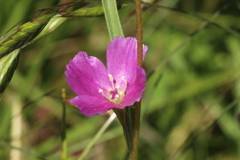
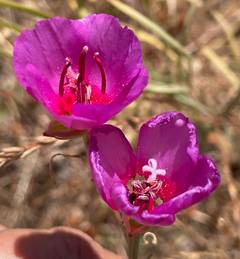
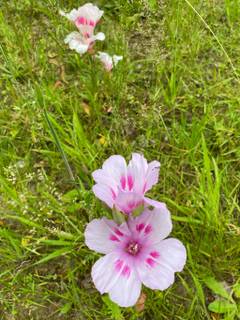
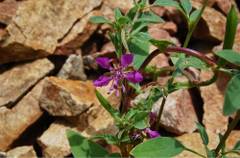
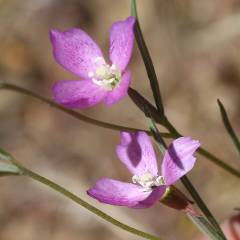
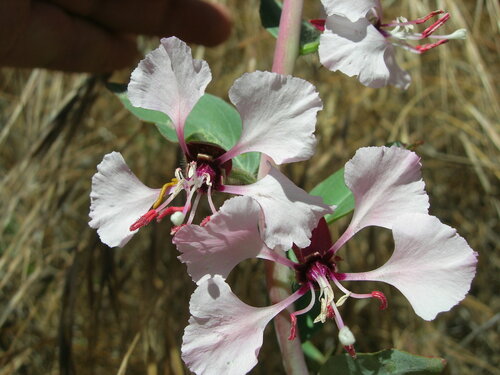
Clarkia unguiculata is an annual wildflower in the evening primrose family, growing 1-3 feet (30-90 cm) tall on slender, often reddish, branching stems. The leaves are lance-shaped, 1-2.5 inches (2.5-6 cm) long, alternate and widely spaced along the stem. The flowers have four petals, each 0.5-1 inch (12-25 mm) long and narrowed at the base into a slender stalk-like claw, giving the bloom an open, pinwheel outline. Petal color ranges from pink and lavender to salmon, reddish-purple, and white, and the buds nod before opening upward. Flowering occurs from late spring into summer, with blooms opening up the stem over several weeks. The plant is endemic to California, growing on dry slopes, in open woodland, and along roadsides in the Coast Ranges and Sierra Nevada foothills. It self-sows from elongated seed capsules and completes its life cycle in a single season. As a warm-season annual, it dies after seed set and leaves no structure in late summer. Flowers are visited by bees and butterflies. It tolerates poor, dry soils but needs full sun and sharp drainage, and overly rich or wet soil produces weak, leggy stems.
Native Range
Endemic to California, where it grows in the Coast Ranges, Sierra Nevada foothills, and inner valleys, on dry slopes and in open woodland.Suggested Uses
Used in wildflower meadows, native plant gardens, and dry sunny borders. Suited to seed mixes and naturalized plantings on open ground. Self-sows to form drifts where soil is left undisturbed.How to Identify
Appearance
Size & Dimensions
Height1' - 3'
Width/Spread6" - 1'
Bloom Information
Detailed Descriptions
Flower Description
pink, lavender, salmon to reddish-purpleFoliage Description
green, sometimes red-tingedGrowing Conditions
Sun Requirements
Requires 6-10 hours of direct sunlight daily
• Full Sun: 6+ hours of direct sunlight
• Partial Shade: 3-6 hours of direct sunlight
• Full Shade: Less than 3 hours of direct sunlight
Water & Climate
Water Needs
Drought Tolerance
Drought tolerant when established
Care & Maintenance
Care Guide
Grows as a warm-season annual from seed sown in fall or early spring. Full sun and free-draining soil produce sturdy, well-flowered plants. Water is needed only to establish seedlings, after which the plant tolerates dry conditions and declines in soggy ground. No fertilizer is needed, and rich soil tends to produce lax, leggy growth. Plants finish their cycle and die by late summer. Allowing seed capsules to ripen supports self-sowing for the next season.Pruning
No pruning is required for this annual. Spent stems can be removed once seed has dropped if self-sowing is not wanted. Dried stems left standing allow seed to disperse on their own.Toxicity
Non-toxicPlanting Guide
Planting Methods & Timing
Planting Method
direct sow
Direct Sow Timing
fall or early spring
Days to Maturity
70–100 days
Plant Spacing
8 inches
Companion Planting
Good Companions