© NOAA Great Lakes Environmental Research Laboratory, some rights reserved (CC-BY-SA) · Wikimedia Commons
Overview
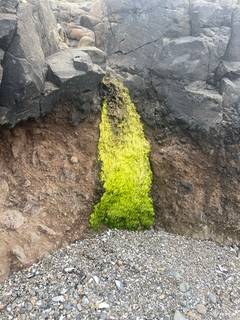
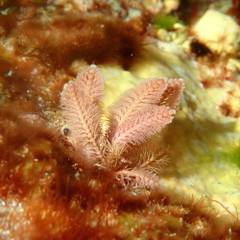
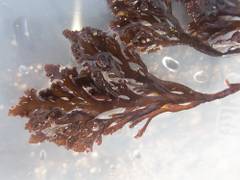
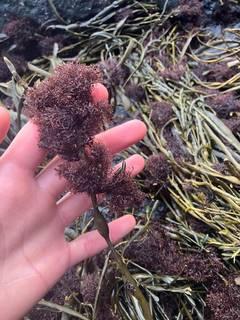
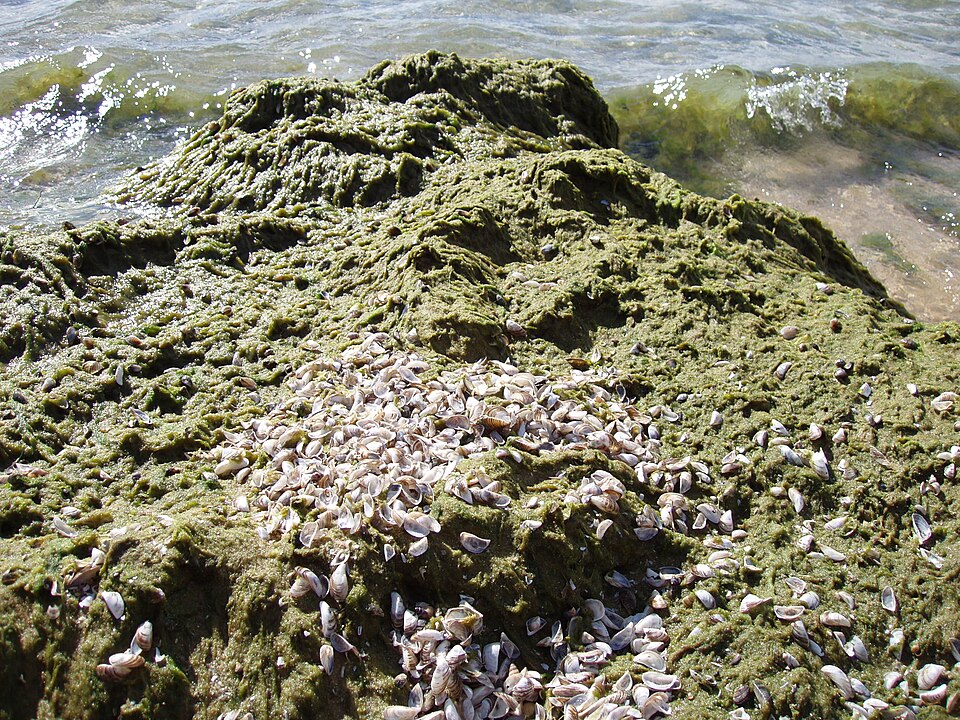
Cladophora is a genus of branching filamentous green algae in the family Cladophoraceae, found in fresh, brackish, and marine waters worldwide. The plants are built from chains of large, multinucleate cells joined end to end into coarse, wiry, much-branched filaments that form green tufts, mats, or floating masses. In flowing water the filaments anchor to rock, wood, or shells and stream out as long green threads; in still or enriched water they can form thick, cottony blankets. The texture is harsher and more wiry than soft green algae like Spirogyra, and the branching, cell structure, and attached habit help separate it. Cladophora grows quickly where light and nutrients are high, and several species form heavy nuisance blooms in lakes, rivers, and on shores enriched by run-off, sometimes washing up in rotting drifts. The genus tolerates a wide range of light, temperature, and water chemistry. Reproduction is by swimming spores and gametes and by simple fragmentation of the filaments. In the Great Lakes and elsewhere, blooms tied to nutrient pollution and invasive mussels have made some species a recurring problem. The coarse, branched, attached filaments mark out the genus.
Native Range
Cladophora occurs worldwide in fresh, brackish, and marine waters, attached to rock, wood, shells, and other surfaces in rivers, lakes, tide pools, and shallow seas, and sometimes floating free. Several species are widespread and form nuisance blooms in nutrient-rich waters.Suggested Uses
Ball-forming Cladophora, sold as marimo moss balls, is kept in aquariums as a low-care ornamental. The genus is studied as an indicator of nutrient pollution and as a cause of nuisance blooms in lakes and rivers. Beach-cast Cladophora is sometimes used as fertiliser.How to Identify
Appearance
Colors
Foliage Colors
Bloom Information
Cladophora does not flower. It reproduces by swimming spores and gametes and by simple fragmentation, with broken filaments growing into new plants. Growth is fastest in warm, well-lit, nutrient-rich water, when nuisance blooms can develop.
Growing Conditions
Water & Climate
Water Needs