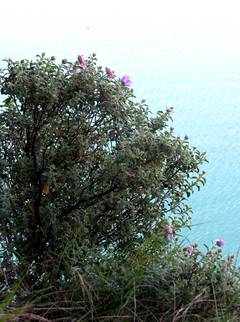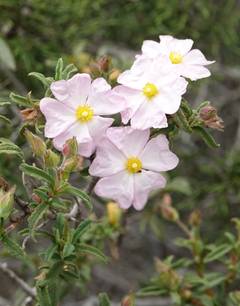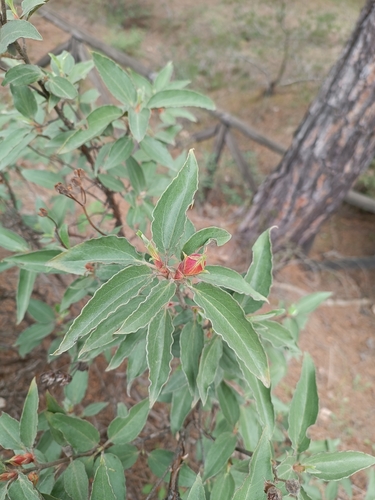
Cistus, Genus, laurifolius, Species,
- Genus & species
laurel-leaved cistus
Native to southern Europe, from the Iberian Peninsula through southern France, Corsica, Sardinia, Italy, the Balkans, and into Turkey and Morocco where the species grows on dry rocky calcareous slopes in garigue and maquis habitats at elevations of 1,000-6,500 ft (300-2,000 m); the elevation range is higher than most other {Cistus} species and accounts for the species' greater cold tolerance — among the larger and harder rockroses in cultivation, tolerating temperatures to approximately 5°F (-15°C)
Overview
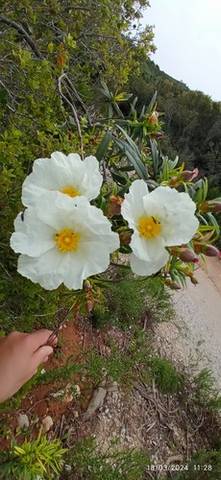
Cistus laurifolius is an evergreen shrub in the rockrose family (Cistaceae) growing 4-7 feet (1.2-2.1 m) tall and 4-6 feet (1.2-1.8 m) wide — among the larger and harder of the cultivated rockroses. Leaves are opposite, ovate to lanceolate, 2-3 inches (5-8 cm) long, dark green above and grey-white tomentose beneath, with a leathery texture and slightly sticky surface from resinous exudates. The species epithet laurifolius references the resemblance to laurel (Laurus) leaves. Flowers are 2.5-3 inches (6-8 cm) across, pure white with five crinkled tissue-paper-textured petals and a prominent central boss of golden-yellow stamens. Individual flowers last a single day but are produced in large numbers over a 3-5 week period. The species is the most cold-hardy of the commonly grown Cistus cultivars, tolerating temperatures to approximately 5°F (-15°C) — significantly hardier than C. albidus or C. × purpureus. Native to dry rocky calcareous habitats across southern Europe at elevations up to 6,500 ft (2,000 m), which accounts for the species' greater cold tolerance. The aromatic resin (labdanum) on the foliage carries a warm balsamic scent detectable in warm weather. Short-lived: 10-15 years is typical before plants become leggy and open. Does not regenerate from hard pruning into old wood.
Native Range
Cistus laurifolius is native across southern Europe, from the Iberian Peninsula through southern France, Corsica, Sardinia, Italy, the Balkans, and into Turkey and Morocco. The species grows on dry rocky calcareous slopes in garigue and maquis habitats at elevations of 1,000-6,500 ft (300-2,000 m) — higher than most other Cistus species.Suggested Uses
Planted as a specimen, informal hedge, or mass planting on dry banks and slopes, spaced 4-5 feet (1.2-1.5 m) apart. The hardiest Cistus for the Pacific Northwest — tolerates zone 7b conditions with adequate drainage. Works in Mediterranean-style gardens, coastal plantings, and gravel gardens. The dark evergreen foliage gives year-round structure across the seasons.How to Identify
Appearance
Size & Dimensions
Height4' - 7'
Width/Spread4' - 6'
Bloom Information
White flowers open from late May through June, with each flower lasting a single day — opening in the morning and shedding petals by evening. A well-established plant produces dozens of flowers daily over a 3-5 week period. Pollinated by bees visiting for pollen. Seed capsules develop by August.
Detailed Descriptions
Flower Description
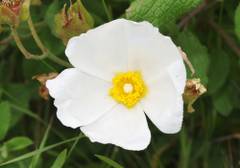
Pure white five-petaled flowers 2.5-3 inches (6-8 cm) across with crinkled tissue-paper-textured petals and a prominent central boss of golden-yellow stamens; individual flowers last a single day, opening in the morning and shedding petals by eveningFoliage Description
Dark green leathery ovate to lanceolate leaves 2-3 inches (5-8 cm) long carried opposite on the stems with grey-white tomentose undersides; the foliage carries a slightly sticky surface from resinous exudates and an aromatic balsamic scent in warm weatherGrowing Conditions
Sun Requirements
Requires 6-12 hours of direct sunlight daily
• Full Sun: 6+ hours of direct sunlight
• Partial Shade: 3-6 hours of direct sunlight
• Full Shade: Less than 3 hours of direct sunlight
Care & Maintenance
Care Guide
Plant in full sun in well-drained lean neutral to alkaline soil at pH 6.5-8.0. Space 4-5 feet (1.2-1.5 m) apart. Tolerates poor rocky and calcareous soils. The species does not need fertilization since excess nutrients produce lax growth. Water sparingly after establishment; drought-tolerant once rooted. Sharp winter drainage is required since waterlogged soil is more damaging than cold for this species. In the Pacific Northwest, this species is the most reliable Cistus for zones 7b-8, tolerating wet winters better than most relatives if drainage is adequate. Site on a south-facing slope or raised bed.Pruning
Prune lightly after flowering in late June — trim new growth by one-third to maintain a compact shape. Do not cut into old leafless wood since regrowth is unreliable. Replace plants when they become leggy and open (typically after 10-15 years). Tip-prune young plants in the first 2 years to encourage dense branching.Pruning Schedule
Prune: June–July
summer
Container Growing
Suitable for container growing
Minimum container size: 7 gallons