Cistus, Genus, creticus, Species,
- Genus & species
Cretan rock-rose
Overview
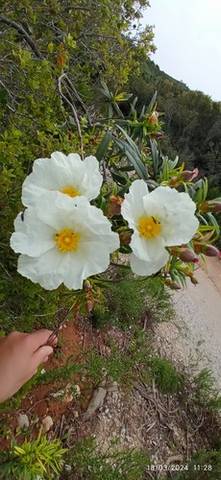
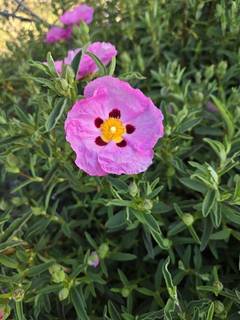
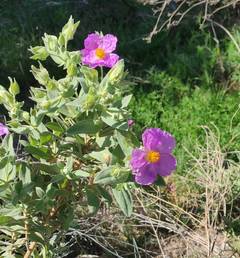
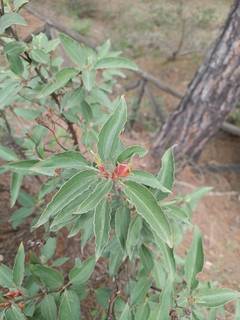
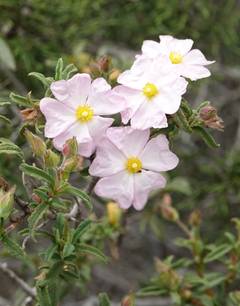
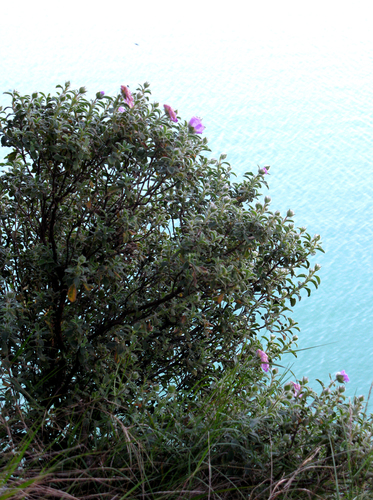
Cistus creticus is an evergreen shrub reaching 20–40 inches (50–100 cm) tall and 24–40 inches (60–100 cm) wide, forming a rounded, densely branched mound. The oval to lance-shaped leaves measure 0.8–2 inches (2–5 cm) long, grey-green, wrinkled on the upper surface, and coated with a sticky aromatic resin called labdanum. Flowers open 1.6–2.4 inches (4–6 cm) across with five pink to magenta petals that carry a crinkled, crepe-paper texture and a cluster of yellow stamens at the centre. Each bloom lasts a single day, with new flowers opening in succession from late spring into early summer. The shrub grows on rocky Mediterranean hillsides and tolerates drought, heat, and poor soils once established, though it is short-lived, often declining after 5–8 years, and is damaged by wet winter soils and hard pruning into old wood. Hardiness extends to about 14°F (−10°C), placing it in USDA zones 8–10. The resinous foliage releases scent in warm weather and has a long history of use in perfumery. Growth is fast in the first years, then slows as the plant matures. In cold or poorly drained sites the shrub is prone to root rot and stem dieback.
Native Range
Cistus creticus is native to the Mediterranean Basin, from the Iberian Peninsula and North Africa eastward through Greece, Crete, and Turkey to the Levant. It grows in garrigue, rocky scrub, and open woodland on both limestone and acidic substrates from sea level to about 4,900 feet (1,500 m).Suggested Uses
Cistus creticus is used in Mediterranean and gravel gardens, on dry sunny banks, in coastal plantings, and in mixed shrub borders on poor soils. It combines with lavender, rosemary, and other drought-adapted plants. In containers it suits hot patios where drainage is high.How to Identify
Appearance
Size & Dimensions
Height1'8" - 3'4"
Width/Spread2' - 3'4"
Colors
Bloom Information
Flowering runs from late spring through early summer, roughly May to June in the Northern Hemisphere. Individual flowers open at dawn and drop their petals by afternoon, replaced by new buds over a period of about 4–6 weeks. Peak bloom coincides with rising temperatures and lengthening days. Spent flowers give way to small dry seed capsules.
Detailed Descriptions
Flower Description
Pink to magenta with yellow centreFoliage Description
Grey-greenGrowing Conditions
Sun Requirements
Requires 6-12 hours of direct sunlight daily
• Full Sun: 6+ hours of direct sunlight
• Partial Shade: 3-6 hours of direct sunlight
• Full Shade: Less than 3 hours of direct sunlight
Care & Maintenance
Care Guide
Grow Cistus creticus in full sun and sharply drained soil, including sandy, rocky, or chalky ground of low fertility. Watering is needed only during establishment; mature plants withstand extended dry spells and decline in soils that stay wet, particularly over winter. The species tolerates coastal salt spray and wind. Feeding is rarely required, and rich soils produce soft growth with fewer flowers. Hardiness reaches about 14°F (−10°C); in colder zones the shrub is grown in containers moved under cover or treated as a short-lived planting. Root rot and stem dieback are the main problems, both linked to excess moisture.Pruning
Light trimming after flowering keeps the shrub compact and removes spent growth. Cistus species do not regenerate from old bare wood, so cuts are kept within the current season's green shoots. Hard renovation pruning usually kills the plant rather than rejuvenating it.Pruning Schedule
Prune: June–July
summer
Container Growing
Suitable for container growing
Minimum container size: 5 gallons