Overview
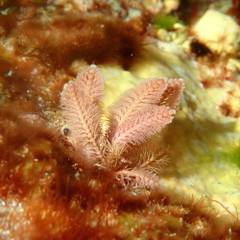
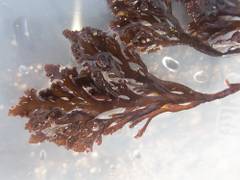
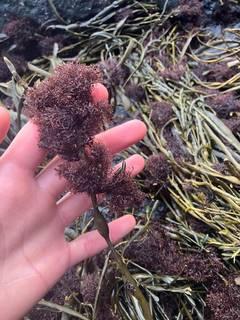
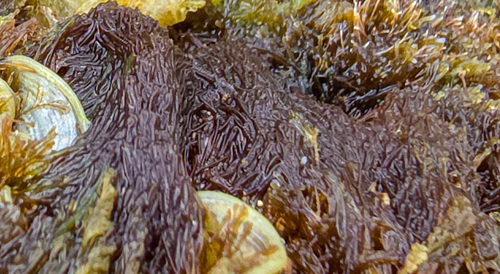
Ceramium is a genus of small filamentous red algae in the family Ceramiaceae, common on rocky shores, in tide pools, and on other seaweeds in seas worldwide. The thalli are slender, much-branched threads usually 1-4 inches (2.5-10 cm) long, pink to brownish-red, attaching to rock, shells, or larger algae by tiny rootlike holdfasts. Under a lens, the filaments show a banded pattern: bands of small cells wrap around the joints between larger clear cells, giving the common name banded weeds. The branch tips are often curved inward like tiny pincers or forceps. Ceramium grows quickly and is among the first algae to settle on new surfaces, including ropes, shells, and the fronds of other seaweeds, where some species live as harmless epiphytes. The genus tolerates a wide range of light, salinity, and shore levels, and several species are widespread fouling organisms in harbours and on aquaculture gear. Reproduction follows the three-phase life cycle of red algae, with spores and gametes formed along the filaments. The banded pattern and forceps-like tips identify the genus, though species need microscopic study.
Native Range
Ceramium occurs in seas worldwide, from cold to tropical waters, on rocky shores, in tide pools, and growing on other seaweeds and on hard surfaces from the intertidal into shallow subtidal water. Several species are widespread and some have spread as fouling organisms.Suggested Uses
Ceramium is studied as an early coloniser and fouling alga on shores, ropes, and aquaculture gear, and as an epiphyte on other seaweeds. It forms part of the red-algal turf that feeds grazing animals. The banded filaments are a common subject in teaching algal structure.How to Identify
Appearance
Bloom Information
Ceramium does not flower. It reproduces through the three-phase life cycle of red algae, with spores and gametes formed in and along the filaments. Growth and reproduction are fastest in the warmer months in temperate seas and continue year-round in mild waters.
Growing Conditions
Water & Climate
Water Needs