Cecropia, Genus, spp., Multiple species,
- Genus
- Multiple species
cecropias
Neotropics (southern Mexico to tropical South America)
Overview
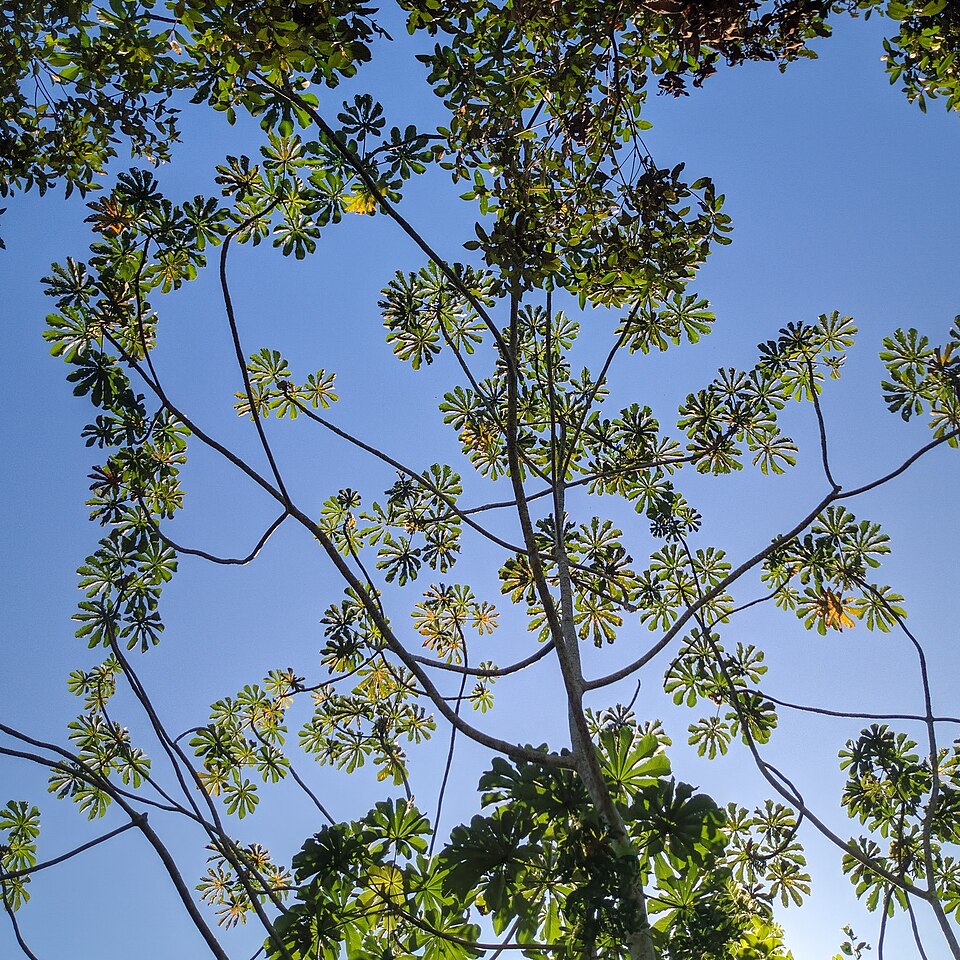
Cecropia is a genus of about 60 fast-growing pioneer trees in the family Urticaceae, native to the American tropics from southern Mexico through Central America and into tropical South America. The trees reach 15–70 ft (4.5–21 m) tall, with a slender, often candelabra-branched trunk marked by ringed leaf scars and large, hollow internodes. The large leaves are a familiar sight in tropical forests: nearly circular and deeply divided into 7–11 radiating lobes, up to 24 in (60 cm) across, dark green above and white-felted beneath, held on long stalks at the branch tips. Most species are dioecious, with male and female flowers on separate trees, packed into finger-like spikes enclosed at first by a papery sheath. Many Cecropia are myrmecophytes: the hollow stems house colonies of Azteca ants that feed on tissue produced at the leaf bases and defend the tree against herbivores and encroaching vines. The trees colonise gaps, roadsides, and cleared land, growing quickly in full sun, and bear fruit eaten by birds, bats, monkeys, and sloths. Cecropia is strictly tropical, frost-tender, and limited to USDA zones 10–11, and the soft, fast-grown wood is weak and short-lived.
Native Range
Cecropia ranges through the Neotropics, from southern Mexico and the Caribbean slope of Central America across the Amazon Basin to subtropical South America. The trees are pioneers of disturbed ground, lining river banks, landslides, forest gaps, and roadsides, and they are among the first woody plants to colonise cleared rainforest.Suggested Uses
Cecropia is grown as a fast-growing shade and feature tree in tropical and subtropical parks and large gardens, valued for its bold, deeply lobed foliage and pale trunks. In conservatories and frost-free landscapes it is used for a rainforest effect. In its native range the trees are important early colonisers that shelter regenerating forest and feed wildlife, including sloths and toucans.How to Identify
Appearance
Size & Dimensions
Height15' - 70'
Width/Spread10' - 30'
Bloom Information
Flowering can occur through much of the year in the wet tropics, often peaking in the rainy season. Male and female trees carry separate finger-like spikes that emerge from a papery sheath. The female spikes ripen into slender, fleshy fruit clusters that draw a wide range of birds and mammals.
Detailed Descriptions
Flower Description
green to yellowFoliage Description
dark green above, white beneathGrowing Conditions
Sun Requirements
Requires 6-12 hours of direct sunlight daily
• Full Sun: 6+ hours of direct sunlight
• Partial Shade: 3-6 hours of direct sunlight
• Full Shade: Less than 3 hours of direct sunlight
Care & Maintenance
Care Guide
Cecropia grows quickly in full sun on moist, fertile, well-drained tropical soils, behaving as a pioneer that races to fill open ground. The trees need consistent warmth and moisture and have no frost tolerance, surviving outdoors only in USDA zones 10–11 or frost-free tropical climates. In cultivation the ant associations are usually absent, and plants are grown for their bold foliage in large gardens, parks, and conservatories. Growth is fast but the wood is brittle and the trees short-lived, often declining within 20–30 years. Propagation is by the abundant seed, which germinates readily in warm, bright conditions. Container specimens are kept warm, bright, and evenly moist and rarely reach full size.Pruning
Pruning is limited to removing damaged, crowded, or low branches, ideally in the warm growing season. The soft, hollow stems are cut cleanly to avoid crushing, and large wounds heal slowly. Crown-raising on young trees opens up the candelabra form.Container Growing
Suitable for container growing
Minimum container size: 15 gallons