Image 1 of 8
1 / 8
Plant Reference
Pilea, Genus, peperomioides, Species,
- Genus & species
Pilea peperomioides
Southwestern China (Yunnan, Sichuan); shaded rocky slopes 1,500-3,000 m elevation
Overview
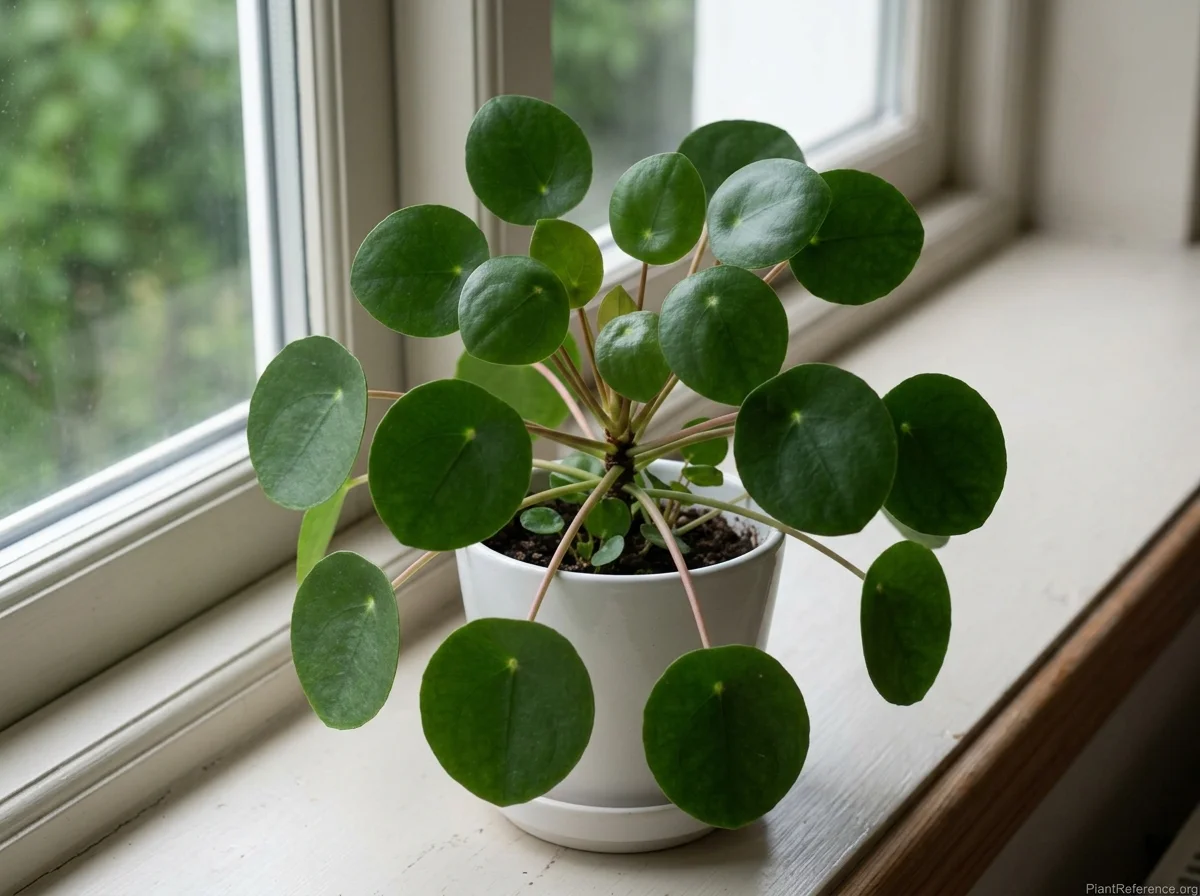
Pilea peperomioides is an evergreen herbaceous perennial from southwest China, growing 8–14 inches (20–35 cm) tall and 6–12 inches (15–30 cm) wide as a single rosette of long-petioled round leaves. Leaves are 1.5–4 inches (4–10 cm) across, peltate (with the petiole attached at the center of the leaf blade rather than the edge), nearly circular, dark glossy green on top with a pale-yellow spot at the petiole attachment, and slightly paler beneath. Petioles are 4–10 inches (10–25 cm) long, slender, dark red-brown, and hold leaves above the central stem. The main stem develops a thick rhizomatous base with age and produces side shoots ('pups') from the base and along the stem; these can be separated and rooted, and have driven the plant's spread through informal sharing among home growers. Outdoor specimens in tropical zones 10–11 produce small pinkish-white flowers on slender stalks 4–8 inches (10–20 cm) tall in spring; indoor flowering is uncommon. The plant is non-toxic to dogs, cats, and humans. Cold-tender: leaf damage occurs below 50°F (10°C) and plant death below 28°F (−2°C). Plants lean toward the light source and develop an asymmetric rosette; quarter-turning every 1–2 weeks produces a more even shape. Common indoor pests include spider mite, mealybug, and aphid.
Native Range
Native to the southern Yunnan and Sichuan provinces of southwestern China, where it grows on shaded rocky slopes at 1,500–3,000 m (4,900–9,800 ft) elevation. The species was rare in Western horticulture until the 1980s and spread primarily through cuttings exchanged among home growers.Suggested Uses
Grown as a small indoor specimen on bright windowsills, desks, and tabletops in temperate climates. Container culture in 4–8 inch (10–20 cm) pots with well-drained potting mix supports the indoor mature size. The propagation rate of basal pups (typically 4–10 pups per established plant per year) makes the plant a source of cuttings for sharing.How to Identify
Appearance
Size & Dimensions
Height8" - 1'2"
Width/Spread6" - 1'
Bloom Information
Outdoor specimens in tropical zones 10–11 produce small pinkish-white flowers on slender stalks 4–8 inches (10–20 cm) tall in spring; bloom duration is 2–4 weeks. Indoor flowering is uncommon and depends on cool overnight temperatures around 50°F (10°C) for several weeks during winter.
Detailed Descriptions
Flower Description
Pinkish-white on slender stalks (rare indoors)Foliage Description
Dark glossy green, peltate, nearly circular, 1.5-4 inches (4-10 cm); pale-yellow spot at petiole junctionGrowing Conditions
Sun Requirements
Requires 4-6 hours of direct sunlight daily
• Full Sun: 6+ hours of direct sunlight
• Partial Shade: 3-6 hours of direct sunlight
• Full Shade: Less than 3 hours of direct sunlight
Care & Maintenance
Care Guide
Grows in bright indirect light at 60–75°F (16–24°C). Direct midday summer sun scorches leaves; deep shade slows growth and reduces leaf size. Watering occurs when the top 1 inch (2.5 cm) of potting mix has dried — typically every 5–10 days in active growth and every 10–14 days in winter. Air humidity 30–50% is sufficient. Plants lean toward the light source; quarter-turning every 1–2 weeks produces a more even rosette. Re-potting every 1–2 years into a container 1–2 inches (2.5–5 cm) larger than the root ball is typical.Pruning
Pruning consists of removing damaged or yellowing leaves at the petiole base. Basal pups are detached at the rhizome with a clean cut and rooted in moist potting mix or water within 2–4 weeks. The main stem can be cut back to 2 inches (5 cm) above the soil to force new branching from the base; this is performed in spring at the start of active growth.Pruning Schedule
Prune: March–April
spring
Container Growing
Suitable for container growing
Minimum container size: 1 gallons