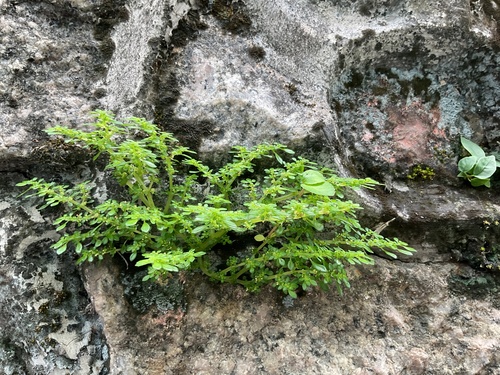
Pilea, Genus, spp., Multiple species,
- Genus
- Multiple species
clearweeds
Tropical and subtropical regions worldwide, most diverse in tropical Asia and the Americas
Overview
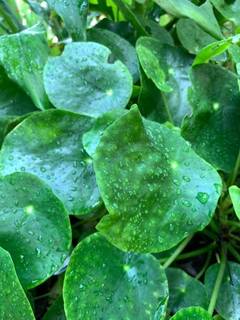
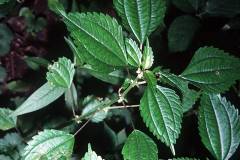
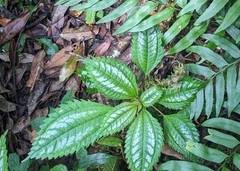
Pilea is a genus of roughly 600 to 700 species of herbaceous plants in the family Urticaceae, the nettle family, spread across tropical and subtropical regions worldwide, with a few species reaching temperate zones. Plants range from creeping mat-formers a few inches high to upright stems near 18 in (45 cm) tall, often with succulent, watery stems and brittle joints. Leaves vary widely between species: the rounded, coin-like leaves of P. peperomioides, the quilted silver-marked leaves of P. cadierei, and the tiny paired leaves of P. microphylla. The flowers are tiny, greenish to pinkish, and gathered in small clusters; in P. microphylla the ripe male flowers snap open and fling pollen, giving the artillery-plant name. Unlike many in the nettle family, Pilea species lack stinging hairs. Many are grown as foliage houseplants for their leaf shape and markings. Limitations include frost sensitivity, brittle stems that break under handling, and legginess in low light. The temperate clearweeds, such as P. pumila, are annual weeds of moist, shaded ground.
Native Range
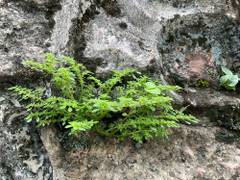
Pilea is found through the tropics and subtropics of Asia, Africa, the Americas, and the Pacific, and is most diverse in tropical Asia and the Neotropics. Temperate species such as P. pumila occur in eastern North America and East Asia. Plants grow on shaded forest floors, rocks, and stream banks, and several have naturalized as weeds far beyond their native range.Suggested Uses
Pilea species are grown as foliage houseplants, in terrariums, and in shaded containers, with trailing forms set in hanging baskets. In frost-free gardens they are planted as a low groundcover in shade. Compact species suit dish gardens and bottle gardens.How to Identify
Appearance
Size & Dimensions
Height3" - 1'6"
Width/Spread6" - 1'6"
Bloom Information
Pilea flowers are tiny, greenish to pinkish, and clustered in the leaf axils, opening mainly in summer. They have little visible effect on the plant. In P. microphylla, the male flowers release pollen in small visible puffs as they open.
Detailed Descriptions
Flower Description
greenish to pinkishFoliage Description
green, some with silver markingsGrowing Conditions
Sun Requirements
Needs bright indirect light. Keep it out of direct sun, which can scorch the leaves.
• Bright indirect light: a bright spot near a window, with no direct sun on the leaves
Care & Maintenance
Care Guide
Pilea grows in bright, indirect light to partial shade in moist, free-draining soil with a pH from about 5.5 to 7.0. Plants are watered when the top inch of soil dries and decline in both soggy soil and prolonged drought, as the succulent stems hold little reserve. The genus is frost tender, kept above 50 to 55 F (10 to 13 C) and grown as a houseplant outside the tropics. Humidity above 40 percent keeps the foliage from browning at the edges. Light feeding through spring and summer sustains steady leaf growth. Plants grown in dim light stretch and grow leggy, with widely spaced leaves.Pruning
Pilea is pinched at the stem tips to keep growth bushy and to limit legginess. Spent or yellowed leaves are removed at the base, and offsets that crowd the pot are divided away. Trailing species are trimmed to length during the growing season.Container Growing
Suitable for container growing