Caulerpa, Genus, spp., Multiple species,
- Genus
- Multiple species
sea grapes
Warm tropical and subtropical seas (some temperate)
WaterHigh
Overview
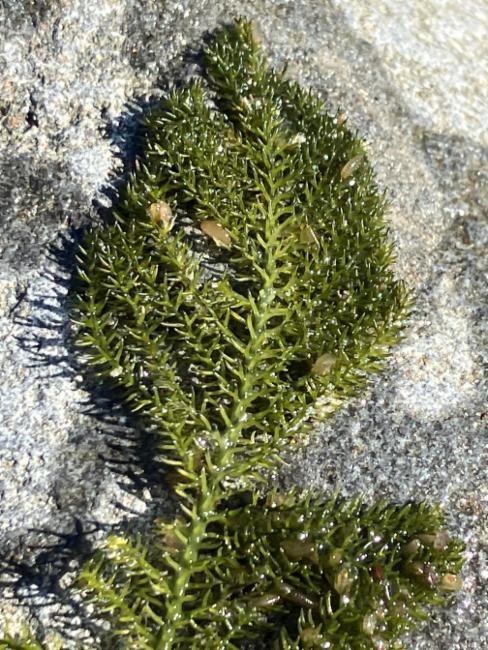
Caulerpa is a genus of green seaweeds in the family Caulerpaceae, found mainly in warm tropical and subtropical seas, with some species in temperate waters. Like Codium, it is coenocytic: the whole plant is effectively a single giant cell with many nuclei and no internal walls, yet it grows into complex shapes. A creeping horizontal stem, the stolon, runs over sand, mud, or rock, anchored by root-like rhizoids, and sends up green upright fronds that vary by species from feathery and fern-like to rows of small grape-like or disc-shaped beads, 1-12 inches (2.5-30 cm) tall. Caulerpa spreads quickly over the seabed and can regrow a whole plant from a small fragment, which has made some species, especially strains of C. taxifolia, notorious invaders that smother native seagrass and reef communities far from their home range. Several species are eaten in Southeast Asia and the Pacific, where the bead-like C. lentillifera is sold as sea grapes. The genus contains the compound caulerpin and related substances, and some are harmful if eaten in quantity. The single-celled construction, creeping stolon, and varied upright fronds mark out the genus.
Native Range
Caulerpa grows mainly in warm tropical and subtropical seas worldwide, with some species in temperate waters, on sand, mud, rubble, and rock in shallow lagoons, reef flats, and seagrass beds. Some strains have spread as invasive seaweeds far beyond their native range.Suggested Uses
Bead-like Caulerpa lentillifera, known as sea grapes, is eaten fresh in Southeast Asia and the Pacific and is farmed for food. Other species are grown in marine refugia to absorb nutrients and feed grazers. The genus is studied as a clear example of single-celled construction and as a source of invasive seaweeds.How to Identify
Appearance
Colors
Foliage Colors
Bloom Information
Caulerpa does not flower. It reproduces by releasing gametes, often in a synchronised mass spawning, and spreads very effectively by fragmentation, with a small broken piece able to grow a whole new plant. Growth is fastest in warm, well-lit water.
Growing Conditions
Water & Climate
Water Needs