Castilleja, Genus, linariifolia, Species,
- Genus & species
Wyoming paintbrush
Overview
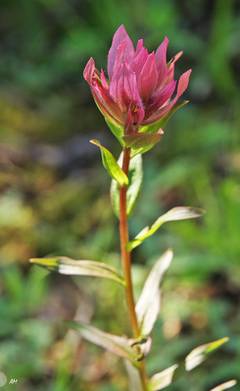
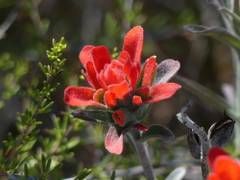
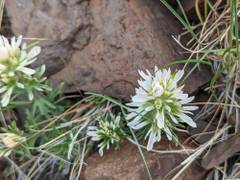
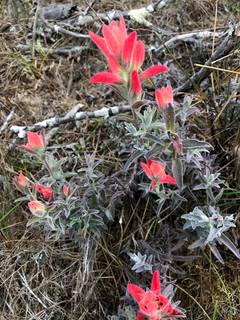
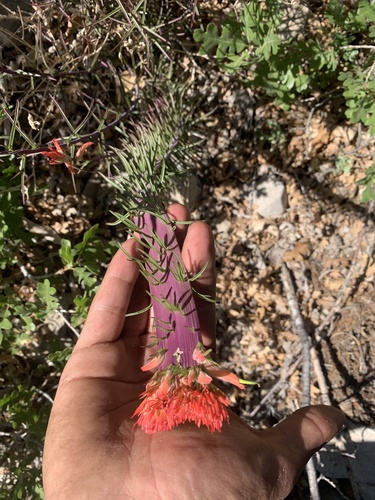
Castilleja linariifolia is an upright, hemiparasitic perennial in the broomrape family, growing 1-3 feet (30-90 cm) tall with slender, often branching stems. As a root hemiparasite it taps the roots of nearby grasses and shrubs, especially sagebrush, for part of its water and nutrients while still producing its own green leaves. The narrow, linear leaves are 1-3 inches (2.5-7.5 cm) long and may have a few thread-like lobes near the tip. The color comes not from petals but from red to red-orange bracts at the top of each stem; the actual flowers are slim greenish-yellow tubes that protrude from among the bracts. It is the state flower of Wyoming and grows in sagebrush steppe, dry slopes, pinyon-juniper woodland, and open conifer forest across the western United States. Because it depends on host plants, it is difficult to grow in isolation and seldom transplants successfully. Hummingbirds are the main pollinators, drawn to the red bracts and tubular flowers. The plant blooms across the warm months and sets small seed capsules.
Native Range
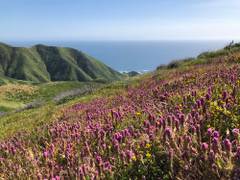
Castilleja linariifolia is native to the western United States, from Oregon and Idaho south to California, Arizona, and New Mexico, and east into Wyoming and Colorado. It grows in sagebrush steppe, dry slopes, pinyon-juniper woodland, and open coniferous forest.Suggested Uses
Castilleja linariifolia is used in native and wildlife gardens, sagebrush and high-desert restoration, and hummingbird plantings where suitable host plants are present. It suits naturalized western landscapes rather than formal beds because of its host requirement. It combines with sagebrush, native bunchgrasses, and penstemons in dry plantings.How to Identify
Appearance
Size & Dimensions
Height1' - 3'
Width/Spread6" - 1'
Bloom Information
Flowering extends through the warm season, mainly May to September depending on elevation. The red bracts hold their color for many weeks, far longer than the slim tubular flowers they surround. Hummingbirds visit repeatedly during bloom. Seed capsules form after flowering and release many small seeds.
Detailed Descriptions
Flower Description
red to red-orange bractsFoliage Description
greenGrowing Conditions
Sun Requirements
Requires 6-10 hours of direct sunlight daily
• Full Sun: 6+ hours of direct sunlight
• Partial Shade: 3-6 hours of direct sunlight
• Full Shade: Less than 3 hours of direct sunlight
Care & Maintenance
Care Guide
Castilleja linariifolia grows in full sun and dry, fast-draining, often rocky or sandy soil in cool, semi-arid climates. As a hemiparasite it grows poorly on its own and is usually established by sowing seed near host plants such as sagebrush, bunchgrasses, or penstemon. Seed needs a period of cold, moist stratification before it will germinate. Once growing it needs little water and declines in rich soil or with overwatering. It is hardy in USDA zones 4 through 8 and dies back to the root crown each winter. Established plants do not move well because of the host connection.Pruning
No routine pruning is needed. Dead stems can be cut back after the plant goes dormant in late autumn. The colored bracts are left in place through the season, since cutting them removes the main display and the developing seed.Pruning Schedule
Prune: November
fall