Castilleja, Genus, coccinea, Species,
- Genus & species
painted-cup paintbrush
SunFull Sun – Part Shade
WaterMedium
Overview
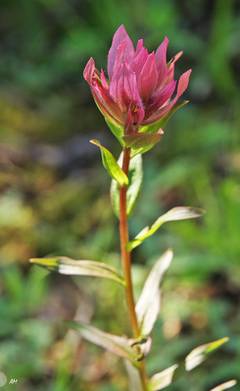
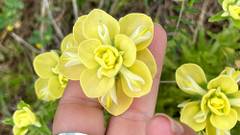
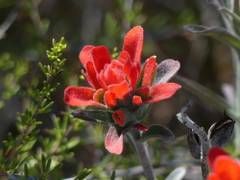
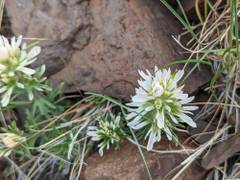
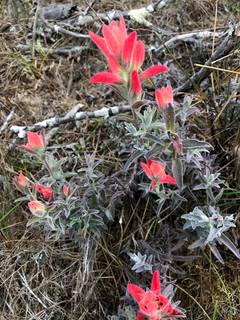
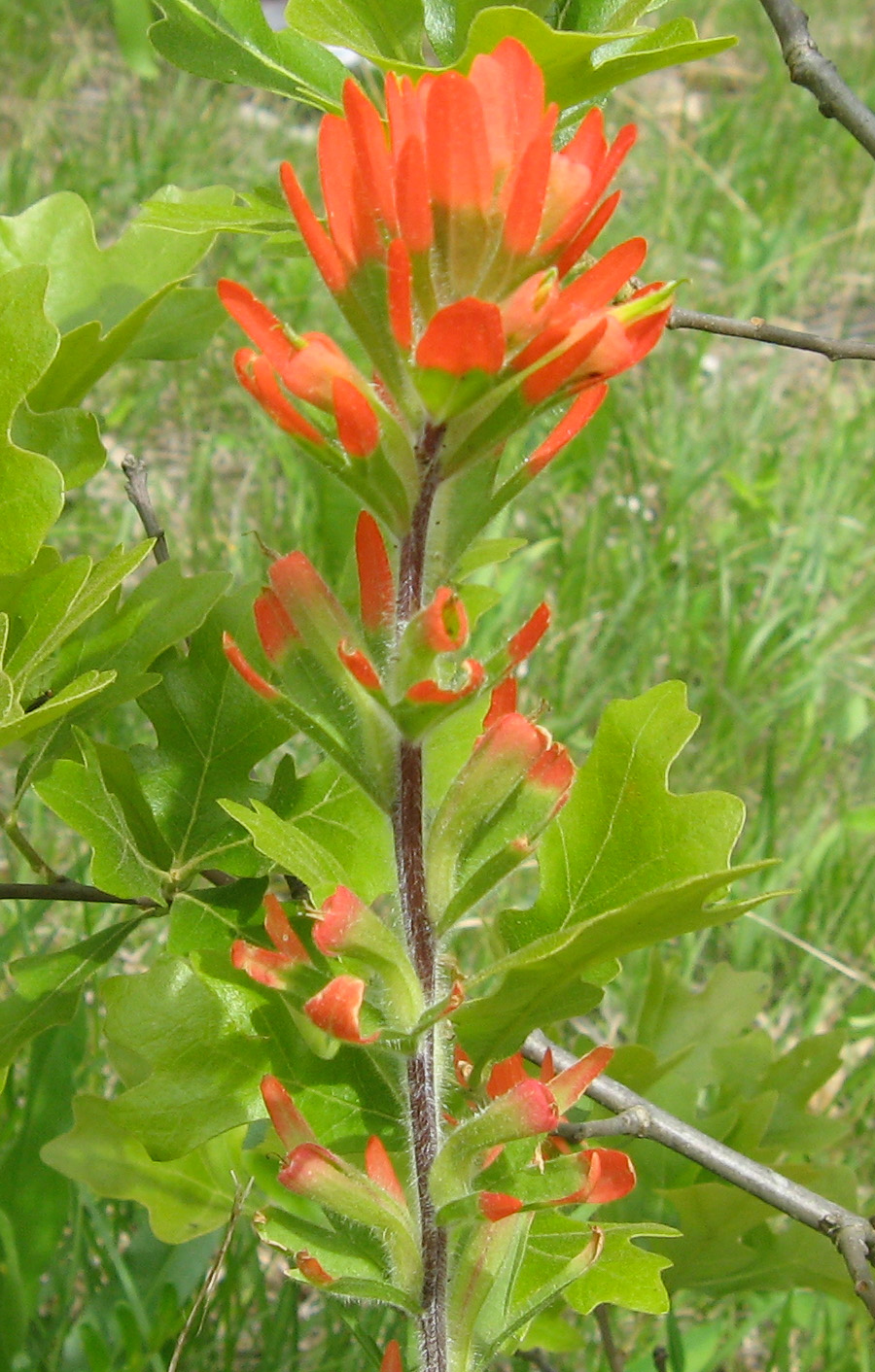
Castilleja coccinea is an annual to biennial herb reaching 8-24 inches (20-60 cm) tall, with one to several erect, mostly unbranched hairy stems. It is a hemiparasite, drawing part of its water and nutrients from the roots of neighboring grasses and forbs through root connections. A basal rosette of oblong leaves forms first; the stem leaves are deeply cut into narrow lobes. The color comes from the upper bracts, which are tipped bright scarlet to red-orange, sometimes yellow, 0.5-1 inch (1.3-2.5 cm) long, surrounding small, inconspicuous greenish tubular flowers from late spring into summer. The fruit is a small two-chambered capsule with many tiny seeds. C. coccinea grows in moist to medium prairies, meadows, fens, and open woods across eastern and central North America. Because it relies on host plants, it is difficult to grow without suitable neighbors. The plant dies after setting seed.
Native Range
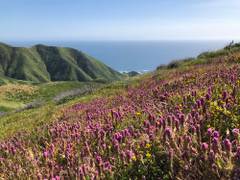
Castilleja coccinea is native to eastern and central North America, from Manitoba and Ontario south to the Gulf states and from the Great Plains to the Atlantic. It grows in moist to medium prairies, meadows, fens, sandy savannas, and open woodland.Suggested Uses
Castilleja coccinea is grown in prairie and meadow plantings and native gardens that already hold host grasses and forbs, sown among them rather than set out as plants. Its scarlet bracts add late-spring color to native plantings. The tubular flowers draw hummingbirds and long-tongued bees.How to Identify
Appearance
Size & Dimensions
Height8" - 2'
Width/Spread6" - 1'
Bloom Information
Detailed Descriptions
Flower Description
Scarlet to red-orange bractsFoliage Description
GreenGrowing Conditions
Sun Requirements
Requires 6-10 hours of direct sunlight daily
• Full Sun: 6+ hours of direct sunlight
• Partial Shade: 3-6 hours of direct sunlight
• Full Shade: Less than 3 hours of direct sunlight
Water & Climate
Water Needs
Care & Maintenance
Care Guide
Castilleja coccinea grows in full sun to part shade in moist to medium, well-drained sandy or loamy soil with a pH from 5.5 to 7.0. As a hemiparasite it needs nearby host grasses or forbs to draw water and nutrients from, and it rarely persists without them. Seed is sown fresh among established host plants, since transplanting bare plants seldom succeeds. As an annual to biennial, it completes its cycle and dies after flowering, returning from self-sown seed where hosts are present. Growth fails in dense shade, in dry soil, and where no host plants grow. It needs no fertilizer in a prairie setting.Pruning
No routine pruning is needed for this short-lived hemiparasite. Spent plants are left in place so seed can ripen and scatter among the host plants. Removing seed heads early reduces the chance of plants returning the next year.Pruning Schedule
Prune: July
summer
Toxicity: Not assessed
UnknownPlanting Guide
Planting Methods & Timing
Planting Method
direct sow
Direct Sow Timing
Fall, sown fresh among host plants
Plant Spacing
8 inches