Castilleja, Genus, chromosa, Species,
- Genus & species
desert paintbrush
Great Basin and western United States deserts
Overview
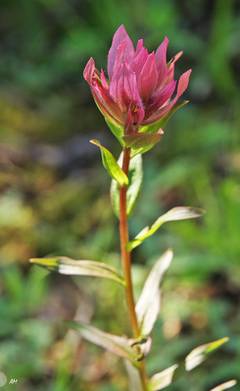
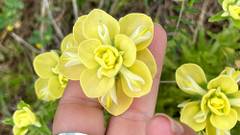
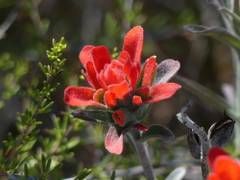
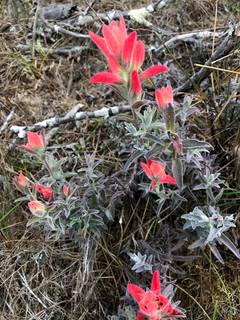
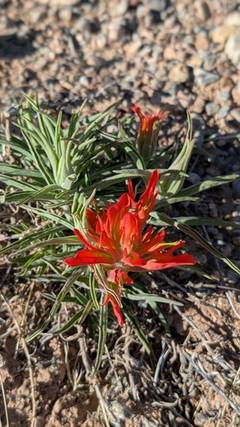
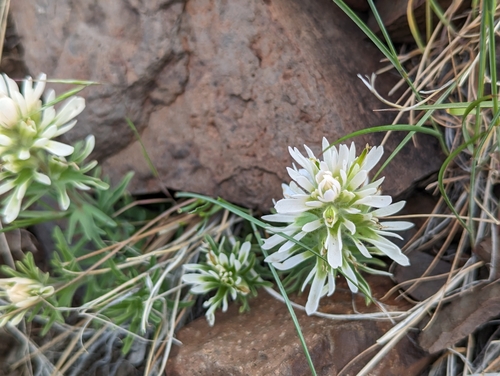
Castilleja chromosa is a hemiparasitic perennial wildflower in the broomrape family growing 4-16 inches (10-40 cm) tall in clumps of erect, often hairy stems. The narrow leaves are 0.8-2 inches (2-5 cm) long, gray-green, and usually divided into a few thread-like lobes near the tip. The plant draws part of its water and nutrients by attaching its roots to those of neighboring shrubs and grasses, especially sagebrush, through structures called haustoria. The conspicuous color comes not from the small greenish flowers but from the bracts and sepals around them, which flush bright red to orange-red in dense terminal clusters. Each tubular flower is mostly hidden, with a beak-like upper lip protruding past the colored bracts. C. chromosa blooms in spring across the sagebrush deserts and dry slopes of the western United States. Because it depends on host plants and specific soil conditions, it resists transplanting and is hard to grow from seed without a host nearby, which limits garden use. The clumps are long-lived in undisturbed desert but slow to establish.
Native Range
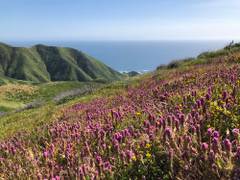
Castilleja chromosa is native to the western United States, including the Great Basin, Mojave, and Colorado Plateau regions of Nevada, Utah, Arizona, California, and neighboring states. It grows in sagebrush scrub, pinyon-juniper woodland, and dry, rocky slopes.Suggested Uses
Castilleja chromosa is used in native, restoration, and water-wise plantings in desert and sagebrush regions, always paired with a suitable host plant. Its red-orange spring bracts add color to dry slopes and rock gardens. The flowers draw hummingbirds and native bees.How to Identify
Appearance
Size & Dimensions
Height4" - 1'4"
Width/Spread6" - 1'
Bloom Information
The red-orange bracts color up in spring, roughly March to June, depending on elevation and rainfall. The small tubular flowers tucked among the bracts are pollinated mainly by hummingbirds drawn to the color. Bracts hold their color for several weeks before fading as seed capsules form.
Detailed Descriptions
Flower Description
red to orange-red bractsFoliage Description
gray-greenGrowing Conditions
Sun Requirements
Requires 6-12 hours of direct sunlight daily
• Full Sun: 6+ hours of direct sunlight
• Partial Shade: 3-6 hours of direct sunlight
• Full Shade: Less than 3 hours of direct sunlight