Castanea, Genus, sativa, Species,
- Genus & species
sweet chestnut
Southern Europe, North Africa, Asia Minor
Overview
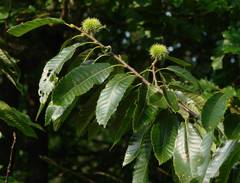
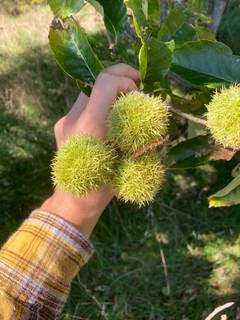
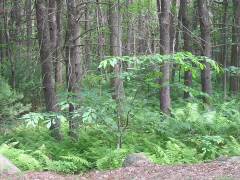
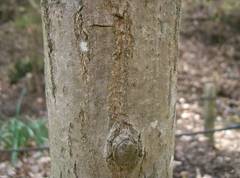
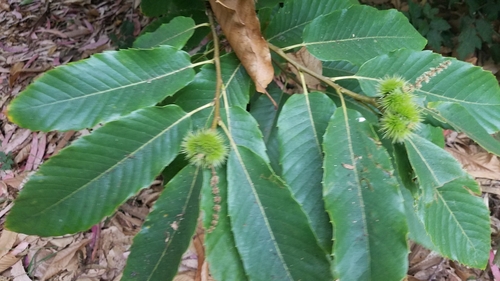
Castanea sativa, the sweet chestnut, is a large, long-lived deciduous tree native to southern Europe and Asia Minor and cultivated since Roman times for its edible nuts and timber. It grows 65-100 feet (20-30 m) tall with a broad, domed crown, and old trees develop massive trunks with grey-brown bark that splits into long spiralling ridges. The glossy, oblong-lance-shaped leaves are 4-11 inches (10-28 cm) long, sharply toothed with bristle tips, turning yellow-brown in autumn. In midsummer the tree carries long, upright, creamy-yellow catkins that are heavily scented; the upper flowers are male, with female flowers at the base of some catkins. Fertilized flowers develop into very spiny green burs that split in autumn to release one to three glossy brown nuts. The tree needs deep, acidic, free-draining soil and grows poorly on chalk or shallow lime soils. It is susceptible to chestnut blight and ink disease, both of which can be fatal, and its eventual size suits it only to large spaces.
Native Range
Native to southern Europe, North Africa, and Asia Minor, including the Mediterranean region and the Caucasus. Long cultivation has spread it through much of temperate Europe and beyond.Suggested Uses
Grown as a nut and timber tree, a parkland specimen, and a coppice crop for poles and fencing. It suits large gardens, estates, and woodland on acidic soils. Its size and disease susceptibility limit its use in small or chalky gardens.How to Identify
Appearance
Size & Dimensions
Height65' - 100'
Width/Spread40' - 60'
Bloom Information
Long creamy catkins open in June and July, later than most temperate trees. The male flowers shed pollen with a strong, heavy scent, and insects and wind carry it to the female flowers. Burs swell through summer and split open in October.
Detailed Descriptions
Foliage Description
glossy dark green, yellow-brown in autumnGrowing Conditions
Sun Requirements
Requires 6-10 hours of direct sunlight daily
• Full Sun: 6+ hours of direct sunlight
• Partial Shade: 3-6 hours of direct sunlight
• Full Shade: Less than 3 hours of direct sunlight