Castanea, Genus,
- Genus
chestnut
Multiple species across temperate Northern Hemisphere: {C. dentata} eastern North America; {C. mollissima} China and Korea; {C. sativa} southern Europe and western Asia; {C. crenata} Japan
Overview
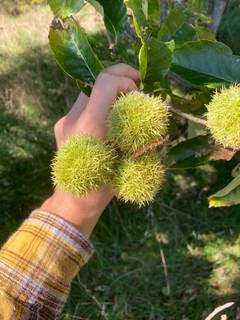
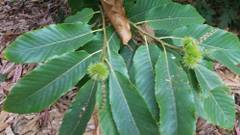
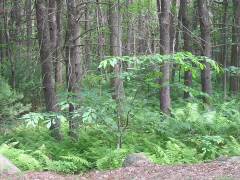
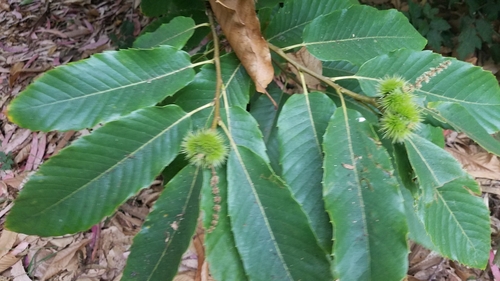
Castanea is a genus of approximately 8 species of large deciduous trees in the family Fagaceae, reaching 40–70 feet (12–21 m) tall and 40–60 feet (12–18 m) wide with broad spreading canopies. Leaves are oblong-lanceolate, 5–9 inches (13–23 cm) long, medium to dark green, with coarsely serrated margins and prominent parallel veins. Erect creamy yellow catkins 4–8 inches (10–20 cm) long appear in June and July and carry a strong musky scent that draws bees and other pollinators. Spiny burs 2–3 inches (5–7 cm) across split in September and October to release 1–3 brown nuts. Cultivated species in the genus include C. dentata (American chestnut, native to eastern North America), C. mollissima (Chinese chestnut, native to China and Korea, with strong resistance to chestnut blight), C. sativa (European or sweet chestnut, native to southern Europe and western Asia), and C. crenata (Japanese chestnut, native to Japan). Chestnut blight (Cryphonectria parasitica), an Asian fungal pathogen introduced to North America around 1904, reduced the American chestnut from a dominant eastern North American canopy tree to root sprouts within about 50 years and is the central historical and ongoing constraint on the genus in cultivation; C. mollissima and C. mollissima hybrids carry strong blight resistance and are the species planted today for nut production. Cross-pollination from a second compatible tree within 200 feet (60 m) is required for nut set; isolated single trees produce few or no nuts. Limitation: the genus requires acidic well-drained soil at pH 5.5–6.5 and does not tolerate alkaline or wet soils, where ink disease (Phytophthora cinnamomi and P. cambivora) develops in waterlogged conditions and is fatal; chestnut blight remains widespread in eastern North America wherever C. dentata and susceptible hybrids are grown.
Native Range
The genus carries multiple species with distinct native ranges: C. dentata is native to eastern North America from Maine south to Mississippi and west to Indiana; C. mollissima is native to China and Korea; C. sativa is native to southern Europe and western Asia; and C. crenata is native to Japan.Suggested Uses
Used as a shade tree, nut-producing orchard tree, and large specimen in landscapes with 40–60 feet (12–18 m) of lateral space and at least 200 feet (60 m) clearance to a second compatible tree for cross-pollination. Blight-resistant species such as C. mollissima and its hybrids supply nut production in regions where chestnut blight is established. Acidic well-drained soil is required. Alkaline soils, lawns, sites with poor drainage, and isolated single-tree placements that limit cross-pollination are unsuitable.How to Identify
Appearance
Size & Dimensions
Height40' - 70'
Width/Spread40' - 60'
Bloom Information
Erect creamy yellow catkins 4–8 inches (10–20 cm) long open in June and July with a strong musky odor, lasting about 4 weeks. The flowers are bee- and wind-pollinated. Spiny burs 2–3 inches (5–7 cm) across develop through summer and split in September and October to release 1–3 brown nuts.
Detailed Descriptions
Flower Description
creamy yellow; in erect catkins 4-8 inches (10-20 cm) long with a pungent musky odorFoliage Description
medium to dark green; oblong-lanceolate, 5-9 inches (13-23 cm) long, with coarsely serrated margins and prominent veins; turns yellow to yellow-brown in fallGrowing Conditions
Sun Requirements
Requires 6-10 hours of direct sunlight daily
• Full Sun: 6+ hours of direct sunlight
• Partial Shade: 3-6 hours of direct sunlight
• Full Shade: Less than 3 hours of direct sunlight
Care & Maintenance
Care Guide
Site in full sun with 6–10 hours of direct sun per day in well-drained acidic soil with a pH of 5.5–6.5. Alkaline soils and wet or poorly drained soils are unsuitable; ink disease (Phytophthora) develops in waterlogged conditions and kills affected trees. Cross-pollination from a second compatible tree within 200 feet (60 m) is required for nut set, so single-tree plantings produce few or no nuts. Chestnut blight (Cryphonectria parasitica) affects C. dentata and many hybrids in eastern North America; C. mollissima and C. mollissima hybrids carry strong blight resistance and are the standard species for nut orchards. Hardy in USDA zones 4–9. Routine fertilization is not required in suitable soils.Pruning
Pruning is carried out during winter dormancy (November through February). Dead, crossing, or damaged branches can be removed at that time. A strong central leader is developed in the first 5–10 years for timber form, or a multi-leader open canopy is allowed for nut production because open canopies promote more nut-bearing wood. Water sprouts and basal suckers can be removed at the base.Pruning Schedule
Prune: November–February
winter