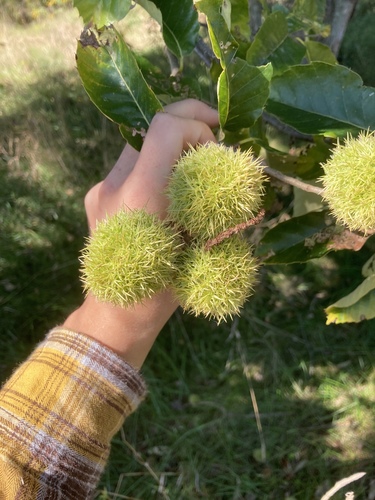
Castanea, Genus, mollissima, Species,
- Genus & species
Chinese chestnut
Overview
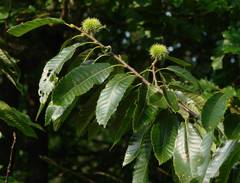
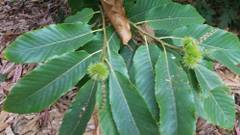
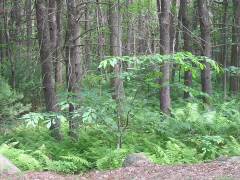
Castanea mollissima is a deciduous nut tree native to China and Korea, growing 480-720 inches (12-18 m) tall and 480-600 inches (12-15 m) wide as a mature tree, with a rounded spreading crown. Spiny burs 1.5-3 inches (4-7.5 cm) in diameter open along four sutures in late September to October, releasing 2-3 glossy mahogany-brown nuts 0.75-1.25 inches (2-3 cm) wide; nuts are sweet when roasted and lower in oil and higher in starch than other nut crops. Long pendulous creamy-white male catkins 4-8 inches (10-20 cm) develop in June, with female flowers at the base of bisexual catkins on the same tree; the catkins emit a strong musky scent during pollen shed. Self-incompatible — fruit set requires a second C. mollissima or compatible hybrid within 100 feet (30 m). Medium green oblong-lanceolate leaves 4-8 inches (10-20 cm) long with coarsely serrated margins and downy undersides; foliage turns yellow to bronze in autumn. Hardy to USDA zone 4 (-30°F / -34°C). Resistance to chestnut blight (Cryphonectria parasitica) is the genetic basis used in breeding programs to restore American chestnut populations after the 20th-century blight epidemic. Susceptible to chestnut gall wasp (Dryocosmus kuriphilus) in some regions. Growth rate moderate at 12-24 inches (30-60 cm) per year. Bears within 4-7 years of planting. Lifespan 100-200 years. Zones 4-8.
Native Range
C. mollissima is native to China and Korea, where it grows in mixed deciduous forests at 300-2,800 m elevation. Cultivated in China for at least 4,000 years for nut production.Suggested Uses
Grown in nut orchards, agroforestry plantings, and large landscapes in zones 4-8 with spacing of 480-600 inches (12-15 m) between trees. Acidic well-drained soils are required; alkaline soils cause persistent chlorosis. Two seedlings or compatible cultivars within 100 feet (30 m) are required for nut production. Used as a parent in American chestnut restoration breeding programs. Not suitable for containers due to mature size.How to Identify
Appearance
Size & Dimensions
Height40' - 60'
Width/Spread40' - 50'
Bloom Information
Long pendulous creamy-white male catkins 4-8 inches (10-20 cm) appear in June, 2-4 weeks after leaf-out. Female flowers are clustered at the base of bisexual catkins on the same tree. Strong musky scent during pollen shed attracts beetles and flies, which contribute alongside wind to pollination. Bloom duration 2-3 weeks.
Detailed Descriptions
Foliage Description
Medium green above, downy below, oblong-lanceolate, coarsely serratedGrowing Conditions
Sun Requirements
Requires 6-10 hours of direct sunlight daily
• Full Sun: 6+ hours of direct sunlight
• Partial Shade: 3-6 hours of direct sunlight
• Full Shade: Less than 3 hours of direct sunlight
Care & Maintenance
Care Guide
Full sun (6+ hours). Well-drained loam or sandy loam, pH 5.5-6.5; alkaline soils cause chlorosis and stunted growth. Water deeply once weekly during the first 2 growing seasons; established trees tolerate moderate drought. Resistance to chestnut blight (Cryphonectria parasitica) is high. Susceptible to chestnut gall wasp (Dryocosmus kuriphilus) in regions where the wasp is established. Hardy to USDA zone 4 (-30°F / -34°C). Two seedlings or compatible cultivars within 100 feet (30 m) are required for nut production. Lifespan 100-200 years.Pruning
Prune in late winter to early spring before bud break to remove dead, diseased, and crossing branches. Modified central leader is the typical form for chestnut, with scaffold branches at 30-45 degree angles. Heading cuts on bearing wood reduce nut production for 1-2 years.Pruning Schedule
Prune: February–March
winter