Castanea, Genus, dentata, Species,
- Genus & species
American chestnut
Overview
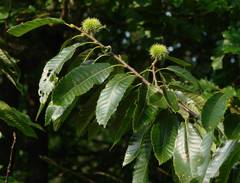
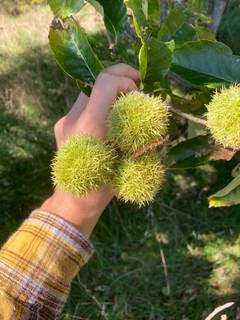
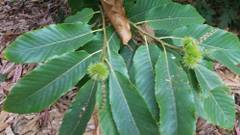
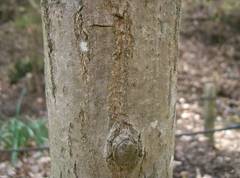
Castanea dentata, the American chestnut, is a deciduous tree in the beech family that was once a dominant canopy species across the eastern North American hardwood forest. Before 1900 mature trees reached 50-100 feet (15-30 m) tall with trunks up to 10 feet (3 m) across, and the species made up an estimated quarter of the hardwoods in parts of the Appalachians. The leaves are 5-8 inches (13-20 cm) long, narrow, and edged with forward-pointing bristle teeth, turning yellow to bronze in autumn. In early summer the tree carries long creamy-white catkins, followed by spiny burs that split to release two or three sweet, edible nuts. An introduced fungal blight, Cryphonectria parasitica, arrived around 1904 and killed nearly all mature trees within fifty years. The species now survives mainly as root collars that resprout, with stems usually girdled by blight before they reach nut-bearing size. Because of this, the plant rarely persists as a full-grown tree in the wild today. Breeding and biotechnology programs are working to restore blight-tolerant trees from surviving stock.
Native Range
Native to eastern North America, historically from Maine and southern Ontario south to Georgia and Alabama and west to the Ohio Valley. It grew on well-drained, acidic slopes and ridges in mixed hardwood forest, reaching its greatest abundance in the southern Appalachians.Suggested Uses
Historically used for timber, nuts, and shade, and now planted mainly in restoration trials, breeding orchards, and conservation plantings. Grown by enthusiasts and research programs testing blight tolerance.How to Identify
Appearance
Size & Dimensions
Height50' - 100'
Width/Spread40' - 70'
Bloom Information
Creamy-white catkins appear in June and July, after the leaves expand, and are strongly scented. Flowering lasts about two weeks. Burs ripen and drop their nuts in September and October.
Detailed Descriptions
Foliage Description
green, turning yellow to bronze in fallGrowing Conditions
Sun Requirements
Requires 6-12 hours of direct sunlight daily
• Full Sun: 6+ hours of direct sunlight
• Partial Shade: 3-6 hours of direct sunlight
• Full Shade: Less than 3 hours of direct sunlight