Carya, Genus, glabra, Species,
- Genus & species
pignut hickory
Overview
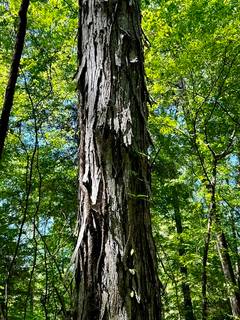
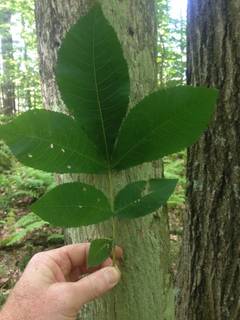
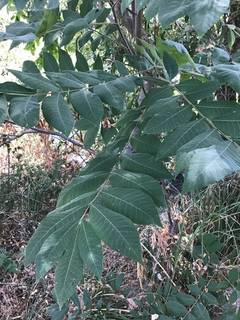
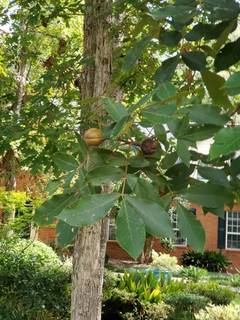
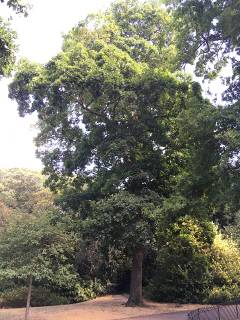
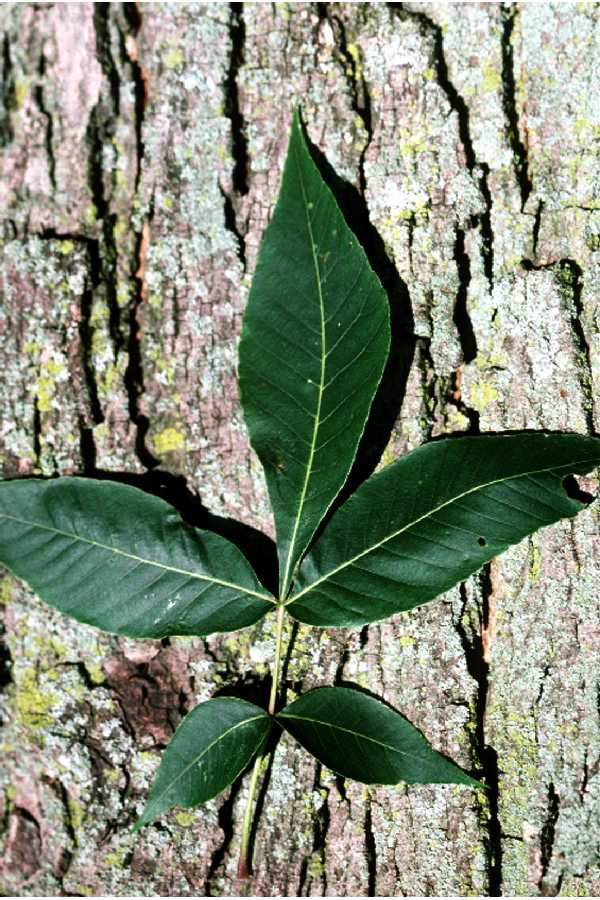
Carya glabra is a large deciduous hickory tree of eastern North America, reaching 50-80 feet (15-24 m) tall, occasionally over 100 feet (30 m), with a straight trunk and a narrow to rounded crown. The pinnately compound leaves are 8-12 inches (20-30 cm) long and usually carry five, sometimes seven, lance-shaped leaflets that turn clear yellow in autumn. The bark is tight and gray, developing shallow interlacing ridges with age rather than the shaggy plates of some hickories. It is monoecious: drooping male catkins and small female flowers appear with the new leaves in spring. The fruit is a rounded to pear-shaped nut about 1 inch (2.5 cm) long, enclosed in a thin husk that splits only partway; the kernel is bitter. C. glabra grows on dry to moderate upland slopes and ridges in mixed hardwood forests. It grows slowly, develops a deep taproot that makes transplanting difficult, and produces heavy nut crops only at intervals of several years. It is hardy in USDA zones 4 through 9.
Native Range
Native to eastern North America, from southern Ontario and Maine south to Florida and west to eastern Texas and the Mississippi Valley. It grows on dry upland slopes, ridges, and well-drained hillsides in oak-hickory forests.Suggested Uses
Used as a shade and timber tree in large landscapes, parks, and woodland restorations on upland sites. The nuts feed squirrels, deer, and other wildlife, and the wood is harvested for tool handles and fuel.How to Identify
Appearance
Size & Dimensions
Height50' - 80'
Width/Spread25' - 40'
Bloom Information
Greenish male catkins and small female flowers emerge with the new leaves in spring, generally April through May. Pollination is by wind, and the flowers are inconspicuous. Nuts ripen in September and October and drop through autumn.
Detailed Descriptions
Foliage Description
GreenGrowing Conditions
Sun Requirements
Requires 6-10 hours of direct sunlight daily
• Full Sun: 6+ hours of direct sunlight
• Partial Shade: 3-6 hours of direct sunlight
• Full Shade: Less than 3 hours of direct sunlight
Care & Maintenance
Care Guide
Grow C. glabra in full sun to part shade on deep, well-drained upland soil; it tolerates dry, rocky ground and a range of pH. Set out young nursery stock or sow nuts in place, since the deep taproot makes older trees hard to transplant. Water during establishment, after which the tree is drought tolerant and needs little care. Growth is slow, and trees take many years to bear heavy nut crops. Falling nuts and husks litter the ground beneath the canopy in autumn. The wood is strong, though brittle branches can shed in storms.Pruning
Prune in late winter while the tree is dormant to remove dead, damaged, or crossing limbs. Train young trees to a single central leader for strong structure. Heavy pruning is rarely needed once the framework is set.Pruning Schedule
Prune: February
winter