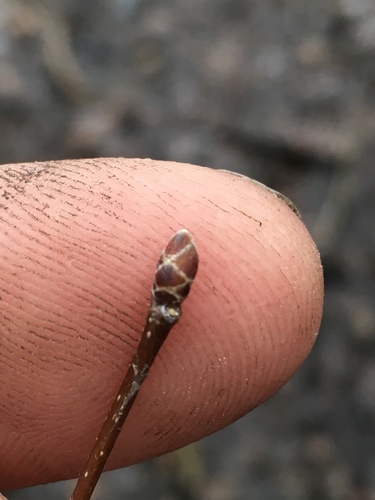
Carpinus, Genus, caroliniana, Species,
- Genus & species
American hornbeam
Eastern North America (Nova Scotia to Florida, west to Minnesota and eastern Texas)
Overview
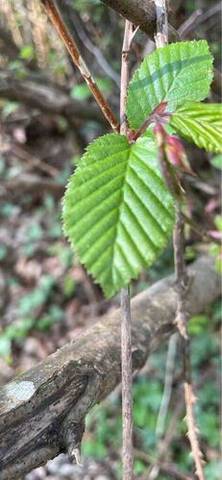
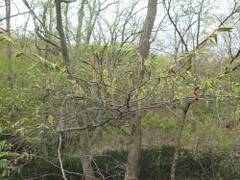
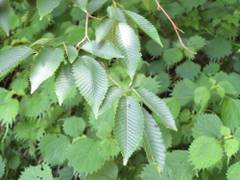
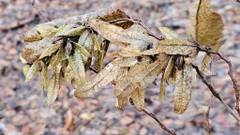
Carpinus caroliniana is a small to medium deciduous tree reaching 20–35 feet (6–10.5 m) tall with a spread of 20–30 feet (6–9 m). The form is typically multi-stemmed or low-branched with a broadly rounded to vase-shaped crown. The trunk and major limbs are smooth, blue-gray, and sinewy, with long fluted ridges resembling flexed muscles beneath the bark — the source of the common name 'musclewood.' The bark holds this smooth character into old age. Leaves are ovate to elliptic, 2–4 inches (5–10 cm) long, with doubly serrate margins and prominent parallel veins; they are smaller than the 2–5 inch (5–13 cm) leaves of C. betulus. Spring color is medium green, sometimes with a reddish tinge on emerging leaves, darkening to dark green in summer. Fall color ranges from yellow to orange to scarlet-red — more variable and often more saturated than the yellow fall color of C. betulus. Foliage is slightly marcescent in winter, though less persistently than C. betulus. Pendulous male catkins and small female catkins open in April. Fruit are small nutlets with three-lobed leafy bracts in pendant clusters. Growth rate is slow at 8–12 inches (20–30 cm) per year. The species tolerates heavy shade and wet soils, occurring naturally as an understory tree. The dense fibrous root system makes the tree difficult to transplant; container-grown stock establishes more readily than field-dug stock.
Native Range
Carpinus caroliniana is native to eastern North America, from Nova Scotia and Minnesota south to Florida and eastern Texas. It occurs as an understory tree in moist mixed hardwood forests, bottomland woodlands, and along streams and river floodplains from lowland to foothill elevations.Suggested Uses
Used as a small shade tree, understory tree, and naturalized woodland planting at 15–25 foot (4.5–7.5 m) spacing. Shade and wet-soil tolerance suits the species for rain gardens, stream bank stabilization, and low-lying sites. The multi-stemmed form and smooth muscular bark add year-round structural interest. The species functions as a specimen in residential gardens where a smaller tree than C. betulus is needed. Native plant value for wildlife: the fruits feed songbirds. Not used for formal hedging or containers.How to Identify
Appearance
Size & Dimensions
Height20' - 35'
Width/Spread20' - 30'
Bloom Information
Pendulous male catkins 1–2 inches (2.5–5 cm) long and small greenish female catkins open in April with the emerging leaves. Wind-pollinated. Pendant clusters of three-lobed leafy fruit bracts develop through summer and ripen in September–October. The fruits feed songbirds, turkeys, and small mammals.
Detailed Descriptions
Flower Description
Greenish (inconspicuous catkins)Foliage Description
Medium to dark green; yellow, orange, to scarlet-red fall colorGrowing Conditions
Sun Requirements
Requires 2-10 hours of direct sunlight daily
• Full Sun: 6+ hours of direct sunlight
• Partial Shade: 3-6 hours of direct sunlight
• Full Shade: Less than 3 hours of direct sunlight
Care & Maintenance
Care Guide
Plant in moist, well-drained to occasionally wet soil in partial shade to full sun. Tolerance of heavy shade and wet conditions exceeds that of most ornamental trees, reflecting the species' understory and bottomland origins. Soil pH is adaptable from acidic to slightly alkaline. Consistent moisture supports vigorous growth. The slow growth rate means the tree takes 10–15 years to develop mature character. Transplanting from containers rather than balled-and-burlapped stock improves establishment. No serious pest or disease problems. Heat-tolerant across the wide native range.Pruning
Prune in late winter to early spring. Train to a single trunk or allow the natural multi-stemmed form. Remove crossing or damaged branches. The species tolerates pruning but does not respond to hedging as readily as C. betulus. The rounded canopy needs minimal shaping.Pruning Schedule
Prune: February–March
winterearly spring