Cardamine, Genus, pensylvanica, Species,
- Genus & species
Pennsylvania bittercress
SunFull Sun – Part Shade
WaterHigh
Overview
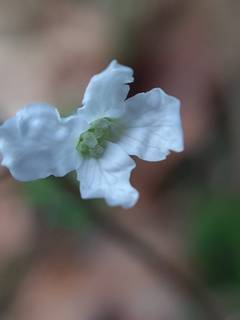
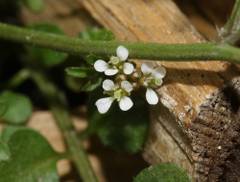
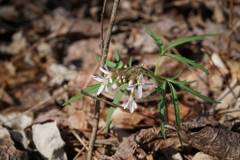
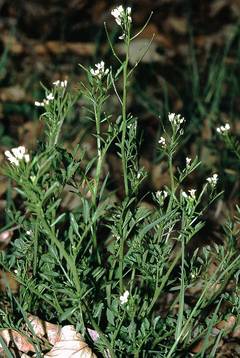
Cardamine pensylvanica is a small annual to biennial herb growing 4-20 inches (10-50 cm) tall, with branched, somewhat hairy stems rising from a basal rosette. The leaves are pinnately divided into rounded to oval lobes, the terminal lobe largest, 1-4 inches (2.5-10 cm) long overall, forming a low rosette before the stems extend. Tiny white four-petaled flowers about 0.1 inch (2-3 mm) across cluster at the stem tips from early spring into summer. Each flower forms a narrow, erect seedpod, a silique 0.6-1 inch (15-25 mm) long, that snaps open when ripe and flings seed several feet. The whole plant has a mild peppery, cress-like flavor. As a cool-season annual it germinates in fall or early spring, flowers, sets seed, and dies within a year, often completing two or more generations where ground stays moist. It is widespread on wet soils and a common weed of gardens, nurseries, and greenhouses.
Native Range
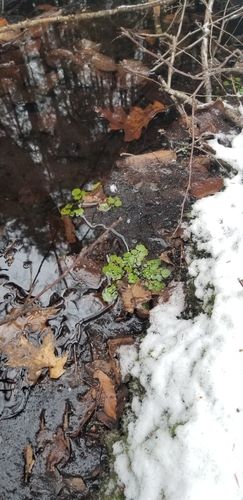
Native to much of North America, from Alaska and Canada south across the United States. Grows in wet woods, stream banks, seeps, ditches, springs, and other damp, disturbed ground, and spreads readily into moist garden soil and container plants.Suggested Uses
Grown rarely on purpose; young leaves and stems are eaten raw or cooked as a peppery cress. It appears mainly as a self-sown plant of wet ground and is more often managed as a weed than planted. Its explosive seed spread and weedy habit make it unsuited to ornamental beds, where volunteers quickly multiply.How to Identify
Appearance
Size & Dimensions
Height4" - 1'8"
Width/Spread3" - 8"
Bloom Information
Flowers from March through June, beginning very early as the overwintered rosette bolts, and may flower again in fall in mild, moist conditions. Each plant blooms over 2-4 weeks while continuing to set seed at the base. Warmth and moisture speed the cycle, allowing repeated generations.
Detailed Descriptions
Foliage Description
greenGrowing Conditions
Sun Requirements
Requires 4-8 hours of direct sunlight daily
• Full Sun: 6+ hours of direct sunlight
• Partial Shade: 3-6 hours of direct sunlight
• Full Shade: Less than 3 hours of direct sunlight
Water & Climate
Water Needs
Care & Maintenance
Care Guide
A plant of wet, disturbed ground, it grows in full sun to part shade on consistently moist soils and is grown from seed that needs no special treatment. It self-sows heavily and the siliques fling seed widely, so it spreads fast in irrigated beds, nursery pots, and greenhouses. Dry soil and dense competition limit it. Removing plants before the pods ripen prevents the seed from scattering. Few pests trouble it, though it can host clubroot and other brassica diseases. Plants die after seeding, leaving a large seed bank.Pruning
No pruning is needed. Pulling or hoeing plants before the siliques ripen is the main way to limit spread, since ripe pods scatter seed on contact. Spent plants pull up easily from moist soil.Toxicity
Non-toxicPlanting Guide
Planting Methods & Timing
Planting Method
direct sow