Cardamine, Genus, maxima, Species,
- Genus & species
large toothwort
Native to eastern North America from Quebec and Ontario south to Georgia and west to Minnesota; native habitats are the floor of rich moist deciduous forests, stream banks, and shaded ravines
Overview
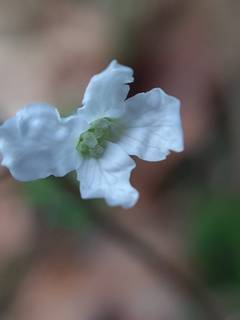
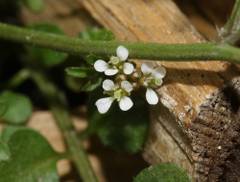
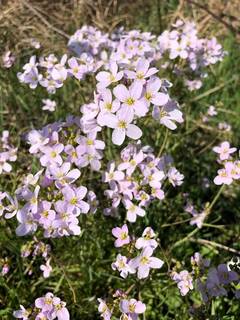
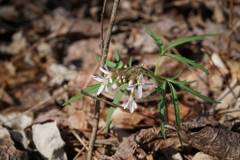
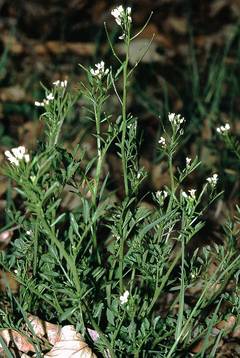
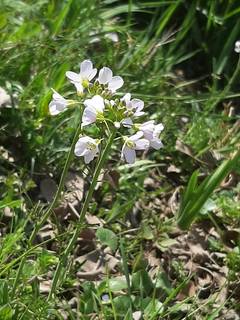
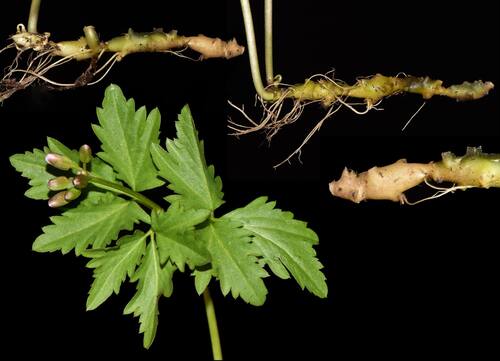
Cardamine maxima (synonym Dentaria maxima) is a native spring ephemeral wildflower in the mustard family (Brassicaceae) reaching 8–16 inches (20–40 cm) tall and spreading 12–18 inches (30–45 cm) wide by jointed fleshy underground rhizomes. Clusters of four-petaled pale pink to white flowers appear in March through May, blooming before the deciduous canopy leafs out fully. Each stem bears a whorl of 3 palmately compound leaves, each divided into 3 coarsely toothed leaflets. The species name 'maxima' refers to the larger leaf and flower size compared to the closely related C. diphylla (two-leaved toothwort), which carries 2 leaves per stem rather than 3. By midsummer, the foliage yellows and disappears entirely as the plant enters dormancy, leaving no above-ground trace until the following spring. The ephemeral habit is an adaptation to the deciduous forest floor: the plant completes the full annual cycle — emergence, flowering, seed set, and energy storage — in the 6–8 week window of full sunlight before the tree canopy closes overhead. The fleshy rhizomes are edible with a peppery horseradish-like flavor and were used historically by indigenous peoples and early settlers as a wild root vegetable. Spreading runs moderate by rhizome extension in moist humus-rich woodland soil. The plant is a larval host for the West Virginia white butterfly (Pieris virginiensis), a declining species of conservation concern across the Appalachian range. Deer browse the foliage during the spring window. Not known to be toxic to pets or humans.
Native Range
Cardamine maxima is native to eastern North America, from Quebec and Ontario south to Georgia and west to Minnesota. The species grows on the floor of rich moist deciduous forests, along stream banks, and in shaded ravines.Suggested Uses
Used in woodland wildflower gardens, native plant restorations, and naturalized plantings under deciduous trees where the spring ephemeral habit suits the site's seasonal light cycle. Combines with other spring ephemerals such as Mertensia virginica (Virginia bluebells), Trillium species, Erythronium (trout lily), and Hepatica for a layered spring display where the species flower together in the brief pre-canopy window. The summer dormancy leaves gaps that should be filled with later-emerging shade perennials — ferns, hostas, Tiarella (foamflower), and woodland sedges work well as companions covering the dormant ground from June through frost. The species is a teaching example in Appalachian forest ephemeral ecology curricula and in butterfly conservation programming for the Pieris virginiensis (West Virginia white butterfly) population, which depends on the species as a larval host plant. The species is unsuitable for full-sun gardens, dry sites, and gardens without an existing deciduous canopy — the spring-sun summer-shade light cycle is essential for the ephemeral habit to function.How to Identify
Appearance
Size & Dimensions
Height8" - 1'4"
Width/Spread1' - 1'6"
Bloom Information
Flowering occurs in March through May, before the deciduous canopy fully closes. Clusters of four-petaled pale pink to white flowers open over approximately 3 weeks. Seed capsules develop quickly after bloom — characteristic of spring ephemerals which compress the entire reproductive cycle into the brief window of pre-canopy sunlight. The entire plant goes dormant by June or July as the deciduous canopy closes and the forest floor returns to deep summer shade.
Detailed Descriptions
Flower Description
Pale pink to white; four-petaled cruciform; in clusters at the stem tipFoliage Description
Medium green; palmately compound with 3 coarsely toothed leaflets per leaf; whorl of 3 leaves per stemGrowing Conditions
Sun Requirements
Requires 2-6 hours of direct sunlight daily
• Full Sun: 6+ hours of direct sunlight
• Partial Shade: 3-6 hours of direct sunlight
• Full Shade: Less than 3 hours of direct sunlight