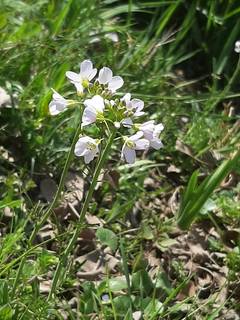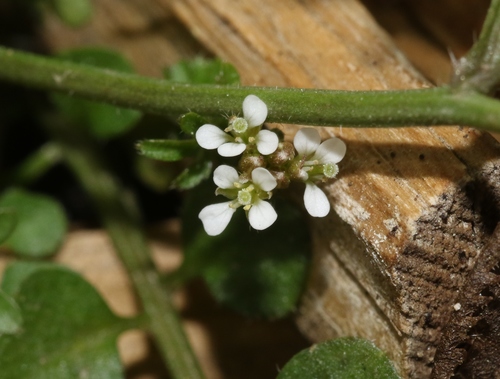
Cardamine, Genus, hirsuta, Species,
- Genus & species
shotweed
Europe, western and central Asia, northern Africa
SunFull Sun – Part Shade – Full Shade
WaterMedium
Overview
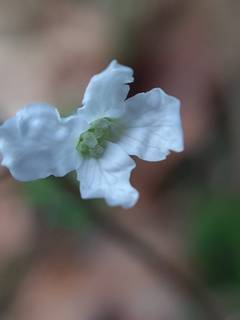
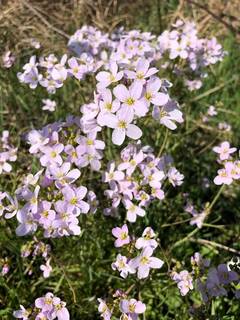
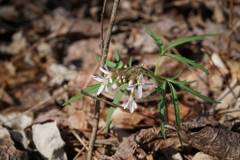
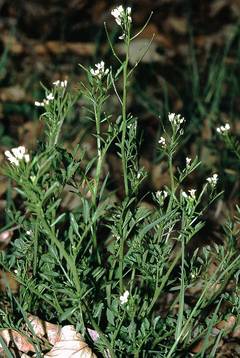
Cardamine hirsuta is a winter annual in the mustard family (Brassicaceae) reaching 2-12 inches (5-30 cm) tall with a compact 2-6 inch (5-15 cm) spread. Plants form a basal rosette of pinnately compound leaves with 3-7 rounded leaflets; the terminal leaflet is kidney-shaped and larger than the lateral leaflets. Rosette leaves lie flat against the ground, 1-3 inches (2.5-8 cm) long. Flowering stems are erect, slender, and usually leafless or bearing 1-2 small cauline leaves. Flowers are white, four-petaled, 0.1-0.15 inch (2-4 mm) across, with typically 4 stamens rather than the 6 found in most Brassicaceae. Fruit is a narrow silique 0.6-1 inch (15-25 mm) long that dehisces explosively when ripe, projecting seeds up to 3 feet (90 cm) from the parent plant; this mechanism gives the common name shotweed. A single plant produces 600-5,000 seeds. Plants complete the life cycle in 6-8 weeks and produce multiple overlapping generations per year in mild climates. Seeds germinate year-round in the Pacific Northwest whenever soil is moist and temperatures exceed 40°F (4°C). The species colonizes nursery containers, greenhouse benches, sidewalk cracks, and garden beds, and is a primary weed contaminant in container nursery production.
Native Range
Cardamine hirsuta is native to Europe, western and central Asia, and northern Africa, occurring in shaded banks, woodland edges, and moist disturbed ground from sea level to approximately 5,000 feet (1,500 m). Naturalized throughout North America, the species is particularly abundant in the Pacific Northwest, where it persists as a weed in nurseries, container stock, and residential landscapes.Suggested Uses
Used in weed identification training for nursery and greenhouse workers, as the species is a primary weed contaminant in container production. Studied in plant dispersal ecology for the ballistic seed ejection mechanism. Young leaves are edible with a peppery cress-like flavor and are consumed in some European and Asian culinary traditions.How to Identify
Appearance
Size & Dimensions
Height2" - 1'
Width/Spread2" - 6"
Bloom Information
Flowers appear February through May in the Pacific Northwest, with sporadic flowering in mild fall and winter months. Individual plants flower for 2-3 weeks. Multiple generations overlap, so flowering plants are present continuously from late winter through late spring. Siliques mature 3-4 weeks after pollination. The species is self-pollinating and does not require insect visitation.
Detailed Descriptions
Flower Description
White, four-petaled, 0.1-0.15 inch (2-4 mm) across in erect racemesFoliage Description
Medium green, pinnately compound with 3-7 rounded leaflets; terminal leaflet kidney-shaped, larger than lateralsGrowing Conditions
Sun Requirements
Requires 2-8 hours of direct sunlight daily
• Full Sun: 6+ hours of direct sunlight
• Partial Shade: 3-6 hours of direct sunlight
• Full Shade: Less than 3 hours of direct sunlight