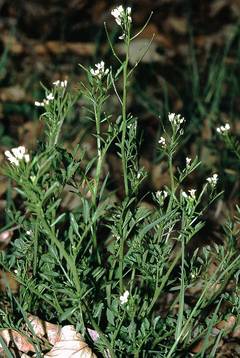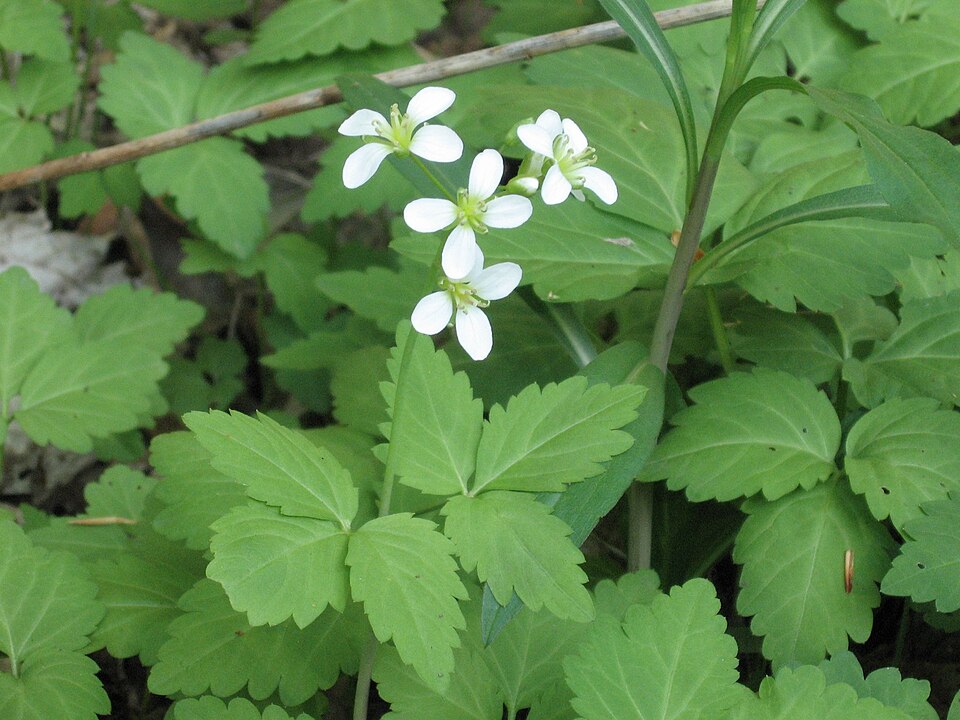
Cardamine, Genus, diphylla, Species,
- Genus & species
two-leaved toothwort
Overview
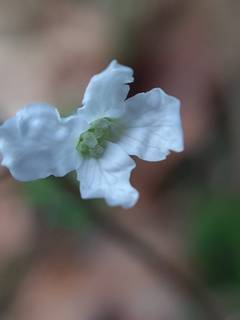
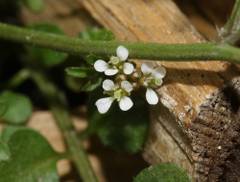
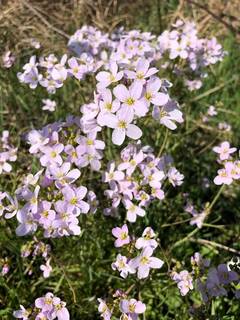
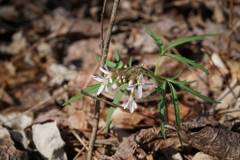
Cardamine diphylla is a low woodland perennial in the mustard family, spreading by a toothed, jointed white rhizome that has a peppery, horseradish-like taste. It grows 8-16 inches (20-40 cm) tall, with a pair of opposite leaves on the flowering stem, each divided into three broad, coarsely toothed leaflets. Separate basal leaves rise directly from the rhizome and persist into winter. In mid to late spring it carries loose clusters of four-petaled flowers about 0.5-0.75 inch (12-18 mm) across, white to pale pink. The flowers open before the forest canopy closes and are followed by slender seed pods. As a spring ephemeral the top growth often fades by midsummer, while the rhizome stays dormant below the leaf litter. Native to rich, moist deciduous woods of eastern North America, it forms slow-spreading colonies on the forest floor. It needs cool, shaded, humus-rich soil and declines in dry or compacted ground. The rhizome was historically used as a pungent seasoning.
Native Range
Native to eastern North America, from Quebec and Ontario south to Georgia and Alabama. It grows in rich, moist deciduous and mixed woods, on shaded slopes, and along streams.Suggested Uses
Cardamine diphylla is grown in shade and woodland gardens, native plant borders, and naturalized drifts under deciduous trees. Its early flowers draw spring bees and other small pollinators.How to Identify
Appearance
Size & Dimensions
Height8" - 1'4"
Width/Spread8" - 1'
Bloom Information
Flowers open from April to June, before the tree canopy fully leafs out. Bloom lasts about two to three weeks per colony. Narrow seed pods follow, and top growth often dies back by midsummer.
Detailed Descriptions
Foliage Description
greenGrowing Conditions
Sun Requirements
Requires 2-6 hours of direct sunlight daily
• Full Sun: 6+ hours of direct sunlight
• Partial Shade: 3-6 hours of direct sunlight
• Full Shade: Less than 3 hours of direct sunlight