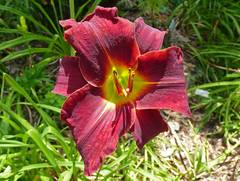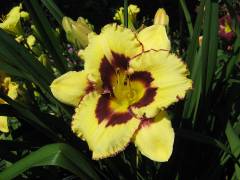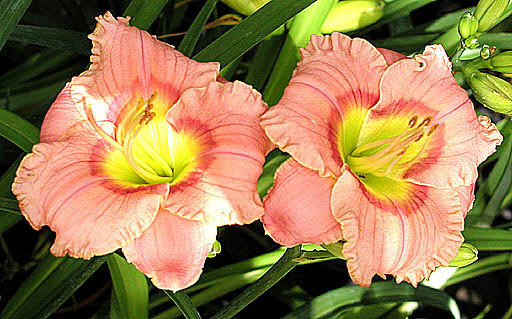
Hemerocallis, Genus, 'Elegant Candy', Cultivar,
- Genus
- Cultivar
elegant candy daylily
Garden cultivar; parent species native to East Asia
Overview
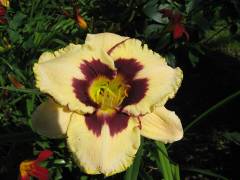
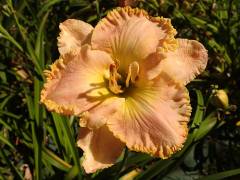
Hemerocallis 'Elegant Candy' is a clump-forming herbaceous perennial with a tetraploid genetic background, reaching 26-30 inches (65-75 cm) tall in flower and 24-30 inches (60-75 cm) wide at maturity. Foliage forms an arching basal mound of strap-shaped mid-green leaves 16-18 inches (40-45 cm) long; foliage is semi-evergreen in zones 7-9 and herbaceous in zones 3-6. Scapes hold 4-6 buds each. Flowers are 4.25 inches (11 cm) wide, candy pink with a deep cherry red eyezone surrounding a yellow-green throat; ruffled tepal margins are slightly paler pink. Each flower opens in early morning and closes by evening; some openings extend to a second day in cool weather. Bloom begins in mid-June through July in zones 5-7, with rebloom in late summer to early fall in zones 5-9 when plants receive consistent moisture. Fragrance is light and detectable on still mornings within 12 inches (30 cm) of the flower. Plants spread slowly by short rhizomes; mature clumps reach 24-30 inches (60-75 cm) in 3-4 years from a single fan. Lower foliage may yellow in late summer under drought; this can be removed without affecting plant health. Lifespan in zones 4-8 is 8-12 years between divisions.
Native Range
Hemerocallis 'Elegant Candy' is a garden cultivar with no native habitat. Modern Hemerocallis hybrids descend from East Asian species (H. fulva, H. lilioasphodelus, H. citrina, H. minor), found in meadows, woodland edges, and stream banks across temperate China, Japan, and Korea.Suggested Uses
Used in perennial borders, mass plantings, and along sloped banks; spaced 18-24 inches (45-60 cm) apart in groupings. Combines with mid-summer perennials such as Echinacea purpurea, Phlox paniculata, and Stachys byzantina, and with ornamental grasses such as Pennisetum alopecuroides. Grown in containers of at least 3 gallons (11 L); container plants flower less heavily than in-ground plants and require winter protection in zones 3-5.How to Identify
Appearance
Size & Dimensions
Height2'2" - 2'6"
Width/Spread2' - 2'6"
Bloom Information
Mid-June through July in zones 5-7, with rebloom 6-8 weeks after the primary flush in zones 5-9 when plants receive supplemental water through the gap. Each scape carries 4-6 buds opening successively over 10-14 days; total primary bloom display extends 4-5 weeks. Rebloom continues for 2-3 weeks in late August through September. In zones 8-9, bloom may begin in late May with rebloom into October.
Detailed Descriptions
Flower Description
Candy pink with deep cherry-red eyezone and yellow-green throat; ruffled tepal marginsFoliage Description
Mid-green, strap-shaped, slightly archingGrowing Conditions
Sun Requirements
Requires 6-10 hours of direct sunlight daily
• Full Sun: 6+ hours of direct sunlight
• Partial Shade: 3-6 hours of direct sunlight
• Full Shade: Less than 3 hours of direct sunlight
Care & Maintenance
Care Guide
Plants are set with the crown at soil level in spring or fall in well-drained loam; planting deeper than 1 inch (2.5 cm) reduces flowering. Water weekly during the first growing season; established plants tolerate 3-4 weeks without rain but produce fewer flowers and skip rebloom under drought. Daylily rust (Puccinia hemerocallidis) appears as orange pustules on leaf undersides in humid conditions; affected foliage can be cut to ground in fall and removed from the site. Spring sickness sometimes appears in zones 5-7 as deformed early growth following hard winters; affected plants generally recover by late spring. Clumps benefit from division every 4-6 years when the center thins; division is performed in early spring or 6 weeks before first frost. Slugs feed on emerging foliage in cool wet springs.Pruning
Spent scapes are cut to the base after bloom completes to prevent seed pod formation that diverts energy from rebloom. Yellowing or browning foliage is removed mid-season as needed; this does not affect plant health. Foliage is cut to 4-6 inches (10-15 cm) above the crown in late fall after first frost, or left in place over winter and removed in early spring before new growth emerges.Pruning Schedule
Prune: July & October–November
summerfall
Container Growing
Suitable for container growing
Minimum container size: 3 gallons