Camassia, Genus, leichtlinii, Species, ssp., Subspecies, suksdorfii, Subspecies,
- Genus & species
- Subspecies
great camas
Overview
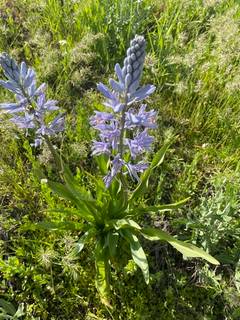
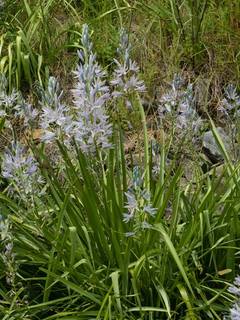
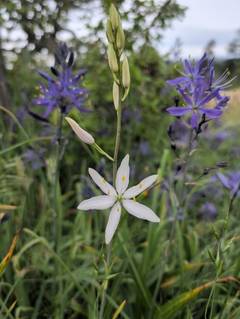
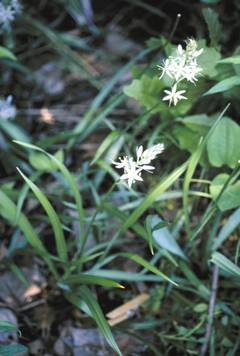
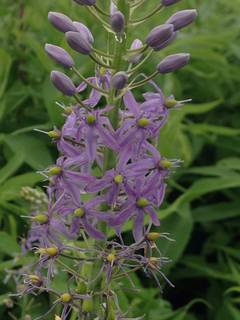
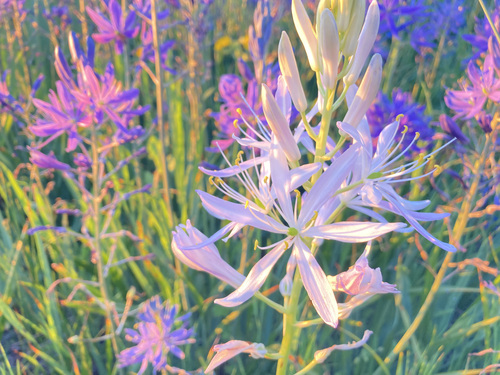
Camassia leichtlinii ssp. suksdorfii is a bulbous herbaceous perennial in the asparagus family, native to the Pacific Northwest. It grows from a deep bulb, producing a basal clump of narrow, strap-shaped grey-green leaves 12-24 inches (30-60 cm) long. In late spring it sends up stout, upright flower stems 24-48 inches (60-120 cm) tall, each carrying a long raceme of star-shaped, six-petalled flowers about 1.5-2.5 inches (4-6 cm) across. The flowers are usually blue-violet, sometimes pale blue, and open from the bottom of the spike upward over one to two weeks. After bloom, rounded seed capsules form and the foliage yellows and dies back by midsummer as the plant enters dormancy. This subspecies bears blue-violet flowers, where the typical subspecies C. leichtlinii ssp. leichtlinii has creamy-white flowers; it is sometimes confused with the unrelated, toxic death camas (Toxicoscordion species), which has cream flowers and grows in similar meadows. One limitation is that the foliage flops and yellows soon after flowering, leaving a gap, and the bulbs rot in soil that stays waterlogged through summer dormancy.
Native Range
Camassia leichtlinii ssp. suksdorfii is native to the Pacific Northwest of North America, from British Columbia south through Washington and Oregon into northern California. It grows in moist meadows, prairies, and seasonally wet grassland that dries through summer.Suggested Uses
Used in moist meadows, prairie and naturalistic plantings, rain gardens, and the margins of ponds and streams. The tall blue spikes combine with grasses and late-spring perennials. It is grown for naturalizing in damp grassland that other bulbs find too wet.How to Identify
Appearance
Size & Dimensions
Height2' - 4'
Width/Spread6" - 1'
Bloom Information
Flowering occurs in late spring, mainly May to June, with each tall raceme opening from the bottom upward over one to two weeks. The star-shaped blue-violet flowers are followed by rounded seed capsules. Foliage yellows and dies back by midsummer as the bulb goes dormant.
Detailed Descriptions
Foliage Description
Grey-greenGrowing Conditions
Sun Requirements
Requires 4-9 hours of direct sunlight daily
• Full Sun: 6+ hours of direct sunlight
• Partial Shade: 3-6 hours of direct sunlight
• Full Shade: Less than 3 hours of direct sunlight
Care & Maintenance
Care Guide
Grow Camassia leichtlinii ssp. suksdorfii in full sun to partial shade in fertile soil that stays moist through spring and dries in summer. Plant bulbs 4-6 inches (10-15 cm) deep in autumn. The plant tolerates heavy clay and seasonally wet ground better than most bulbs but rots where soil stays waterlogged in summer. A pH range of 6.0 to 7.5 suits it, and little feeding is needed in reasonable soil. Leave the foliage to die back naturally to feed the bulb for the following year. Clumps increase slowly and can be lifted and divided when dormant in late summer.Pruning
Remove spent flower spikes after bloom unless seed is wanted, as the plant self-sows in open ground. Leave the leaves until they yellow and wither, then clear them. No other pruning is needed.Pruning Schedule
Prune: June–July
summer
Container Growing
Suitable for container growing
Minimum container size: 2 gallons