Callistemon, Genus, viminalis, Species,
- Genus & species
Weeping bottlebrush
Overview
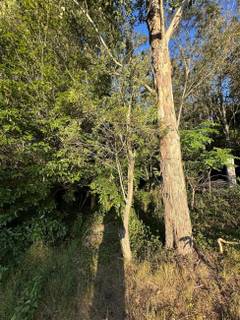
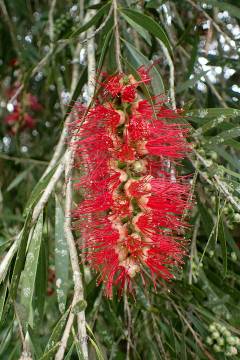
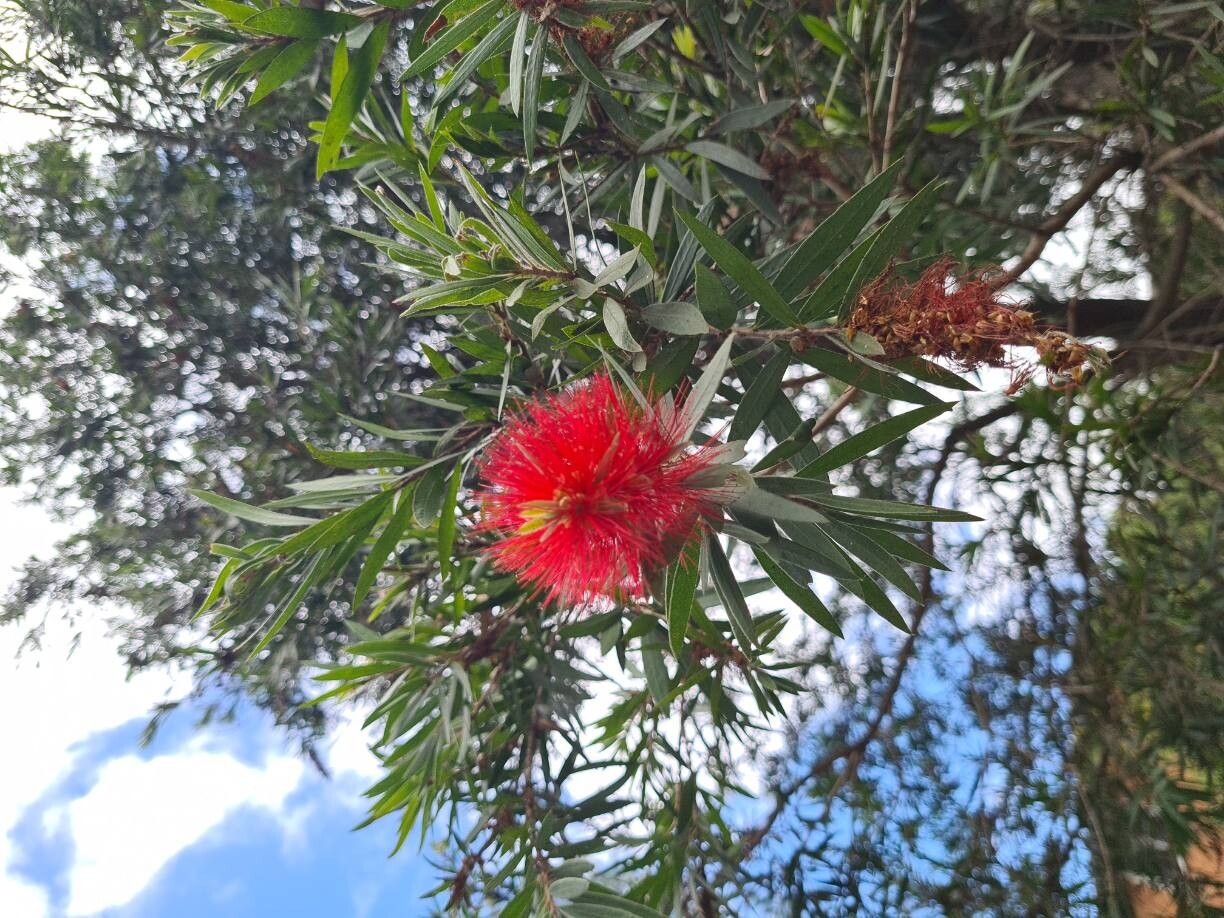
Callistemon viminalis is an evergreen tree or large shrub reaching 15-25 feet (4.5-8 m) tall and 10-15 feet (3-4.5 m) wide, with slender branchlets that hang vertically from arching limbs. Bark is grey-brown and papery, peeling in thin strips on trunks over 4 inches (10 cm) across. Leaves are narrow and lance-shaped, 2-3 inches (5-8 cm) long and 0.2-0.4 inch (5-10 mm) wide, dull mid-green and aromatic when crushed; new growth emerges pink to bronze with silky hairs before hardening to green over 3-4 weeks. Flower spikes are cylindrical, 2-6 inches (5-15 cm) long and about 2 inches (5 cm) across, formed from red stamens 0.8-1 inch (2-2.5 cm) long, and the shoot continues to grow through the spike so a leafy tip extends beyond each brush. Woody seed capsules 0.2 inch (5 mm) wide form in tight bands around the stem and persist for 3-5 years. Young plants extend 2-3 feet (60-90 cm) per year in warm climates. Wood is brittle and limbs 1-2 inches (2.5-5 cm) thick split in winds above 40 mph (64 km/h). Roots run shallow and lift paving within 6-10 feet (1.8-3 m) of the trunk. The species is treated as Melaleuca viminalis in floras that follow the transfer of Callistemon into Melaleuca.
Native Range
Native to eastern Australia, from Cape York Peninsula in northern Queensland south to the Hunter River district of New South Wales. Grows along permanent and seasonal watercourses on sandy and gravelly banks subject to periodic flooding, from sea level to about 3,300 feet (1,000 m). Stands sit within the flood zone and tolerate root inundation for several weeks at a time.Suggested Uses
Planted as a street and park tree at 15-20 foot (4.5-6 m) spacing in frost-free parts of Australia, southern California, Florida, and the Gulf Coast, and as a screen at 8-10 foot (2.4-3 m) spacing. Also grown as a clipped hedge held at 6-10 feet (1.8-3 m) and cut twice yearly, which removes most flower spikes. Shallow roots and brittle limbs limit use directly over paving, driveways, and parking bays.How to Identify
Appearance
Size & Dimensions
Height15' - 25'
Width/Spread10' - 15'
Bloom Information
Main flowering runs 4-6 weeks in late spring, October and November in eastern Australia and May and June in USDA zones 9-11 of the Northern Hemisphere. Scattered spikes appear again in late summer and autumn on shoots that have completed a growth flush, giving 2-4 lighter flushes per year in frost-free coastal climates. Individual spikes hold color for 10-14 days before the stamens drop. Flowering falls away in the year following hard pruning into leafless wood.
Detailed Descriptions
Foliage Description
Mid-greenGrowing Conditions
Sun Requirements
Requires 6-12 hours of direct sunlight daily
• Full Sun: 6+ hours of direct sunlight
• Partial Shade: 3-6 hours of direct sunlight
• Full Shade: Less than 3 hours of direct sunlight
Care & Maintenance
Care Guide
Water twice weekly through the first two summers, then every 2-3 weeks; established trees tolerate 4-6 weeks without water but shed 10-20 percent of their leaves during long dry spells. Soil pH above 7.5 causes interveinal yellowing of new leaves, corrected with chelated iron at 0.5 ounce per 10 square feet (15 g per square meter) in spring. Growth stops below 50F (10C), leaf and shoot damage occurs below 25F (-4C), and whole plants die below 18F (-8C). Scale insects colonize leaf undersides and lead to sooty mold on the foliage beneath them; horticultural oil applied in late winter reduces populations. Myrtle rust, caused by Austropuccinia psidii, produces yellow spore masses on new growth in humid summers and kills soft shoot tips. Shoots emerge from the root crown each spring and return the canopy to a multi-stemmed form if they are left in place.Pruning
Spent spikes are cut back to 6-12 inches (15-30 cm) behind the flower head immediately after each flush, which removes developing capsules and produces branching within 4-6 weeks. Cuts into bare wood more than three years old regenerate slowly and often fail to shoot at all. Root-crown shoots are removed at the point of origin two or three times per year on trees grown with a single trunk. Grafted standards throw shoots below the graft union that grow faster than the scion and take over the head within two seasons if left.Pruning Schedule
Prune: June–July
summer
Container Growing
Suitable for container growing
Minimum container size: 15 gallons