Callistemon, Genus, salignus, Species,
- Genus & species
Willow bottlebrush
Eastern Australia, southeastern Queensland to eastern Victoria
Overview
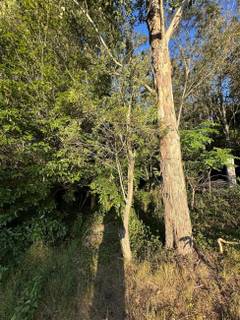
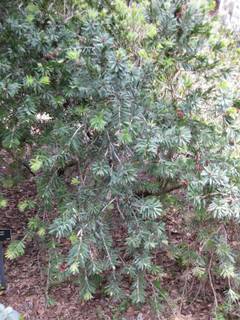
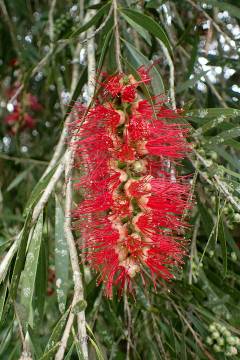
Callistemon salignus is an evergreen tree 15-30 feet (4.5-9 m) tall and 10-20 feet (3-6 m) wide, with an upright trunk and a rounded to slightly weeping crown. The bark is papery and white to pale cream, built up in thin layers that flake and lift, soft under the hand. Leaves are alternate, narrow-lanceolate at 1.5-3 inches (4-8 cm) long and 0.2-0.5 inch (5-13 mm) wide, stiff, dull green, and drawn to a short sharp point; each new flush opens bright pink to coppery red and holds that colour two to three weeks before turning green. Cylindrical flower spikes 1.5-3 inches (4-8 cm) long and 1-1.5 inches (2.5-4 cm) wide are built from cream to pale yellow stamens packed around the stem, with a main flush in spring and often a lighter one in autumn. Woody capsules form in tight rings along the stem behind each spike and stay on the wood for years. Roots are vigorous and lift paving and block drains where the tree is set close to services. The species is susceptible to myrtle rust and to sawfly larvae that strip new growth. Hardy in USDA zones 9-11.
Native Range
Callistemon salignus is native to eastern Australia, from southeastern Queensland through New South Wales into eastern Victoria. It grows along creek banks, on swamp margins, and in moist open forest, usually on soils that stay damp and flood periodically. Plantings extend well beyond that range as a street and park tree in warm-temperate and subtropical climates worldwide.Suggested Uses
Grown as a street, park, and shade tree in frost-free and light-frost climates, as a screen or windbreak on damp ground, and along creek lines and swale edges, spaced 15-20 feet (4.5-6 m) apart. The tolerance of waterlogging suits it to rain garden and detention basin margins. Container culture works for the first five to eight years in pots of 15 gallons (57 L) or larger before the roots fill the container.How to Identify
Appearance
Size & Dimensions
Height15' - 30'
Width/Spread10' - 20'
Bloom Information
The main flush of spikes opens over three to four weeks, between September and November in the southern hemisphere and between April and June in northern hemisphere plantings, with a lighter second flush about six months later in warm climates. Spikes form on the current season growth, so cutting in early spring removes the coming bloom. Each spike holds its open stamens about ten days, opening in sequence from the base of the spike upward. Honeyeaters, lorikeets, honeybees, and beetles feed at the spikes.
Detailed Descriptions
Flower Description
Cream to pale yellowFoliage Description
Dull green, narrow and willow-like, bright pink to coppery red on new growthGrowing Conditions
Sun Requirements
Requires 5-12 hours of direct sunlight daily
• Full Sun: 6+ hours of direct sunlight
• Partial Shade: 3-6 hours of direct sunlight
• Full Shade: Less than 3 hours of direct sunlight
Care & Maintenance
Care Guide
Five or more hours of direct sun carries full flowering, and the species still grows in light shade with fewer spikes. It grows in soils from sand to heavy clay at pH 5.5-7.5, tolerates several weeks of waterlogging, and carries two to three weeks of summer dryness once established. Roughly 1 inch (2.5 cm) of water per week through the first two years settles a deep root system. Phosphorus above about 3 percent in a fertiliser damages the roots of the Myrtaceae, so native-plant formulations or a spring compost mulch are what the species takes. Trees set within 10 feet (3 m) of paving, drains, or foundations lift and crack them as the roots thicken. Sawfly larvae cluster on new shoots in spring and are knocked into water or cut away with the shoot before they strip the flush.Pruning
Spent spikes and 4-6 inches (10-15 cm) of the shoot behind them are cut off after each flowering flush, which stops the woody capsule rings building up and holds the crown dense. The species reshoots from epicormic buds in old wood and from the lignotuber, so hard reduction into bare branches regenerates rather than kills the tree. Lower branches are taken off over two or three seasons to lift the crown to a clear trunk of 6-7 feet (1.8-2.1 m). Cutting in early spring removes the flower buds forming on the current flush.Pruning Schedule
Prune: June–July
summer
Container Growing
Suitable for container growing
Minimum container size: 15 gallons