Callistemon, Genus, citrinus, Species,
- Genus & species
red cluster bottlebrush
Overview
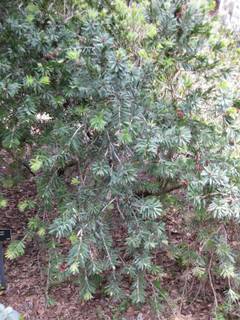
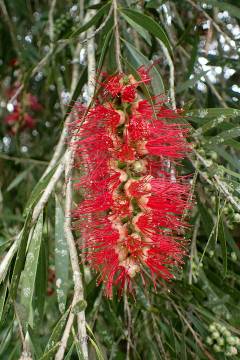
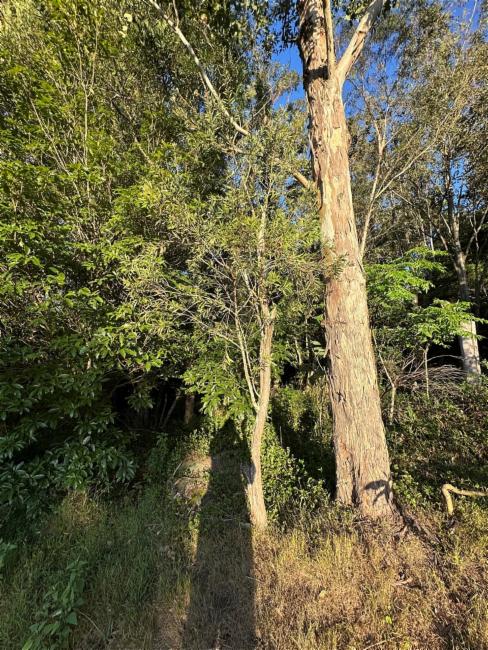
Callistemon citrinus is an evergreen shrub reaching 6-15 feet (1.8-4.5 m) tall and 6-10 feet (1.8-3 m) wide at maturity, with an upright, multi-stemmed, rounded form that becomes more open with age. Foliage consists of linear-lanceolate leaves 1-3 inches (2.5-7.5 cm) long and 0.2-0.4 inch (5-10 mm) wide, leathery, gray-green to mid-green, with a citrus scent when crushed (the basis for the species name 'citrinus'). New growth flushes pinkish-red in spring before maturing to green. Cylindrical bottlebrush flower spikes 2-4 inches (5-10 cm) long appear in spring (April-June) and again in summer in zones 9-11. Flowers consist of crimson-red staminal filaments tipped with golden anthers; spikes 1.5-3 inches (4-7.5 cm) in diameter. Woody seed capsules 0.2-0.3 inch (5-8 mm) form along older branches and persist for many years. Bark develops gray fissures on stems over 2-3 inches (5-7.5 cm) in diameter. Hardy in USDA zones 8b-11; foliage burns at 22°F (-6°C) and stems may die back at 18°F (-8°C). Tolerates seasonal flooding and waterlogging in native riparian habitat.
Native Range
Native to coastal eastern Australia from southern Victoria to southern Queensland, where it grows along streamside margins and seasonal swamps at 0-3,000 feet (0-900 m) elevation. Naturalized in Hawaii, southern California, and parts of southern Africa. Cultivated worldwide in zones 8b-11.Suggested Uses
Used as a specimen, informal hedge at 5-7 foot (1.5-2.1 m) spacing, screen, or container plant in pots of at least 10 gallons (38 L) in zones 9-11. Tolerates coastal conditions, salt spray, and seasonal flooding. Pollinator and hummingbird food source in subtropical and Mediterranean climates.How to Identify
Appearance
Size & Dimensions
Height6' - 15'
Width/Spread6' - 10'
Colors
Bloom Information
Cylindrical crimson-red flower spikes 2-4 inches (5-10 cm) long appear in April through June across most of the range, with peak flowering in May. Secondary flushes occur in summer and fall in zones 9-11 with adequate water. Bloom flushes last 3-4 weeks each. Honey bees, native bees, hummingbirds, and butterflies forage at the flowers.
Detailed Descriptions
Foliage Description
Gray-green to mid-greenGrowing Conditions
Sun Requirements
Requires 6-10 hours of direct sunlight daily
• Full Sun: 6+ hours of direct sunlight
• Partial Shade: 3-6 hours of direct sunlight
• Full Shade: Less than 3 hours of direct sunlight
Care & Maintenance
Care Guide
Water deeply once a week during the first growing season; established plants tolerate 4-6 weeks without rain in zones 9-11. Apply 2 inches (5 cm) of bark mulch over the root zone. Tolerates a wide range of soil types and pH from 5.0 to 8.0; iron chlorosis develops in soils above pH 8.0. Few significant pests; sawfly larvae occasionally skeletonize leaves and webworms web together leaf clusters in summer. Stems die back to ground level at temperatures below 18°F (-8°C); regrowth from the root crown develops over the following growing season.Pruning
Prune after each flowering flush to maintain shape and encourage rebloom. Cuts immediately below faded flower spikes encourage branching and additional flowers in 6-8 weeks during the warm season. Hard rejuvenation cuts to within 12 inches (30 cm) of the ground regenerate from latent buds at the base over 1-2 seasons.Pruning Schedule
Prune: June–July
late springsummer
Container Growing
Suitable for container growing
Minimum container size: 10 gallons