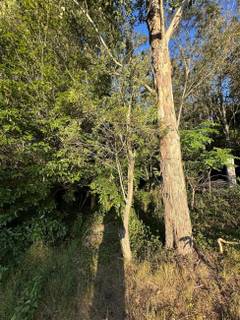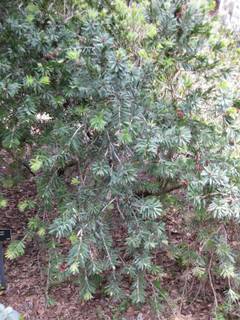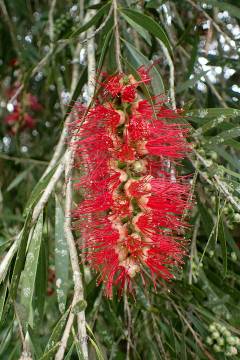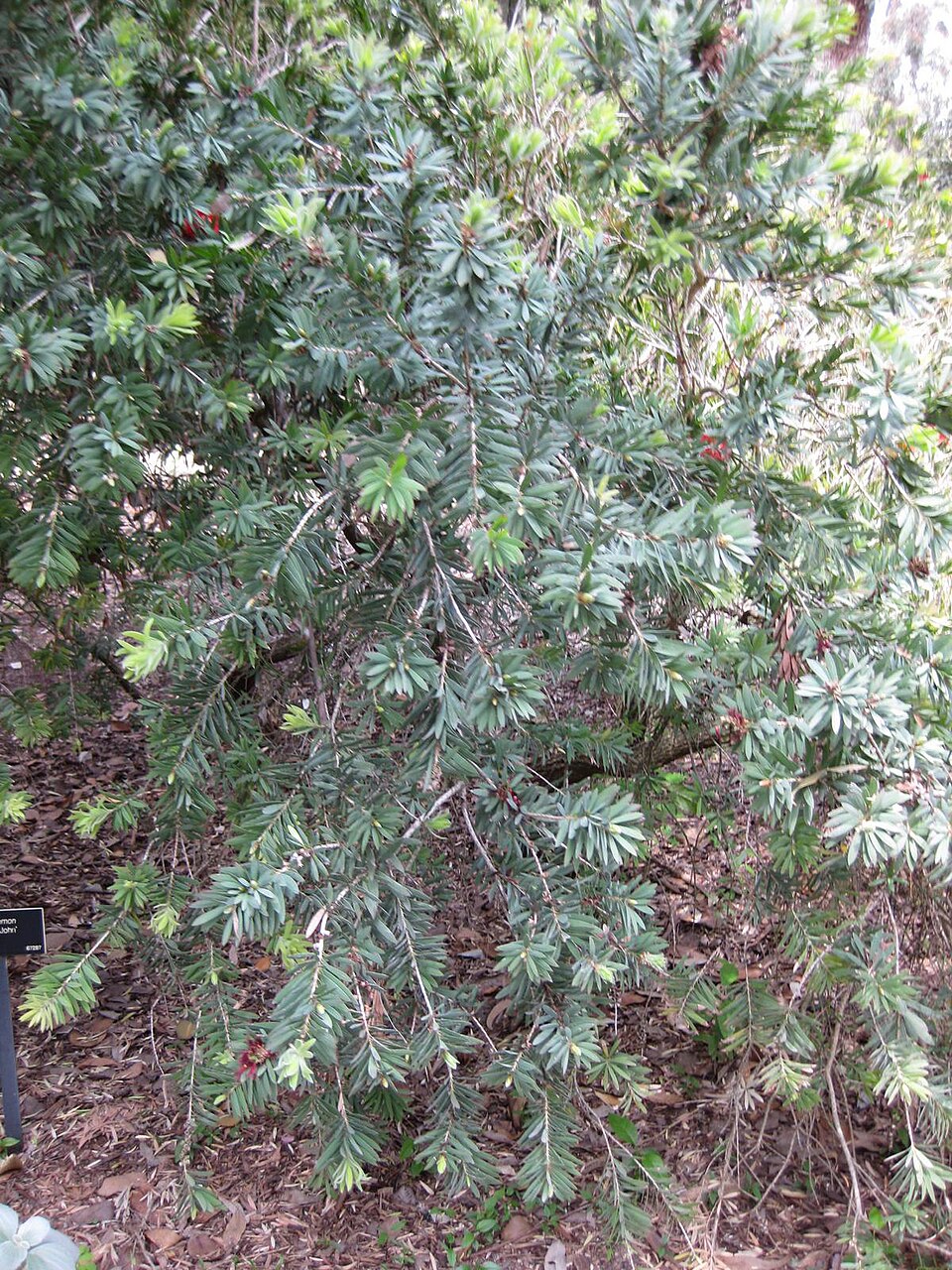
Callistemon, Genus, spp., Multiple species,
- Genus
- Multiple species
bottlebrush
Overview
Callistemon is a genus of evergreen shrubs and small trees in the myrtle family (Myrtaceae), native to Australia and grown widely for their cylindrical, brush-like flower spikes. Plants range from low spreading forms about 3 feet (0.9 m) tall to upright trees near 30 feet (9 m), with narrow, leathery, lance-shaped leaves 1-4 inches (2.5-10 cm) long that are often stiff and pointed. The flower spikes, 1.5-6 inches (4-15 cm) long, are packed with long stamens that create the bottlebrush shape; they are most often red but range through pink, mauve, white, yellow, and green across species. New leaf growth is frequently soft and copper-pink before hardening to green. Woody, cup-shaped seed capsules form in tight clusters along the stems and can persist unopened for years. Many species grow naturally along watercourses and tolerate seasonal flooding as well as moderate drought once established, though most are damaged below about 20F (-7C). The nectar-rich flowers draw honeyeating birds and bees.
Native Range
Callistemon is native to Australia, occurring in all mainland states and Tasmania, with the greatest diversity in eastern and southwestern regions. Species grow along creek banks, swamp margins, rocky hillsides, and open forest, many of them on seasonally wet ground.Suggested Uses
Callistemon is used as an informal hedge, screen, windbreak, and specimen shrub, and low forms serve as groundcover and container plants. Species suited to wet ground are planted along pond and creek margins, while compact selections line drives and borders in zones 9-11. The frost-sensitivity of most kinds limits their use in cold-winter regions.How to Identify
Appearance
Size & Dimensions
Height3' - 30'
Width/Spread3' - 15'
Bloom Information
Most species flower heavily in spring and early summer, roughly September to December in Australia, with lighter repeat flushes through the year in mild climates. Each brush lasts two to four weeks, and a shrub may carry several flushes in a season. In the northern hemisphere, cultivated plants bloom mainly from late spring into summer.
Detailed Descriptions
Flower Description
Red, also pink, mauve, white, yellow, or greenFoliage Description
Green, with copper-pink new growthGrowing Conditions
Sun Requirements
Requires 6-12 hours of direct sunlight daily
• Full Sun: 6+ hours of direct sunlight
• Partial Shade: 3-6 hours of direct sunlight
• Full Shade: Less than 3 hours of direct sunlight
Care & Maintenance
Care Guide
Plants grow in full sun on most free-draining soils and tolerate both seasonal wet and moderate drought once their roots are established. They suit warm-temperate and subtropical zones (about USDA 9-11), and only the hardiest selections survive brief cold near 18F (-8C). Light feeding with a low-phosphorus fertiliser suits them, as members of the myrtle family react badly to high phosphorus. Open, sunny positions give heavier flowering, and shade reduces it. Established plants need little water, though young plants benefit from regular moisture.Pruning
Light pruning just after each flush, cutting behind the spent brushes, keeps plants dense and brings on further flowering. Most species regrow from old wood and from lignotubers, so they tolerate harder renewal pruning if they become leggy. Removing spent capsules is optional and does not affect plant health.Container Growing
Suitable for container growing
Minimum container size: 5 gallons