Bidens, Genus, aristosa, Species,
- Genus & species
bearded beggarticks
Overview
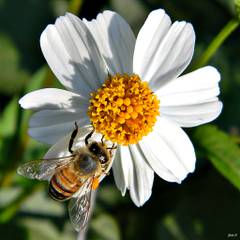
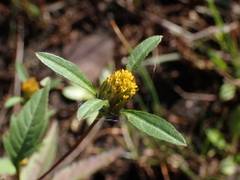
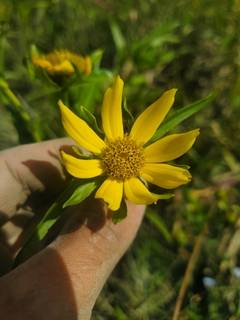
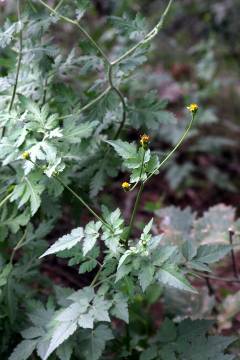
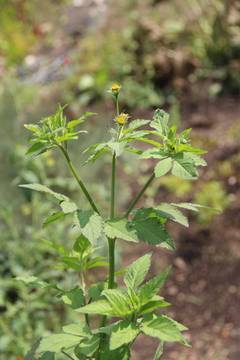
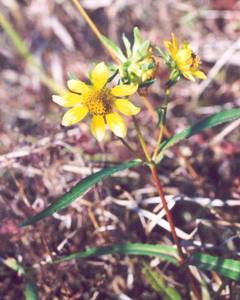
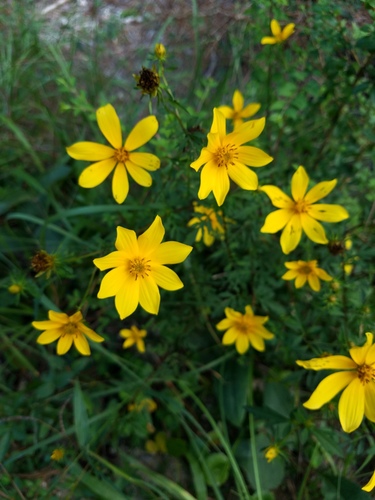
Bidens aristosa is an annual or biennial in the aster family reaching 1-5 feet (30-150 cm) tall with a branched, sometimes sprawling habit. The leaves are opposite, pinnately divided into 3-7 lance-shaped, toothed segments, each leaf spanning 2-6 inches (5-15 cm). From August to October the plant produces daisy-like flower heads 1-1.5 inches (2.5-4 cm) across, each with 8 yellow ray florets surrounding a yellow-to-brown disc. After flowering, the seeds (achenes) are flat with two barbed awns that catch on fur and clothing, giving the plant its common name. B. aristosa grows in moist soils of wet meadows, roadside ditches, floodplains, and pond margins, often forming large colonies that turn fields gold in autumn. It tolerates seasonal flooding and heavy clay but declines in dry, sandy sites. The shallow root system pulls easily, and the prolific seed set can make it weedy in cultivated ground. Bees and butterflies visit the open flower heads. As an annual or short-lived biennial, it persists at a site through self-seeding rather than perennial roots, so populations shift year to year with moisture.
Native Range
Native to central and eastern North America, from Minnesota and Ontario south to Texas and Florida, with concentrations in the Mississippi and Ohio River valleys.Suggested Uses
Used in rain gardens, detention basins, wet meadows, and naturalized plantings where seasonal moisture collects. Massed plantings produce sheets of yellow in early autumn. The clinging seeds make it less suited to paths and high-traffic edges.How to Identify
Appearance
Size & Dimensions
Height1' - 5'
Width/Spread1' - 3'
Bloom Information
Detailed Descriptions
Foliage Description
greenGrowing Conditions
Sun Requirements
Requires 6-12 hours of direct sunlight daily
• Full Sun: 6+ hours of direct sunlight
• Partial Shade: 3-6 hours of direct sunlight
• Full Shade: Less than 3 hours of direct sunlight
Water & Climate
Water Needs
Care & Maintenance
Care Guide
Bidens aristosa grows in full sun and consistently moist to wet soil, including clay and periodically flooded ground. It tolerates a soil pH from about 5.5 to 7.5 and needs no fertilizer in fertile bottomland soils. Plants grown from seed sown in fall or early spring flower the same or following year. Growth slows and flowering thins in dry conditions, so supplemental water sustains it through summer drought. Self-sown seedlings appear readily and can be thinned to manage density. Cutting plants back before seed set limits spread into adjacent beds.Pruning
No structural pruning is needed for this annual or biennial. Shearing spent plants before the barbed seeds mature reduces self-sowing. Plants die back completely after frost and are cleared at the end of the season.Toxicity
Non-toxicPlanting Guide
Planting Methods & Timing
Planting Method
direct sow