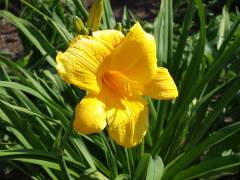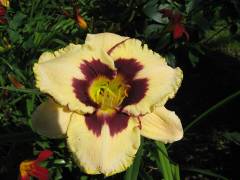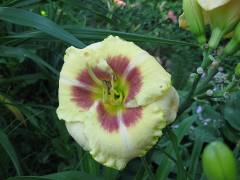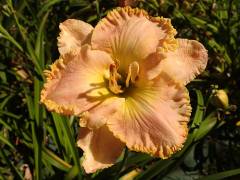
Hemerocallis, Genus, 'Bela Lugosi', Cultivar,
- Genus
- Cultivar
Bela Lugosi daylily
Overview
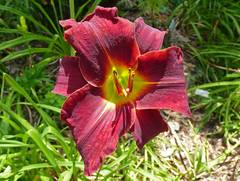
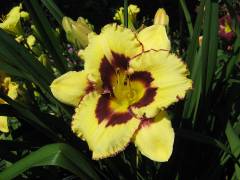
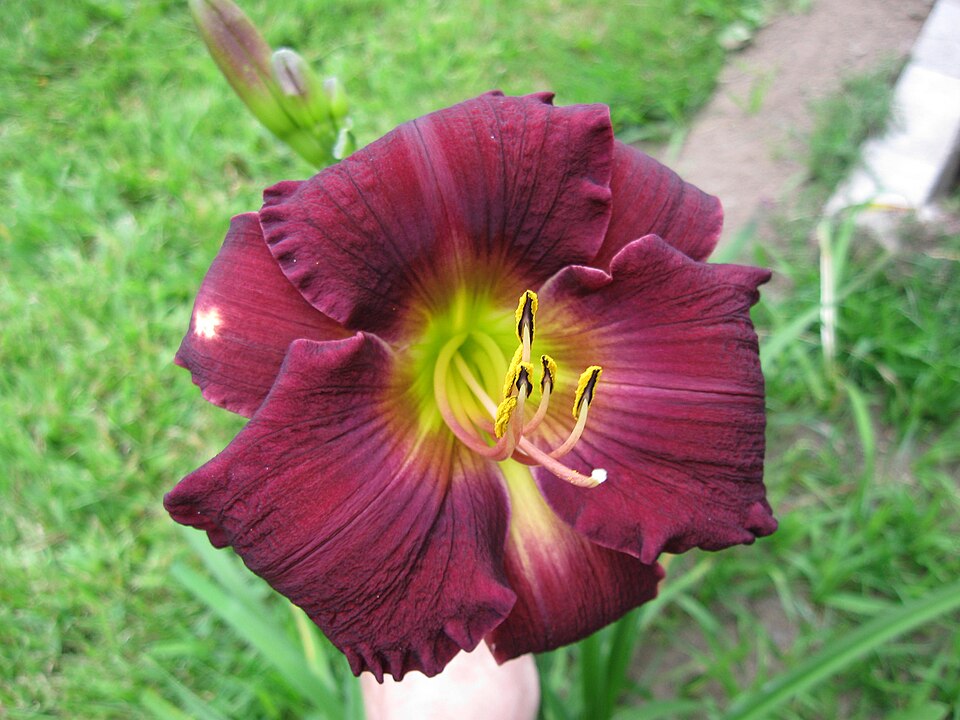
Hemerocallis 'Bela Lugosi' is a tetraploid garden daylily with a clump-forming basal rosette of strap-shaped foliage and tall flower scapes reaching 30-32 inches (75-80 cm) tall over a 24-30 inch (60-75 cm) wide foliage clump. Strap-shaped leaves are arching, deep green, 18-24 inches (45-60 cm) long and 0.75-1 inch (2-2.5 cm) wide. Flowers are diurnal (open one day and wilt by the next morning), measuring 5.5-6 inches (14-15 cm) across with a flat to gently recurved form, deep grape-purple petals and sepals, a chartreuse-green throat, and a faint white midrib down each petal. Scapes carry 12-20 buds with 3-5 flowers open at peak; the registered bud count produces 4-6 weeks of bloom on a single fan. Bloom occurs in mid-summer, July through early August in zones 4-7, with sporadic late-summer rebloom on established clumps. The cultivar is registered as a tetraploid with heavy petal substance that resists rain damage and holds color through hot afternoons. Color fades 10-15 percent in zones 8-9 under intense afternoon sun.
Native Range
Garden daylilies are bred from species in the genus Hemerocallis native to East Asia from southern Russia through China, Korea, and Japan, where wild types occur in mountain meadows, ditch banks, and forest edges at 1,000-7,000 feet (300-2,100 m) elevation. The cultivar 'Bela Lugosi' was registered in 1995 by Robert Hanson of Pennsylvania.Suggested Uses
Planted in mixed perennial borders, mass plantings, and as a deer-resistant ground cover, spaced 18-24 inches (45-60 cm) apart. Used as a midsummer cut flower; each scape carries 5-10 days of vase life as successive buds open. Container culture is possible in pots 5 gallons (19 L) or larger; flowering may decline after 3 seasons without division.How to Identify
Appearance
Size & Dimensions
Height2'6" - 2'8"
Width/Spread2' - 2'6"
Bloom Information
Mid-summer, mid-July through early August in zones 4-7 with peak bloom over 3-4 weeks; bloom shifts earlier in zones 8-9, mid-June through mid-July. Each flower lasts a single day; total clump bloom on an established plant extends 4-6 weeks as successive buds open. Late-summer rebloom on side scapes occurs sporadically on mature clumps.
Detailed Descriptions
Flower Description
Deep grape-purple petals and sepals with chartreuse-green throatFoliage Description
Deep greenGrowing Conditions
Sun Requirements
Requires 6-8 hours of direct sunlight daily
• Full Sun: 6+ hours of direct sunlight
• Partial Shade: 3-6 hours of direct sunlight
• Full Shade: Less than 3 hours of direct sunlight
Care & Maintenance
Care Guide
Plant in spring or fall at 18-24 inches (45-60 cm) spacing with the crown 0.5-1 inch (1.3-2.5 cm) below the soil surface. Water weekly through the first growing season; established plants tolerate 3-4 weeks without rain in zones 4-7. Daylily rust (Puccinia hemerocallidis) appears as orange pustules on leaf undersides in zones 7-9; infected foliage is removed and discarded and overhead watering is reduced. Daylily leaf streak appears as yellow stripes on older leaves in cool wet conditions. Crown rot occurs in continuously waterlogged soil. Apply 2-3 inches (5-8 cm) of compost in spring. Divide every 4-6 years in early spring or after summer bloom; lift the entire clump and cut into divisions of 3-5 fans each.Pruning
Cut spent scapes to basal foliage after all flowers and buds have finished, typically late August in zones 4-7. Remove yellowed or rusted leaves at any time during the season. Cut all foliage to 2-3 inches (5-8 cm) in late November or early spring before new growth emerges. Deadheading individual spent flowers daily tightens clump appearance and reduces seed pod development.Pruning Schedule
Prune: March, August & November
summerfallearly spring
Container Growing
Suitable for container growing
Minimum container size: 5 gallons