Houseplants
Begonia, Genus, rex, Species,
- Genus & species
Rex begonia
Northeastern India, with records in Bhutan and Myanmar
Overview
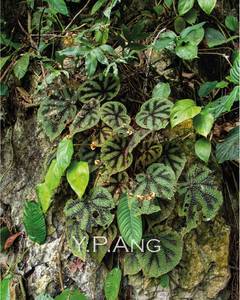
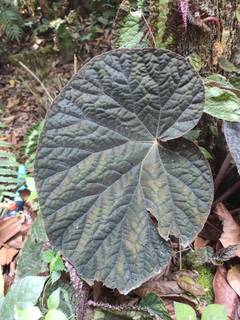
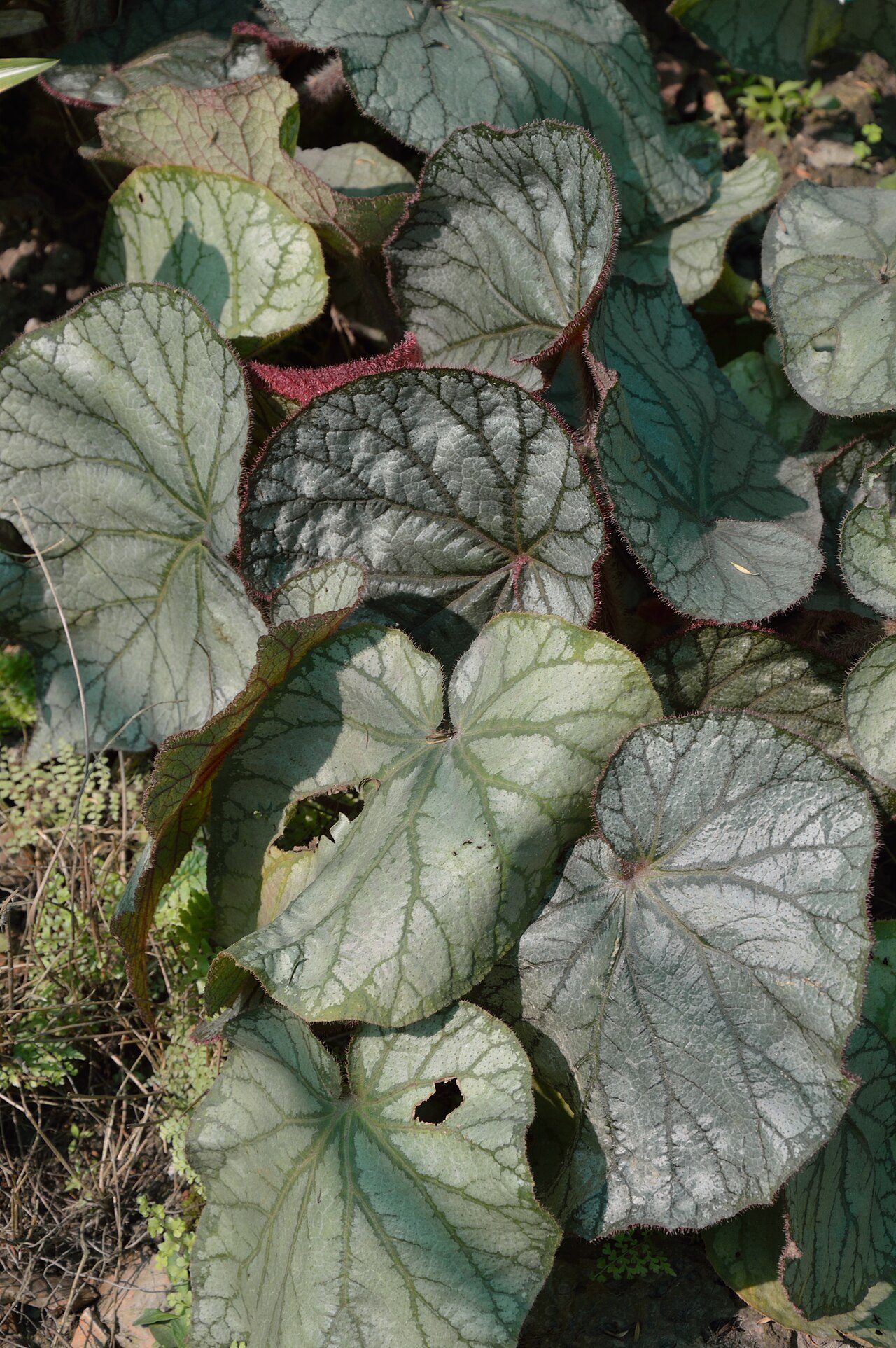
Begonia rex is an evergreen, rhizomatous perennial in the begonia family (Begoniaceae), forming a low mound 12–18 inches (30–45 cm) tall and 12–24 inches (30–60 cm) wide. Leaves arise directly from a creeping, hairy rhizome 0.4–0.8 inch (1–2 cm) thick on stalks 6–10 inches (15–25 cm) long. Each leaf is asymmetrical, heart-shaped, 6–10 inches (15–25 cm) long and 4–7 inches (10–18 cm) wide, with a spiraled base, a slightly toothed margin, and a hairy surface. Leaf color is olive to dark green with a silver-white band or patch following the midrib, and the underside is red-purple. Many hybrid cultivars derived from this species have been selected for leaf color in silver, red, purple, pink, and near-black, and these hybrids differ from the species in size and in tolerance of dry air. Flowers are small, pale pink to white, 0.5–1 inch (1.2–2.5 cm) across, borne on branched stems 12–18 inches (30–45 cm) tall above the foliage. Male and female flowers occur separately on the same plant, and females develop three-winged capsules. Plants are frost-tender and are damaged below 50°F (10°C). Foliage declines in dry indoor air below 40% relative humidity, and leaves develop powdery mildew where air is stagnant.
Native Range
Begonia rex is native to northeastern India, in Assam and adjacent hill regions of the Himalayan foothills, and is reported in neighboring parts of Bhutan and Myanmar. It grows on shaded, moist forest floors and rock outcrops at 1,000–3,000 feet (300–900 m) in humus-rich pockets of soil.Suggested Uses
Grown as a houseplant in shallow pots, terrariums, and shaded conservatories. Grown outdoors in zones 10–11 in shaded, moist beds, spaced 12–18 inches (30–45 cm) apart. Leaf colors are used to build contrast in shaded container groupings.How to Identify
Appearance
Size & Dimensions
Height1' - 1'6"
Width/Spread1' - 2'
Bloom Information
Detailed Descriptions
Flower Description
Pale pink to whiteFoliage Description
Olive to dark green with a silver band; red-purple beneathGrowing Conditions
Sun Requirements
Requires 2-4 hours of direct sunlight daily
• Full Sun: 6+ hours of direct sunlight
• Partial Shade: 3-6 hours of direct sunlight
• Full Shade: Less than 3 hours of direct sunlight
Care & Maintenance
Care Guide
Grows in bright, indirect light, 2–4 hours of filtered sun, in a light, peat-based mix with perlite at pH 5.5–6.5. The top 1 inch (2.5 cm) of mix is allowed to dry before watering, and water is applied to the soil rather than the leaves, which are prone to spotting and mildew. Temperatures of 60–75°F (16–24°C) and relative humidity of 50–60% are typical, and USDA zones 10–11 permit outdoor growth. Plants are repotted every 1–2 years into shallow pots 6–8 inches (15–20 cm) wide. A rest period in winter reduces growth, and watering is reduced by about half. Leaves and rhizomes contain insoluble calcium oxalates.Pruning
Dead, yellowed, or damaged leaves are cut at the base of the stalk. Rhizomes are divided in spring into sections with 1–2 leaves, each at least 2 inches (5 cm) long. Leaf-section cuttings root in 4–8 weeks on moist mix.Pruning Schedule
Prune: April–May
late spring
Container Growing
Suitable for container growing
Minimum container size: 1 gallons