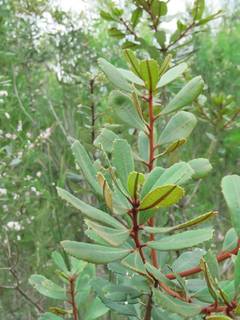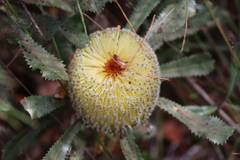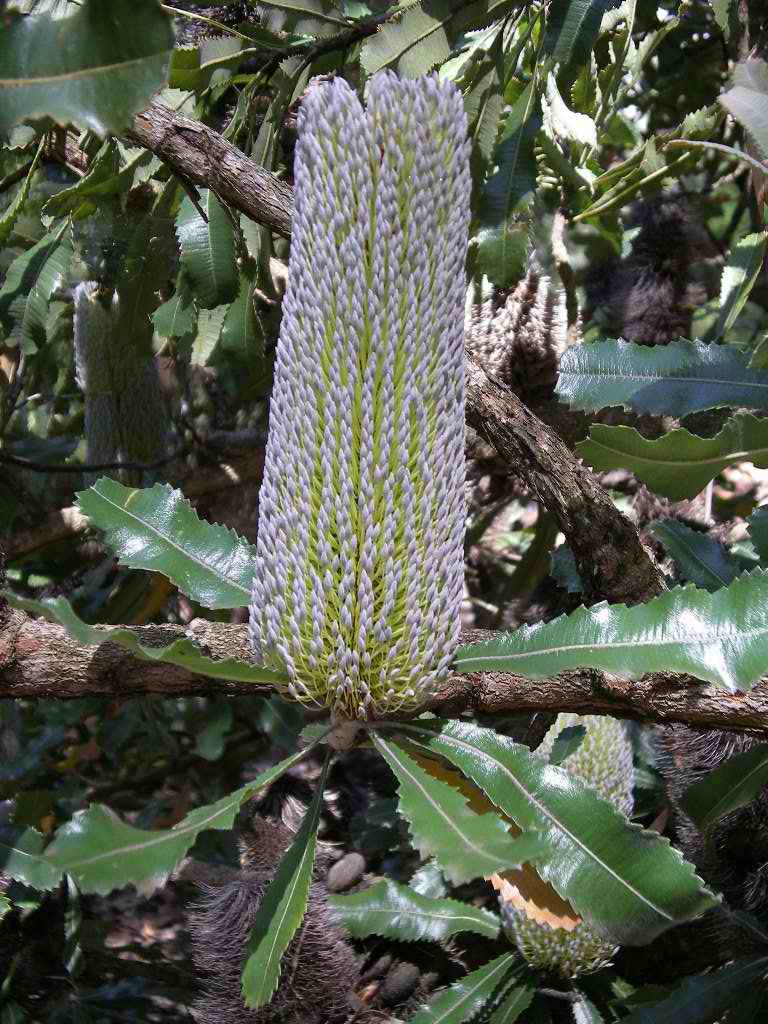
Banksia, Genus, serrata, Species,
- Genus & species
old man banksia
Overview
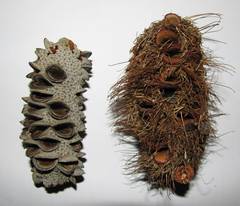
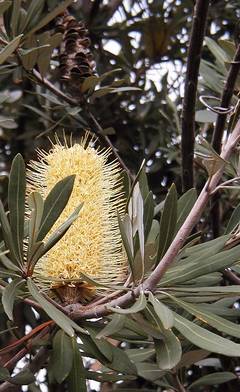
Banksia serrata is a gnarled, woody shrub or small tree growing 5-16 m (16-52 ft) tall, with thick, warty grey bark and a stout, often crooked trunk. The leathery dark green leaves are 7-16 cm (3-6 in) long with sharply saw-toothed (serrated) margins. The flower spikes are dense cylindrical brushes 7-16 cm (3-6 in) tall, grey-green in bud and opening to silver-grey or pale yellow, each made of hundreds of paired flowers. After flowering the spikes harden into woody cones studded with large follicles that hold winged seeds, many opening only after fire. It grows on sandy soils in coastal heath, woodland, and dune systems. The thick bark and woody fruit help it survive bushfire, and it reshoots from a lignotuber. Limitation: growth is slow, and the species declines in heavy, poorly drained, or phosphorus-rich soils.
Native Range
Eastern Australia, along the coast and nearby ranges from southern Queensland through New South Wales to Victoria and Tasmania. It grows on sandy soils in coastal heath, woodland, and dunes.Suggested Uses
Grown as a feature tree or large shrub in coastal, native, and low-water gardens, and in habitat plantings where the nectar-rich spikes attract birds and small mammals. It suits sandy, exposed, and coastal positions.How to Identify
Appearance
Size & Dimensions
Height16' - 52'
Width/Spread10' - 26'
Bloom Information
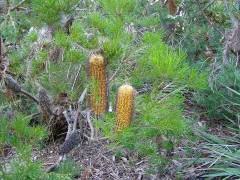
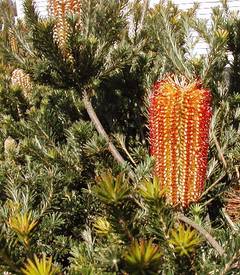
Cylindrical flower spikes open from summer into autumn, mainly January to May, turning from grey-green buds to silver-grey or pale yellow. Each spike carries hundreds of flowers rich in nectar. Old spikes harden into woody cones that persist on the plant.
Detailed Descriptions
Flower Description
silver-grey to pale yellowFoliage Description
dark greenGrowing Conditions
Sun Requirements
Requires 5-9 hours of direct sunlight daily
• Full Sun: 6+ hours of direct sunlight
• Partial Shade: 3-6 hours of direct sunlight
• Full Shade: Less than 3 hours of direct sunlight