Image 1 of 9
1 / 9
No machine-readable author provided. Casliber assumed (based on copyright claims)., no rights reserved (CC0) · Wikimedia Commons
Banksia, Genus, attenuata, Species,
- Genus & species
candlestick banksia
Overview
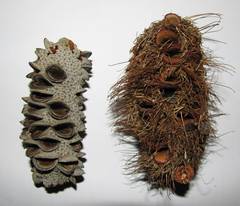
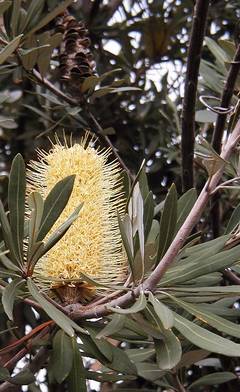
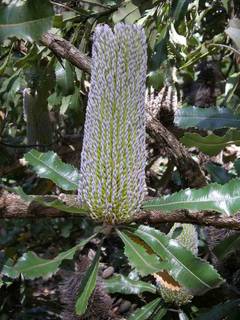
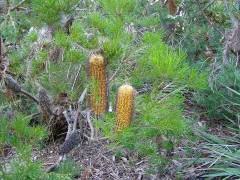
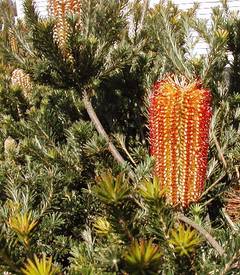
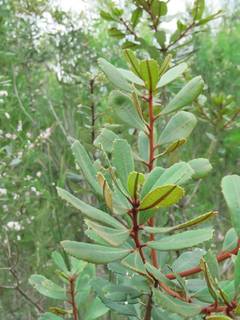
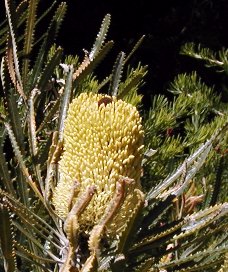
Banksia attenuata is a tree, or a low shrub on exposed sites, growing 13-33 feet (4-10 m) tall, with rough, grey, fissured bark and an open crown. Leaves are linear, 4-10 inches (10-25 cm) long and 0.2-0.4 inch (5-10 mm) wide, with finely serrated margins and a dull green upper surface over a paler underside. The flower spikes are cylindrical, 4-10 inches (10-25 cm) tall and about 2 inches (5 cm) wide, bright yellow, and held upright above the foliage. Flowering occurs mainly in spring and summer. Old spikes develop into woody cones holding raised follicles that open after fire to release winged seeds. The plant grows from a lignotuber and resprouts after burning, and its roots include cluster roots that take up phosphorus from poor soils. Growth is slow to moderate. On deep sand it forms a single-trunked tree; on shallow or exposed ground it remains a multi-stemmed shrub. Foliage is held year-round, and spent flower spikes turn grey and persist on the branches.
Native Range
Native to south-western Western Australia, from Kalbarri south to Albany and inland to the wheatbelt. Grows on deep sandy soils in heath, shrubland, and low woodland, including coastal dunes and sandplains, in a region with wet winters and dry summers.Suggested Uses
Grown in dry-climate and native gardens, on sandy sites, and in revegetation on sandplains, spaced 10-20 feet (3-6 m) apart. Used as a habitat and nectar plant for honeyeaters and as a shade tree on deep sand. The cut flower spikes are used in dried arrangements.How to Identify
Appearance
Size & Dimensions
Height13' - 33'
Width/Spread10' - 20'
Bloom Information
Flowers mainly from spring into summer, October to February, with peak flowering in early summer. The upright yellow spikes open from the base upward over one to two weeks. Flowering is heavier in open, sunny positions and follows the wet-winter, dry-summer rainfall pattern of its range.
Detailed Descriptions
Foliage Description
dull greenGrowing Conditions
Sun Requirements
Requires 6-12 hours of direct sunlight daily
• Full Sun: 6+ hours of direct sunlight
• Partial Shade: 3-6 hours of direct sunlight
• Full Shade: Less than 3 hours of direct sunlight
Care & Maintenance
Care Guide
Grows in full sun on deep, free-draining sandy soils low in phosphorus and tolerates extended summer drought once established. Watering through the first one to two summers aids establishment, after which little or no irrigation is needed. Like other Banksia, it is sensitive to phosphorus, and standard phosphate fertilisers can damage the roots. It is susceptible to the root pathogen Phytophthora cinnamomi in poorly drained or wet soils. Resprouts from a lignotuber after fire. Growth is slow, and plants take several years to begin flowering.Pruning
Light pruning after flowering shapes the plant and removes spent spikes. Cutting into bare old wood may fail to reshoot, so pruning is limited to leafy growth. Plants with a lignotuber tolerate harder cutting and resprout from the base.Pruning Schedule
Prune: February–March
summer