Image 1 of 9
1 / 9
No machine-readable author provided. Casliber assumed (based on copyright claims)., no rights reserved (CC0) · Wikimedia Commons
Banksia, Genus, grandis, Species,
- Genus & species
giant banksia
Overview
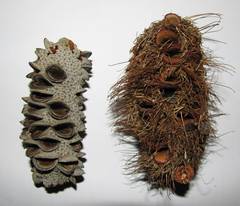
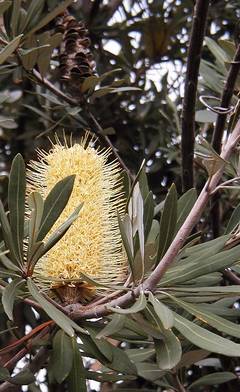
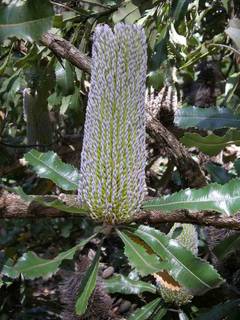
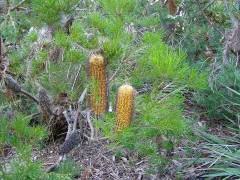
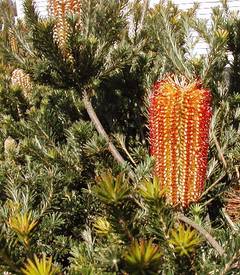
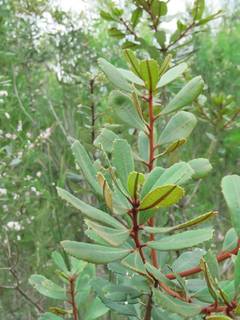
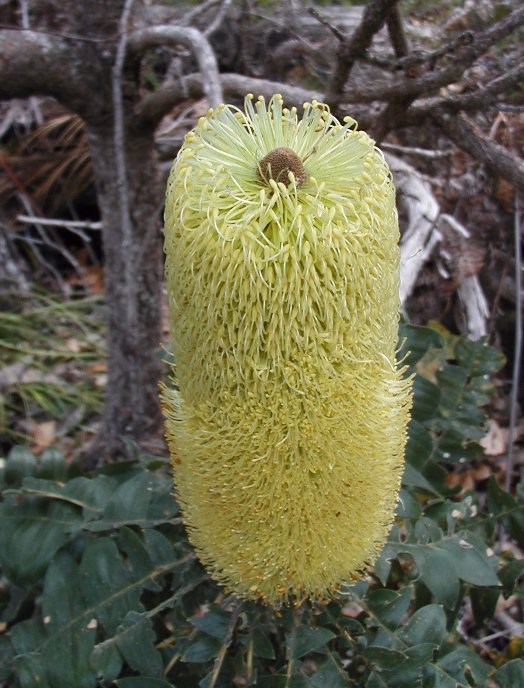
Banksia grandis is an evergreen tree or large shrub in the family Proteaceae, commonly 15-33 feet (4.5-10 m) tall and sometimes reaching 50 feet (15 m), with a stout trunk, rough grey bark, and an open crown; in exposed sites it remains a low, multi-stemmed shrub. The leaves are long and strap-shaped, 6-18 inches (15-45 cm) long, with deep triangular lobes cut almost to the midrib, dark green above and whitish below. Upright cylindrical flower spikes 4-16 inches (10-40 cm) tall and about 3 inches (8 cm) wide carry thousands of yellow flowers, opening from late spring through summer. After flowering, the spikes develop into woody cones studded with large follicles that open after fire to release winged seeds; old grey spikes persist on the branches. Growth is slow to moderate. The species needs sharp drainage and is sensitive to the root-rot pathogen Phytophthora cinnamomi. It grows poorly on heavy, wet, or alkaline soils.
Native Range
Native to south-western Western Australia, from near Geraldton south to Albany. Grows in jarrah and karri forest, woodland, and coastal heath on sandy and gravelly, well-drained soils in a winter-rainfall climate.Suggested Uses
Planted as a feature and shade tree in large native gardens and parks on free-draining soils, spaced 15-25 feet (4.5-7.5 m) apart. The flower spikes draw nectar-feeding birds and insects. Sensitivity to root rot and heavy soils limits its use in irrigated gardens and humid summer-rainfall districts.How to Identify
Appearance
Size & Dimensions
Height15' - 33'
Width/Spread10' - 20'
Bloom Information
Flowers from late spring through summer (October to February in its native range), with tall yellow spikes opening from the base upward over several weeks. Flowering is heaviest in open, sunny positions. Old flower spikes turn grey and woody and remain on the plant for years.
Detailed Descriptions
Foliage Description
Dark green above, whitish belowGrowing Conditions
Sun Requirements
Requires 6-12 hours of direct sunlight daily
• Full Sun: 6+ hours of direct sunlight
• Partial Shade: 3-6 hours of direct sunlight
• Full Shade: Less than 3 hours of direct sunlight
Care & Maintenance
Care Guide
Water through the first two summers to establish, then rely on rainfall, as the species tolerates extended dry periods once established. Plants need full sun and sharply drained sandy or gravelly soils, and decline on heavy, wet, or limy ground. The roots are sensitive to phosphorus, so low-phosphorus native fertilisers are used where feeding is needed. The species is highly susceptible to Phytophthora cinnamomi root rot in poorly drained or summer-wet soils. Few insect pests cause serious damage. Plants resent root disturbance and transplant poorly once established.Pruning
Little pruning is needed beyond removing dead wood and old flower spikes. Cutting back into bare old wood is risky, as the species reshoots unreliably from old growth. Shaping is done on young plants by tip-pruning after flowering.Pruning Schedule
Prune: December–January
summer