Banksia, Genus, spp., Multiple species,
- Genus
- Multiple species
banksias
Overview
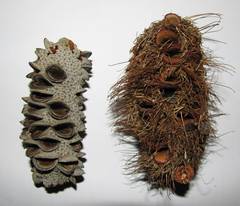
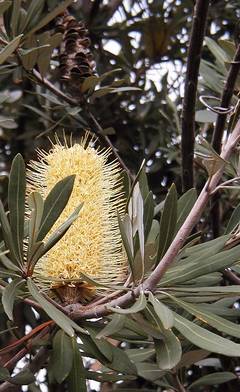
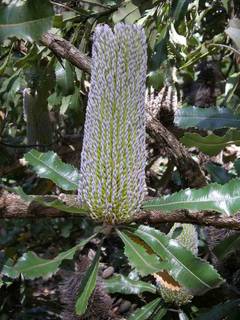
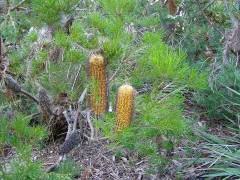
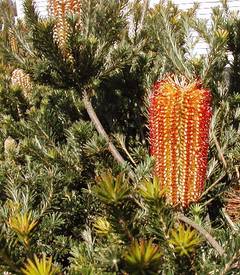
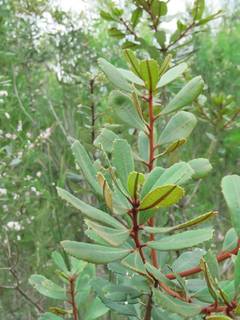
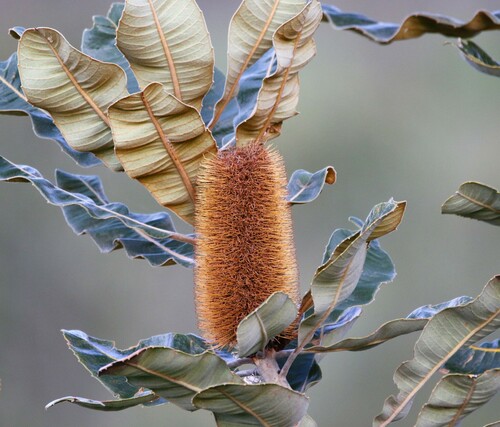
Banksia is a genus of about 170 species of evergreen shrubs and trees in the family Proteaceae, native to Australia. Plants range from prostrate, ground-hugging forms a few inches high to trees such as B. integrifolia reaching 50 to 100 feet (15 to 30 m), though most cultivated species are shrubs of 3 to 15 feet (0.9 to 4.6 m). The leathery leaves are often toothed or deeply lobed, with undersides frequently white or rusty under a felting of short hairs. The flowers are the defining feature: hundreds to thousands of small flowers packed into dense cylindrical or dome-shaped spikes 2 to 16 inches (5 to 40 cm) tall, in shades of yellow, orange, red, bronze, and greenish cream. After flowering, woody fruiting structures form, studded with seed-bearing follicles that in many species open only after fire. The genus occupies heathland, woodland, and sandy coastal scrub across Australia, and most species grow on nutrient-poor, sharply drained soils. A limitation across the genus is sensitivity to phosphorus and to root-rot pathogens in poorly drained or fertilized ground, which restricts cultivation outside well-drained, low-fertility sites.
Native Range
Banksia is native to Australia, where it is widespread across the continent except the driest interior. The genus is most diverse in southwestern Western Australia, with additional species along the eastern and southeastern coasts in heath, woodland, and coastal scrub.Suggested Uses
Banksia species are used in low-water and coastal gardens, native and habitat plantings, and as cut flowers and foliage. Shrubby species are grown in mixed borders and screens on free-draining soil, while prostrate forms are used as groundcover on banks and sandy slopes.How to Identify
Appearance
Size & Dimensions
Height6" - 100'
Width/Spread3' - 20'
Bloom Information
Banksia species flower across a long season that varies by species, with many blooming in autumn and winter and others in spring and summer. Individual spikes open progressively from the base upward over several weeks. The nectar-rich flowers are followed by woody seed cones that can persist on the plant for years.
Detailed Descriptions
Flower Description
yellow, orange, red, bronze, and creamFoliage Description
greenGrowing Conditions
Sun Requirements
Requires 6-12 hours of direct sunlight daily
• Full Sun: 6+ hours of direct sunlight
• Partial Shade: 3-6 hours of direct sunlight
• Full Shade: Less than 3 hours of direct sunlight
Water & Climate
Water Needs
Drought Tolerance
Drought tolerant when established
Care & Maintenance
Care Guide
Across the genus, Banksia grows in full sun and sharply drained, sandy or gravelly soil low in nutrients, with an acidic to neutral pH of about 5.0 to 7.0. Most species are intolerant of phosphorus and are grown without standard fertilizers, which can damage the specialized proteoid roots. Drainage is critical, as the genus is susceptible to Phytophthora root rot in wet ground. Established plants tolerate drought, wind, and coastal salt. Watering is reduced once plants establish, and overhead irrigation in humid weather raises disease risk. Propagation is from seed, which in many species germinates after exposure to heat or smoke.Pruning
Light pruning after flowering keeps plants compact and removes spent flower heads. Most species tolerate trimming of the current season growth but do not reliably resprout from old, leafless wood. A number of species carry a woody basal lignotuber and regrow after harder cutting or fire.Container Growing
Suitable for container growing
Minimum container size: 5 gallons