Banksia, Genus, oblongifolia, Species,
- Genus & species
rusty banksia
Overview
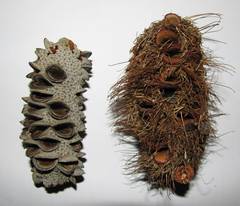
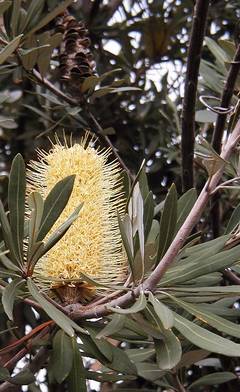
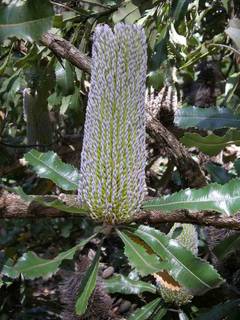
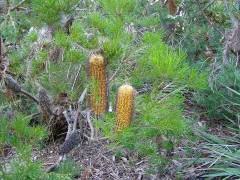
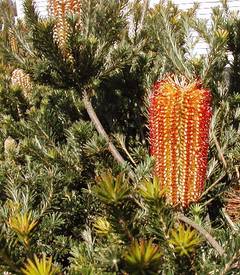
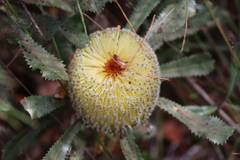
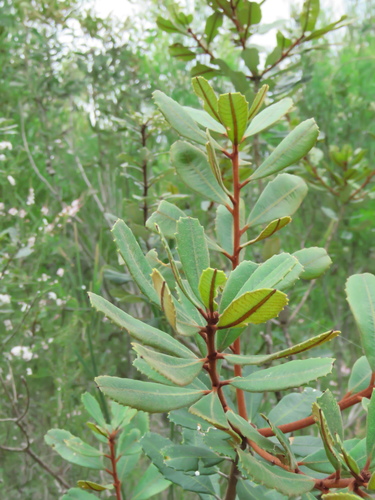
Banksia oblongifolia is an evergreen shrub in the protea family reaching 3-7 feet (1-2 m) tall and 3-6 feet (0.9-1.8 m) wide, with an upright, sometimes spreading habit and a woody lignotuber at the base. Leaves are oblong, 1.5-4 inches (4-10 cm) long, with toothed margins, dark green and smooth above and white-felted beneath, while new growth is covered in rusty-brown hairs. Cylindrical flower spikes 2.4-5 inches (6-13 cm) tall, made of hundreds of small flowers, open from the base upward, pale yellow to yellow-green and sometimes bluish in bud, mainly in autumn and winter. Old spikes turn grey and develop woody follicles that hold the seed, often opening after fire. Growth is moderate, and the lignotuber allows the plant to resprout after fire or hard pruning. The species needs free drainage and low-nutrient soil, is sensitive to phosphorus, and becomes open with age in shade.
Native Range
Native to eastern Australia, along the coast and nearby ranges of New South Wales and southern Queensland. Grows in heath, dry sclerophyll woodland, and swamp margins on sandy, nutrient-poor soils from near sea level to about 2,300 feet (700 m).Suggested Uses
Planted in native, habitat, and bird-attracting gardens, on sandy banks, and in low-nutrient soils, spaced 3-5 feet (0.9-1.5 m) apart. The autumn-winter nectar suits plantings aimed at honeyeaters and small wildlife. Free drainage and low fertility limit its use in heavy clay or fertilized beds.How to Identify
Appearance
Size & Dimensions
Height3' - 7'
Width/Spread3' - 6'
Bloom Information
Flowers mainly in autumn and winter, March to July in its native range, with some bloom into spring. Each spike opens over 3-5 weeks as flowers progress up the cylinder. The flowers hold nectar and draw honeyeaters, and old spikes carry woody seed follicles for years.
Detailed Descriptions
Flower Description
Pale yellow to yellow-greenFoliage Description
Dark green above, white beneath; rusty new growthGrowing Conditions
Sun Requirements
Requires 6-10 hours of direct sunlight daily
• Full Sun: 6+ hours of direct sunlight
• Partial Shade: 3-6 hours of direct sunlight
• Full Shade: Less than 3 hours of direct sunlight
Care & Maintenance
Care Guide
Grows in full sun to light shade in free-draining sandy soil low in nutrients and tolerates seasonally damp ground. Water through the first season to establish; established plants tolerate dry periods and decline in soils that stay wet. Phosphorus-rich fertilizers damage the roots of banksias, so only low-phosphorus native blends are used. The lignotuber lets the plant resprout after hard pruning or fire. Few pests affect it, though borers and scale occur on stressed stems.Pruning
Prune after flowering, cutting up to one-third of the growth or back to the lignotuber to renew old plants. New shoots emerge from the lignotuber and from green wood. Light pruning keeps the shrub dense and slows the open habit of older plants.Pruning Schedule
Prune: July–August
winter
Container Growing
Suitable for container growing
Minimum container size: 7 gallons