Banksia, Genus, cunninghamii, Species,
- Genus & species
Overview
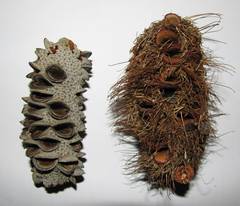
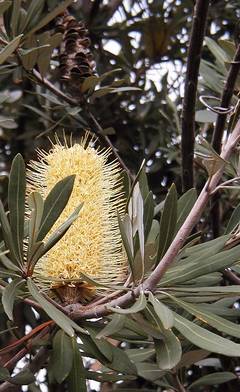
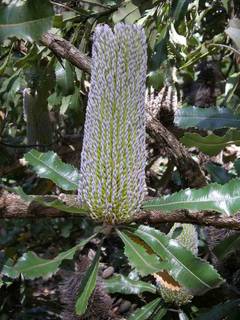
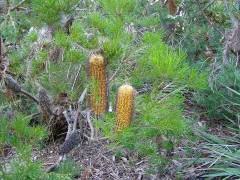
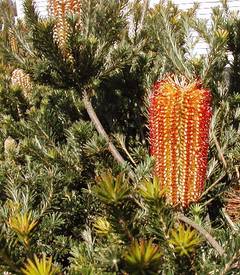
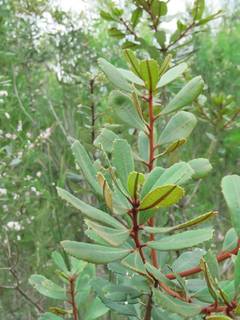
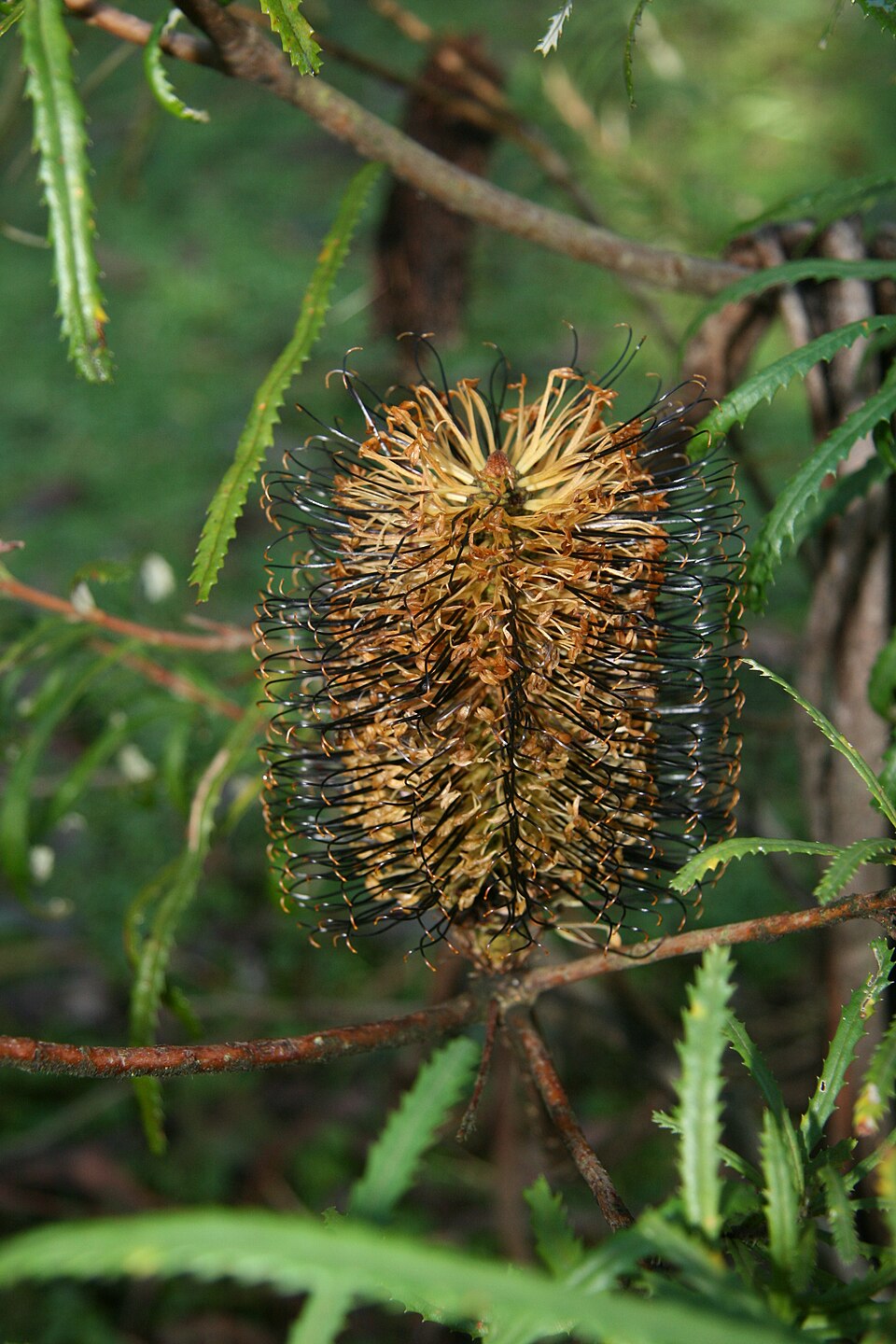
Banksia cunninghamii is a shrub or small tree growing 10-26 feet (3-8 m) tall, with a single main trunk and rough grey bark, taller and more tree-like than the closely related Banksia spinulosa. Leaves are narrow, linear, 1.2-4 inches (3-10 cm) long and about 0.2 inch (5 mm) wide, dark green above and white-hairy beneath, with the tip usually three-toothed. The flower spikes are cylindrical, 3-6 inches (8-15 cm) tall, gold to orange in the open flowers with dark purple-black, hooked styles, giving the spike a two-toned look. Flowering occurs mainly in autumn and winter. Old spikes form woody cones holding raised follicles that open after fire to release winged seeds. Unlike many banksias, it lacks a lignotuber and regenerates from seed rather than resprouting, so fire kills standing plants. Growth is moderate. Foliage is held year-round, and old grey cones persist on the branches. It tolerates poor sandy soils and short frosts but is sensitive to root-rot in wet ground.
Native Range
Native to south-eastern Australia, occurring in New South Wales and Victoria. Grows in dry sclerophyll forest, woodland, and heath, often on sandstone-derived sandy and gravelly soils on slopes and ridges.Suggested Uses
Grown in native gardens, on sandy and sandstone soils, and in revegetation, spaced 8-16 feet (2.5-5 m) apart. Used as a screening shrub or small tree and as a nectar plant for honeyeaters and small mammals. The flower spikes are used as cut flowers.How to Identify
Appearance
Size & Dimensions
Height10' - 26'
Width/Spread8' - 16'
Bloom Information
Detailed Descriptions
Flower Description
gold with purple-black stylesFoliage Description
dark green above, white beneathGrowing Conditions
Sun Requirements
Requires 5-10 hours of direct sunlight daily
• Full Sun: 6+ hours of direct sunlight
• Partial Shade: 3-6 hours of direct sunlight
• Full Shade: Less than 3 hours of direct sunlight
Care & Maintenance
Care Guide
Grows in full sun to part shade on free-draining sandy or gravelly soils low in phosphorus and tolerates short frosts once established. Watering through the first one to two summers aids establishment, after which little supplementary water is needed. Like other Banksia, it is sensitive to phosphorus, and standard phosphate fertilisers can damage the roots. It is susceptible to Phytophthora cinnamomi root rot in poorly drained soils. Because it lacks a lignotuber, fire or cutting to the base kills the plant rather than prompting regrowth. Growth is moderate.Pruning
Light pruning of flowered stems shapes the plant and removes spent spikes. Because it lacks a lignotuber, it does not resprout from the base, so cutting into bare old wood or to ground level kills the plant. Pruning is kept to leafy growth above the lowest foliage.Pruning Schedule
Prune: August
winter