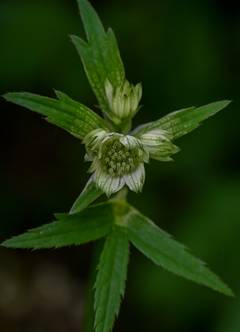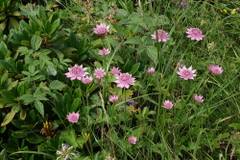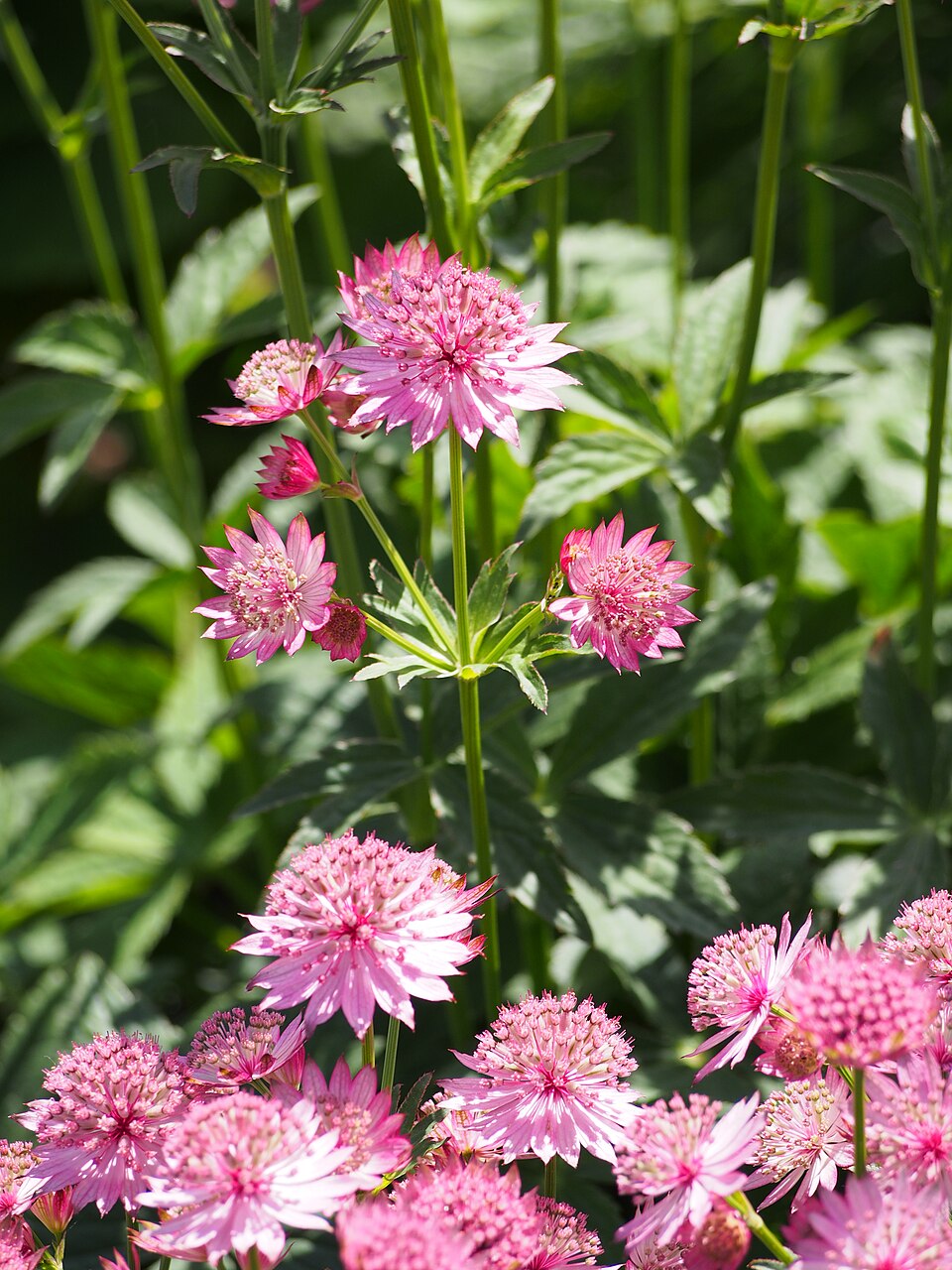
Astrantia, Genus, major, Species, 'Venice', Cultivar,
- Genus & species
- Cultivar
venice masterwort
Overview
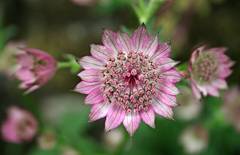
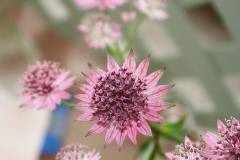
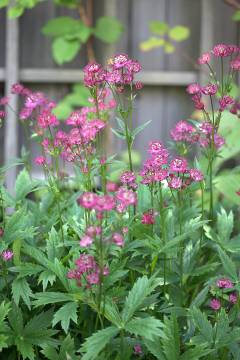
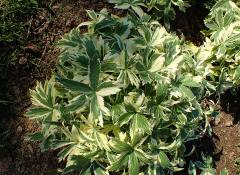
Astrantia major 'Venice' is a clump-forming herbaceous perennial in the Apiaceae family, growing 18-24 inches (45-60 cm) tall and 18 inches (45 cm) wide. From late spring into summer it carries domed flower heads about 1 inch (2.5 cm) across, each a tight pincushion of tiny deep wine-red florets surrounded by a collar of papery, pointed bracts in matching ruby-red. The flowers are held on wiry, branching stems above a mound of deeply lobed, palmate green leaves divided into five to seven toothed segments. 'Venice' carries darker, more saturated red coloring than the pink-and-green-flowered species, and the color holds rather than fading pale. The plant grows in part shade to full sun where soil stays reliably moist; in dry soil or hot afternoon sun the foliage scorches and flowering is reduced. It is hardy in USDA zones 4 through 7 and declines in prolonged heat and humidity. Clumps build slowly and can be divided after several years; the cultivar sets little seed, so it does not self-sow as freely as the species. Flowers draw bees and other pollinators and are cut for fresh and dried arrangements, holding their form well when dried. The species is native to central and eastern European mountain meadows and woodland margins.
Native Range
Astrantia major is native to central and eastern Europe, where it grows in damp mountain meadows, woodland edges, and along streams. 'Venice' is a garden cultivar selected for its deep red flowers.Suggested Uses
Grown in mixed and woodland borders, cottage gardens, and damp partly shaded sites, spaced 16-18 inches (40-45 cm) apart. Flowers are cut for fresh and dried arrangements. It pairs with ferns, hostas, and other moisture-loving perennials in dappled shade.How to Identify
Appearance
Size & Dimensions
Height1'6" - 2'
Width/Spread1'4" - 1'6"
Bloom Information
Flowers from late May or June into August, with the main flush in early to midsummer. Cutting back spent stems can bring a lighter second flush in late summer where soil stays moist. The papery bracts dry in place and hold color for some time after the florets fade.
Detailed Descriptions
Foliage Description
GreenGrowing Conditions
Sun Requirements
Requires 3-6 hours of direct sunlight daily
• Full Sun: 6+ hours of direct sunlight
• Partial Shade: 3-6 hours of direct sunlight
• Full Shade: Less than 3 hours of direct sunlight
Care & Maintenance
Care Guide
Grows in part shade to full sun in fertile, humus-rich soil that stays evenly moist. Dry soil and hot afternoon sun cause leaf scorch and cut flowering short. Water needs are medium to high, and a mulch helps hold soil moisture through summer. In USDA zones 4 through 7 the plant is fully cold hardy and dies back to a crown in winter. Clumps can be lifted and divided in spring or autumn every three to four years to renew vigor. The plant grows poorly in prolonged heat and humidity.Pruning
Spent flower stems are cut back after the first flush to encourage rebloom and limit any self-seeding. The whole plant is cut to the ground in late autumn or early spring as old foliage dies back. Division in spring or autumn renews congested clumps.Pruning Schedule
Prune: March, July & November
summerfall
Container Growing
Suitable for container growing
Minimum container size: 3 gallons