Astrantia, Genus, major, Species, 'Rubra', Cultivar,
- Genus & species
- Cultivar
Rubra masterwort
Overview
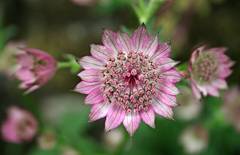
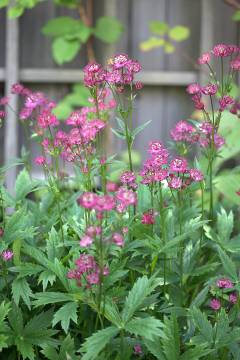
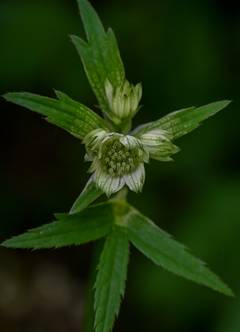
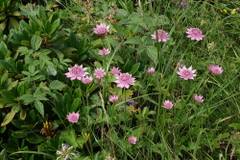
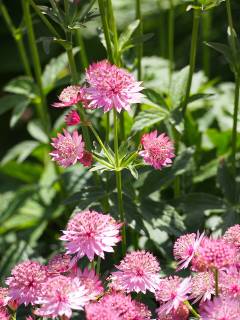
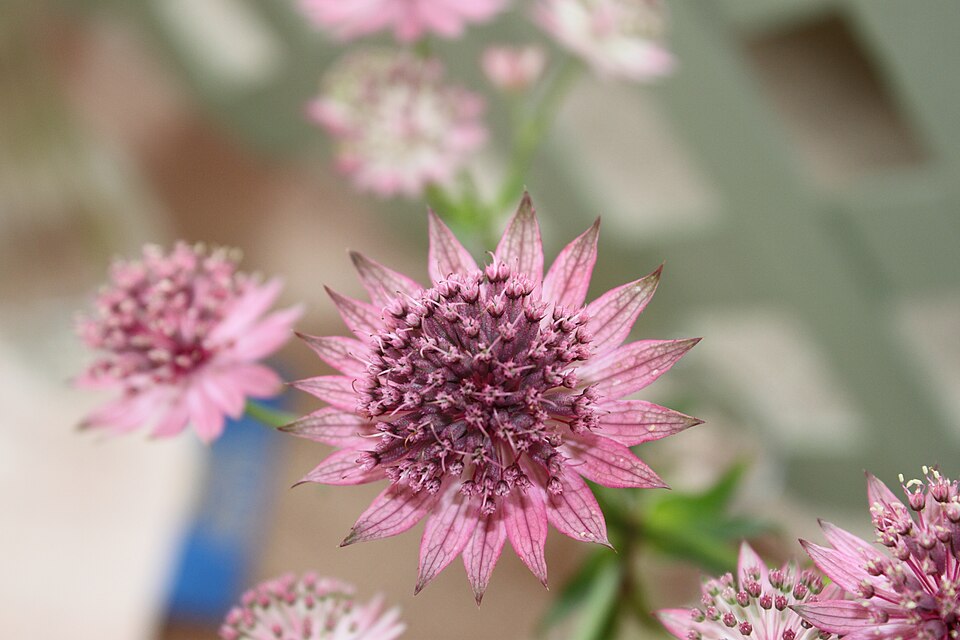
Astrantia major 'Rubra' is a clump-forming herbaceous perennial reaching 24–30 inches (60–75 cm) tall with a spread of 18–24 inches (45–60 cm). This cultivar produces pincushion-like flower heads with plum-red to dark rose bracts and matching dark florets. Individual flower heads are 1–1.5 inches (2.5–4 cm) across. Stems are upright, wiry, and lightly branched. Leaves are palmately lobed with 3–5 deeply toothed lobes, 3–6 inches (8–15 cm) across, medium green. 'Rubra' falls between 'Rosea' and 'Claret' in flower color depth—darker and more saturated than 'Rosea' but not as deep and uniform as 'Claret', with occasional lighter pink flecks in the floret cluster. Bloom occurs in June–August, with a secondary flush if cut back after the first flowering. 'Rubra' is seed-raised rather than vegetatively propagated, resulting in some color variation among plants. Self-sowing is prolific; volunteer seedlings frequently produce lighter-flowered plants. In hot climates (zones 7–8), foliage may go dormant by mid-summer without consistent moisture. Powdery mildew may develop in humid conditions.
Native Range
Astrantia major is native to Europe, from the Iberian Peninsula east through the Alps and Carpathians to the Caucasus. It occurs in mountain meadows, woodland clearings, and stream banks at elevations of 1,000–6,500 feet (300–2,000 m).Suggested Uses
Planted in cottage gardens, shaded borders, and woodland edges at 18–24 inch (45–60 cm) spacing. The plum-red flowers add mid-tone depth between lighter pink and darker wine-red cultivars. Cut flowers last 7–10 days in water; bracts dry for dried arrangements. Grows in containers of at least 5 gallons (19 L) in a humus-rich mix. Expect some color variation among plants due to seed propagation.How to Identify
Appearance
Size & Dimensions
Height2' - 2'6"
Width/Spread1'6" - 2'
Bloom Information
Plum-red pincushion flower heads appear in June–August. Individual heads are 1–1.5 inches (2.5–4 cm) across with papery bracts persisting after florets fade. Cutting stems back after the first flush promotes a secondary bloom in late August–September. Seed-raised plants show some variation in color depth within a batch.
Detailed Descriptions
Flower Description
Plum-red to dark roseFoliage Description
Medium green, palmately lobedGrowing Conditions
Sun Requirements
Requires 3-8 hours of direct sunlight daily
• Full Sun: 6+ hours of direct sunlight
• Partial Shade: 3-6 hours of direct sunlight
• Full Shade: Less than 3 hours of direct sunlight
Care & Maintenance
Care Guide
Plant in humus-rich, consistently moist soil in partial shade to full sun. Consistent moisture in full sun prevents premature dormancy. Afternoon shade in zones 7–8 extends the foliage display. As a seed-raised cultivar, 'Rubra' self-sows prolifically; seedlings frequently revert to paler colors. Remove spent flower heads before seeds mature to maintain the plum-red color in the planting. Divide clumps every 3–4 years in spring. Powdery mildew develops in humid conditions with poor air circulation. Slugs feed on emerging foliage.Pruning
Cut spent flower stems back to the basal foliage mound after the first bloom flush in July to promote a secondary flowering and prevent self-sowing. Cut all stems to ground level in late fall or early spring. Remove volunteer seedlings with off-color flowers to maintain planting uniformity.Pruning Schedule
Prune: March, July & November
summerfallearly spring
Container Growing
Suitable for container growing
Minimum container size: 5 gallons