Image 1 of 21
1 / 21
Plant Reference
Astrantia, Genus, major, Species,
- Genus & species
great masterwort
Central and eastern Europe (Alps, Carpathians, Caucasus); moist mountain meadows and open woodland margins
Overview
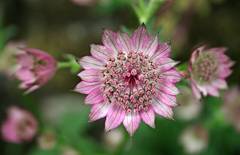
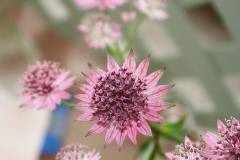
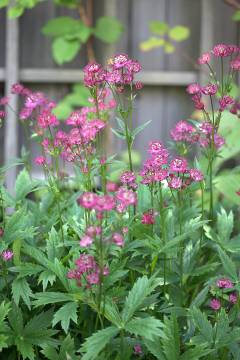
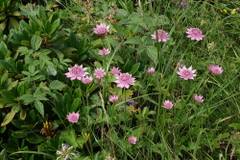
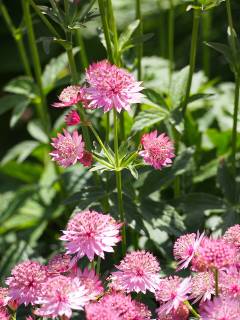
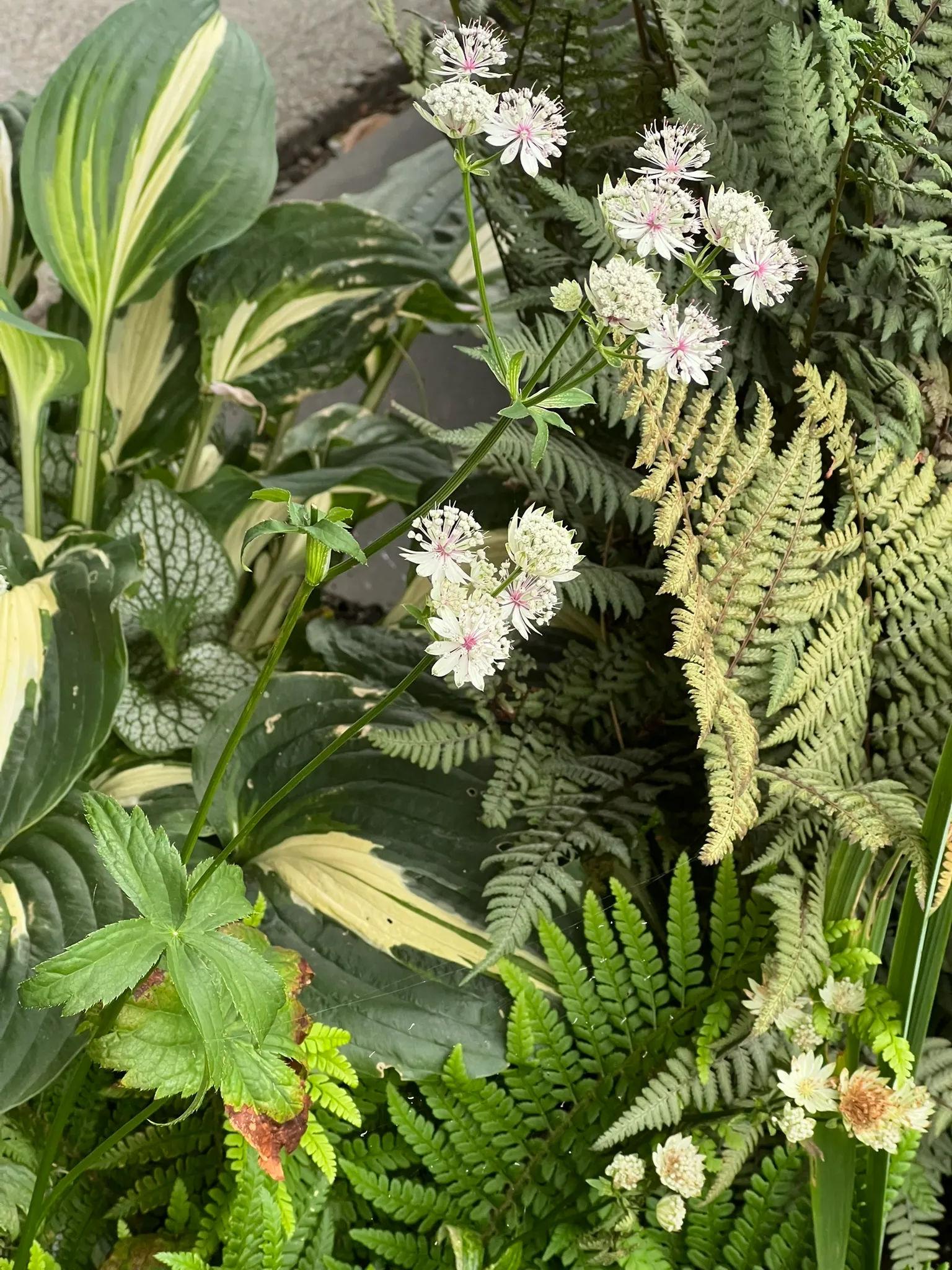
Astrantia major is a clump-forming herbaceous perennial in the family Apiaceae native to central and eastern Europe, reaching 18-36 inches (45-90 cm) tall with a spread of 18-24 inches (45-60 cm). Basal leaves are deeply palmately lobed, 3-5 inches (8-13 cm) across, with 5-7 toothed lobes and medium green coloration. Stems branch in the upper portion and each branch terminates in a pincushion-like flower head about 1-1.5 inches (2.5-4 cm) across. Each head carries a dome of tiny florets surrounded by a collar of papery pointed bracts in white, greenish-white, or pink — often with darker vein markings — above a basal leaf mound. Flowers are intricate in structure and hold up well as cut flowers, lasting 10-14 days in water. Bloom runs June through August, and deadheading promptly after the first flush can support a secondary bloom in late summer. The species self-sows freely and seedlings from named cultivars can come up off-type. The species grows in cool moist conditions and foliage deteriorates in hot dry summers; zones 4-7 suit the plant, while zone 8 summer heat reduces bloom quality and duration.
Native Range
Astrantia major is native to central and eastern Europe from the Alps and Carpathians east through the Caucasus region, where it grows in moist meadows, open woodland margins, and stream sides at 1,600-6,500 feet (500-2,000 m) elevation.Suggested Uses
Planted in shade borders and woodland gardens at 18-24 inch (45-60 cm) spacing. The plant tolerates dry shade less well than many shade perennials and requires consistent soil moisture. Cut flowers last 10-14 days in water. The self-seeding habit naturalizes plantings over time and requires management in formal settings. Grown in containers of 3 gallons (11 L) or more in a humus-rich, moisture-retentive mix. Combined with Alchemilla mollis, Geranium species, and Dryopteris ferns in cool moist shade plantings in zones 4-7. Not suited to dry exposed sites, alkaline soils above pH 7.5, or hot-summer regions above zone 7.How to Identify
Appearance
Size & Dimensions
Height1'6" - 3'
Width/Spread1'6" - 2'
Bloom Information
Pincushion-like flower heads 1-1.5 inches (2.5-4 cm) across open June through August in zones 4-7, with peak bloom in June and July, averaging 8 weeks of bloom. Deadheading immediately after the first flush can produce a second lighter bloom in August or September. Individual flower heads hold 3-4 weeks on the plant. Zone 8-9 summer heat reduces bloom quality and duration.
Detailed Descriptions
Flower Description
white, greenish-white, or pink with darker veining on papery pointed bracts; pincushion-like flower heads 1-1.5 inches (2.5-4 cm) acrossFoliage Description
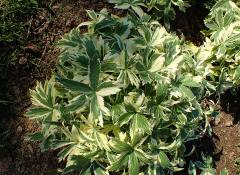
medium green; basal leaves deeply palmately lobed 3-5 inches (8-13 cm) across with 5-7 toothed lobesGrowing Conditions
Sun Requirements
Requires 3-6 hours of direct sunlight daily
• Full Sun: 6+ hours of direct sunlight
• Partial Shade: 3-6 hours of direct sunlight
• Full Shade: Less than 3 hours of direct sunlight
Care & Maintenance
Care Guide
Plant in partial shade in moist, humus-rich, well-drained soil with a pH of 5.5-7.0; tolerated soil types include loam and clay. In cooler climates (zones 4-6) plants tolerate full sun where soil remains consistently moist. Foliage scorches and plants decline in hot dry summers without supplemental water. Mulching 2-3 inches (5-8 cm) deep holds soil moisture. Deadheading promptly after the first bloom flush reduces self-seeding and supports rebloom. Clumps are divided every 3-4 years in spring to sustain vigor. Self-sown seedlings appear reliably but may not match parent cultivar characters.Pruning
Spent flower heads are deadheaded immediately after bloom to reduce prolific self-seeding and to support a second flush. All stems are cut to ground level in late fall (October) after frost or in early spring. Seedlings in unwanted locations are removed because they establish quickly. Division is done in early spring every 3-4 years.Pruning Schedule
Prune: July–August & October
summerfall
Container Growing
Suitable for container growing
Minimum container size: 3 gallons