Aster, Genus, ×, Hybrid, frikartii, Species,
- Genus & species
- Hybrid
Frikart's aster
Garden hybrid (parent species: Europe and western Himalaya)
Overview
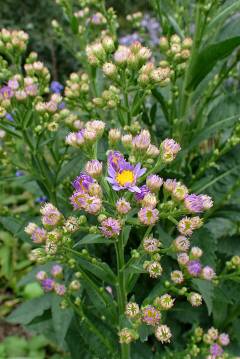
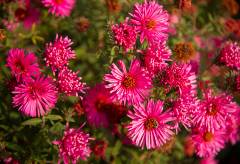
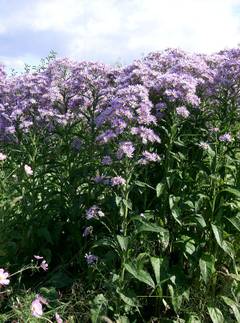
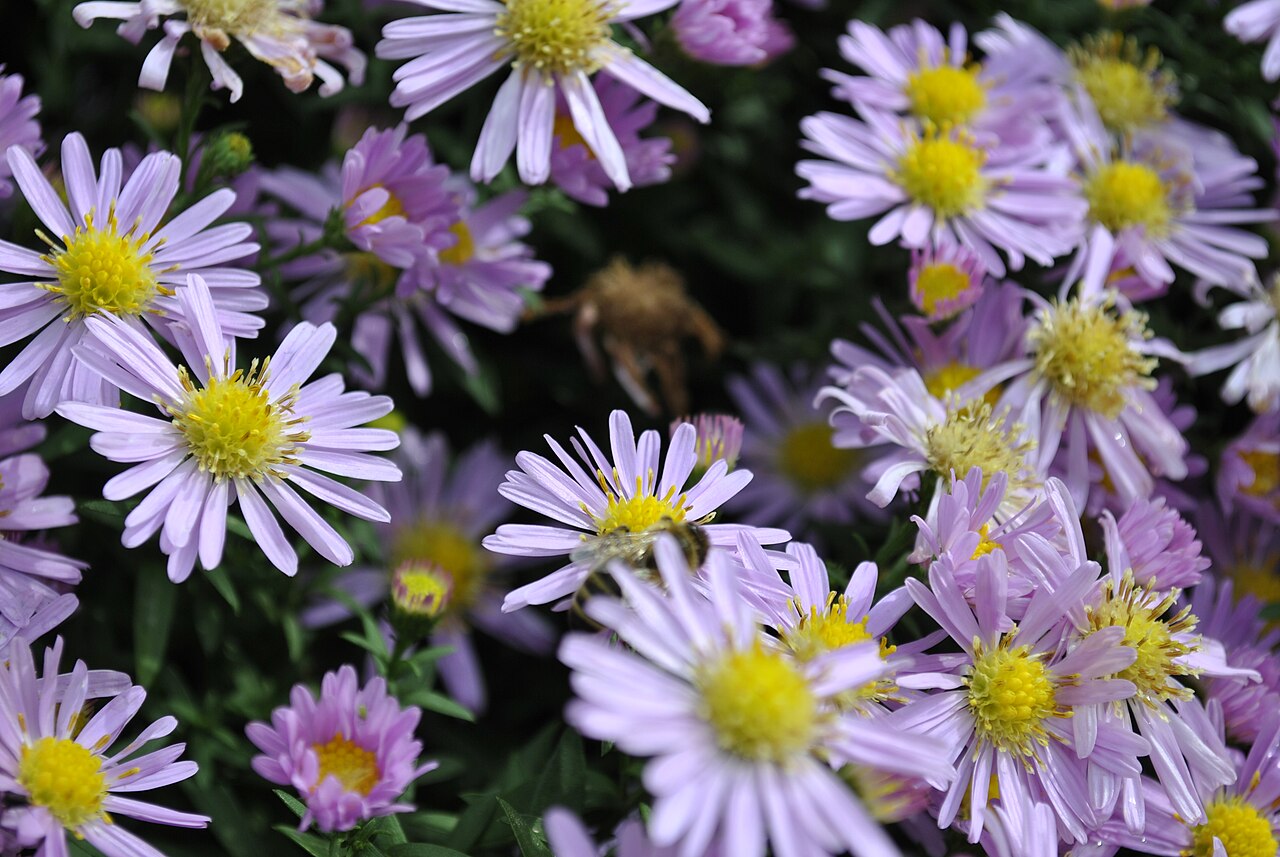
Aster × frikartii is a clump-forming perennial in the aster family (Asteraceae), a hybrid of A. amellus and A. thomsonii raised in Switzerland around 1920. Plants reach 24–36 inches (60–90 cm) tall and 18–24 inches (45–60 cm) wide on branching, upright stems. Leaves are alternate, lance-shaped to oblong, 2–4 inches (5–10 cm) long and 0.5–1 inch (12–25 mm) wide, medium green and rough-textured, with entire or slightly toothed margins. Daisy-like flower heads are lavender-blue, 2–2.5 inches (5–6 cm) across, with 20–30 narrow ray petals around an orange-yellow disk. Flowers open from July and continue to October, a period of 12–16 weeks that is longer than most Aster species. The hybrid is hardy in USDA zones 5–8 and has higher resistance to powdery mildew than Symphyotrichum novae-angliae. Plants decline in wet winter soil, and stems lean in rich soil or in shade deeper than 4 hours of sun, so they are often supported with stakes or neighboring plants.
Native Range
Aster × frikartii is a garden hybrid and has no native range. Its parents are A. amellus, native to central and southern Europe, and A. thomsonii, native to the western Himalaya, where both grow in dry meadows and open slopes.Suggested Uses
Used in perennial borders and cottage gardens, spaced 18–24 inches (45–60 cm) apart. Flowers are visited by bees and butterflies. Also grown in containers 14–18 inches (35–45 cm) wide and as a cut flower lasting 5–7 days in water.How to Identify
Appearance
Size & Dimensions
Height2' - 3'
Width/Spread1'6" - 2'
Bloom Information
Detailed Descriptions
Foliage Description
Medium greenGrowing Conditions
Sun Requirements
Requires 6-10 hours of direct sunlight daily
• Full Sun: 6+ hours of direct sunlight
• Partial Shade: 3-6 hours of direct sunlight
• Full Shade: Less than 3 hours of direct sunlight
Care & Maintenance
Care Guide
Plants grow in full sun in fertile, well-drained loam with a pH of 6.0–7.5. Hardiness covers USDA zones 5–8. Water is applied at 1 inch (25 mm) per week, and established plants tolerate dry spells of 2–3 weeks. Spacing of 18–24 inches (45–60 cm) allows air movement. Wet winter soil causes crown rot, and stems lean in rich soil or shade. Clumps are divided every 3–4 years in spring. Powdery mildew is uncommon but occurs in humid summers.Pruning
Stems are cut back by one-third in early June to produce a more compact habit and to delay bloom by 1–2 weeks. Spent flower heads are cut to a side shoot to extend bloom. Stems are cut to 3–4 inches (7.5–10 cm) in spring, leaving crowns undisturbed through winter to protect them from cold.Pruning Schedule
Prune: March & June
summerearly spring
Container Growing
Suitable for container growing
Minimum container size: 3 gallons