Aster, Genus, tataricus, Species, 'Jindai', Cultivar,
- Genus & species
- Cultivar
Jindai aster
Cultivar of species native to East Asia (Siberia, Mongolia, China, Korea)
Overview
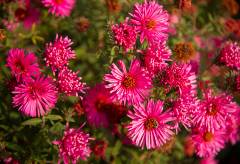
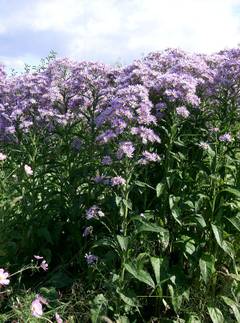
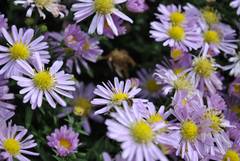
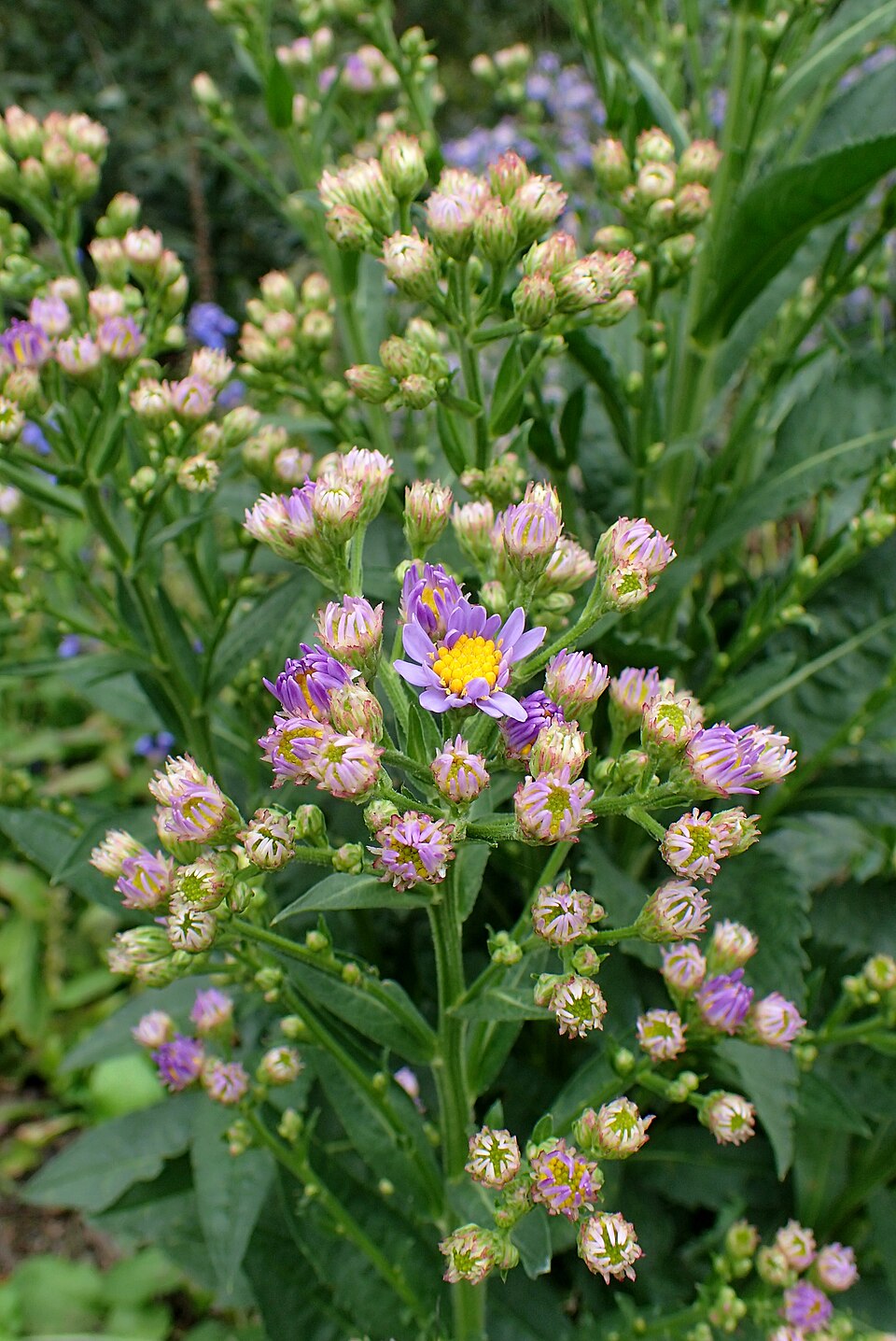
Aster tataricus 'Jindai' is a tall clump-forming herbaceous perennial reaching 4-5 feet (1.2-1.5 m) tall and 24-36 inches (60-90 cm) wide at maturity. Stems erect and sturdy, generally requiring no staking despite the height. Basal leaves paddle-shaped to oblong, 12-18 inches (30-45 cm) long and 4-6 inches (10-15 cm) wide, dark green, coarse-textured; upper stem leaves smaller and narrower. Flowers in flat-topped terminal panicles 6-10 inches (15-25 cm) across, composed of dozens of daisy-form blooms each 1-1.5 inches (2.5-4 cm) wide with lavender-blue ray petals around a yellow central disc. Bloom occurs from late September through October in zones 4-7, after many late-season perennials have finished. Plants spread by underground rhizomes, expanding the clump 4-8 inches (10-20 cm) per year and forming colonies of 24-48 inches (60-120 cm) within 4-5 years. Foliage holds dark green through summer, dropping after first hard frost. Powdery mildew can develop on lower leaves in late summer in humid conditions. The Jindai selection is more compact than the species type, which reaches 5-7 feet (1.5-2.1 m) and tends to flop without staking.
Native Range
Aster tataricus is native to grasslands, river meadows, and forest edges across Siberia, Mongolia, northern China, Korea, and the Russian Far East at 0-3,000 feet (0-900 m) elevation. The cultivar 'Jindai' was selected at Jindai Botanical Park in Tokyo and introduced to North American horticulture in the 1980s through the U.S. National Arboretum.Suggested Uses
Used at the back of mixed perennial borders at 36-48 inch (90-120 cm) spacing, in late-season prairie-style plantings, and as a tall background in pollinator gardens. The late-October bloom timing fills a gap after many other perennials have finished. Containers are not practical due to the large mature size and rhizomatous spread.How to Identify
Appearance
Size & Dimensions
Height4' - 5'
Width/Spread2' - 3'
Bloom Information
Late September through October in zones 4-7. Bloom may begin in early October in zones 8-9. Flowering continues for 4-6 weeks, often after first light frosts, with full panicles holding open flowers 2-3 weeks. Cool nights below 50°F (10°C) extend individual flower lifespan.
Detailed Descriptions
Flower Description
lavender-blue with yellow discFoliage Description
dark greenGrowing Conditions
Sun Requirements
Requires 6-8 hours of direct sunlight daily
• Full Sun: 6+ hours of direct sunlight
• Partial Shade: 3-6 hours of direct sunlight
• Full Shade: Less than 3 hours of direct sunlight
Care & Maintenance
Care Guide
Water weekly during the first growing season in the absence of rain. Established plants tolerate average garden conditions and periodic dry spells. Powdery mildew can develop on lower leaves in late summer in humid conditions; the condition is cosmetic and does not reduce flowering. Plants in zones 4-5 with heavy clay soils are susceptible to crown rot in poorly drained winter conditions. Rhizomatous spread is steady and can dominate fertile soils; the clump is commonly lifted and contained every 3-4 years. Divide in early spring before new growth emerges.Pruning
Cut all stems to 2 inches (5 cm) above ground after the first hard frost or in late winter before new growth emerges. Pinching stems by half in mid-June reduces final height by 8-12 inches (20-30 cm) and promotes branching. Lifting and dividing the rhizomatous clump every 3-4 years controls spread.Pruning Schedule
Prune: February–March, June & November
fallearly springsummer